

CR 085: Ani DiFranco on Collaboration, Connection, and New Beginnings
The iconic singer-songwriter discusses spirituality, her latest creative projects, and her new book, “The Spirit of Ani.”

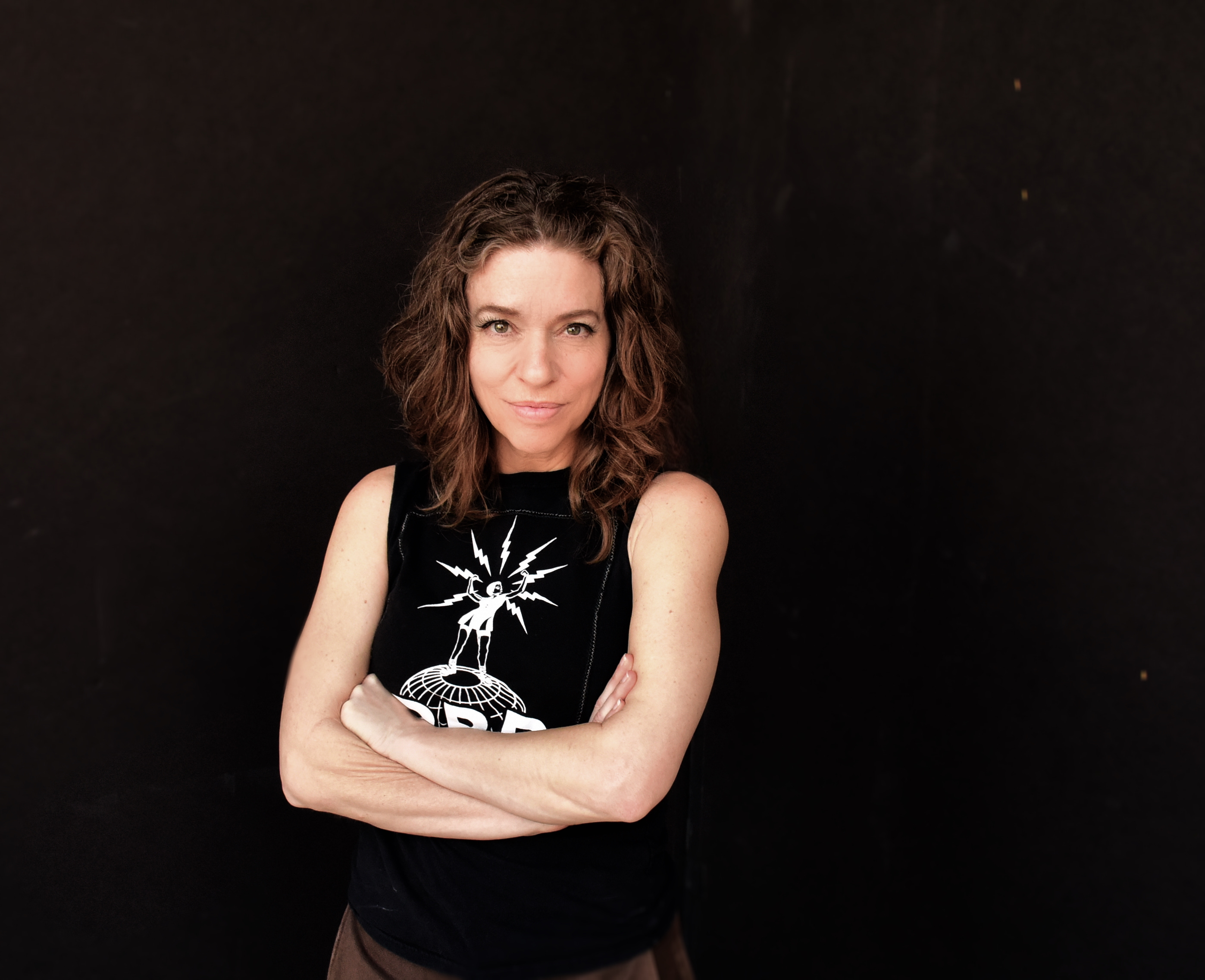
For the first two decades of her career, singer-songwriter Ani DiFranco was exhaustingly prolific. Amid a relentless touring schedule that had her performing upwards of 120 shows a year, the DIY icon released two dozen albums between 1990 and 2008, all of them on Righteous Babe Records, a label she’d launched when she was just 19. Back in those early years, it was not uncommon for her live setlists to include a new song or two she’d just written that day.
Now 55, DiFranco has slowed her output, choosing to focus on longer-term projects rather than adhere to the ambitious performance and album release cycle of earlier years. She still tours and releases the occasional solo album, but at a much slower (at least, for her) pace. It’s been two years since her most recent studio album, Unprecedented Sh!t, and she’s said in recent interviews that it may be her last for a while.
And though it may seem to the casual fan that DiFranco is doing less these days, she’s actually busier than ever. At the moment, she’s putting her energies into creating for film and the stage, contributing the music for an upcoming documentary based on the popular Telepathy Tapes podcast series, while simultaneously writing a stage musical—or as she refers to it, playsicle—of her own. The challenge of creating work in an entirely new format is, she says, precisely what brings her the most joy these days.
“I still have all the same growing and amazement and changes happening and evolution in my thinking and my spiritual growth,” DiFranco says. “But sharing it all? That’s where the motivation has dwindled for me. When I was younger, I was so excited to rush out there and grab any microphone I could find and share everything that I just learned or that I just imagined is possible. Now I’m not as compelled to share it in that way, to rush out there and let everybody know on a microphone what I’m thinking. It’s more that I’d like to put it into the art and offer what I can in the way that I have practiced my whole life but keep myself, personally, more to myself.”
This new approach to her work is one of the many topics DiFranco explores in The Spirit of Ani, a recently released book coauthored with cultural anthropologist Lauren Coyle Rosen. Written as a series of conversations between the two women, the book delves into DiFranco’s creative process and explores her thoughts on feminism, spirituality, and consciousness.
Over Zoom, DiFranco and I had a wide-ranging conversation about her newfound love for collaboration, her current influences, and her desire to be behind the scenes.
This content contains affiliate links. I am an affiliate of Bookshop.org and I will earn a commission if you click through and make a purchase.
SANDRA EBEJER: The Spirit of Ani is a fascinating deep dive into your songwriting and creative process, which can be difficult to define or explain. How was it for you to engage in these conversations with Lauren?
ANI DIFRANCO: It was easy. The conversation between us just flowed. Lauren is a very thoughtful person, an academic and a scholar, but also a very witchy, spiritually questing, and aware person, and so I didn’t feel like there was anything I could say that she would look at me sideways. I didn’t feel like I had to build a big, long bridge to explain my world to her. So yeah, the conversations just flowed.
That’s great! For a long time, you were the sole person controlling your work. Which is not to say that you didn’t collaborate with others, but you wrote all your own songs and produced your own records. In recent years, you seem to be handing over the reins a bit more. BJ Burton produced your most recent album, Dana Flor released a documentary about you last year, and Lauren has written this book. Was there a conscious shift at any point where you began to feel more comfortable letting others have more control?
Yeah, I think so. I’ve been saying for a few years now, I’ve entered the age of collaboration. It’s like a new world for me. Which is and isn’t true because, of course, all along I’ve collaborated. I haven’t really done anything on my own in that sort of way that the mythology might have one believe. But yeah, really handing over the microphone to allow other people to step in and describe my world, like the way Dana did in the movie. That’s her movie and her perspective on me in that moment, or me in general. And that’s a tough thing, you know. It’s a tough thing for any of us, I guess, to not have control over how we’re seen or portrayed or defined. This is not an experience alone to me. I guess it escalates when you’re a public person, but we’re all at the mercy of other people’s perceptions of us. That’s something people are exploring a lot these days. But yeah, it feels like a different way of being vulnerable in the world. It’s definitely something I’m exploring. The Spirit of Ani book was Lauren’s idea, and she got in touch. And just saying yes to somebody else’s project and getting involved but not being at the helm necessarily—that was truly a collaboration that started as conversations and then we edited it together, but her voice is in there, as well as mine. So, yeah, that’s just something I’ve been doing more lately.
I just turned 50 a few months ago, and I feel a big shift in how I think about everything—my work, especially. It’s like everything that happened the first 50 years has prepared me for whatever is happening now, and this next chapter is going to be totally different. Does that resonate with you? Did you feel that as well?
Totally. Deeply. I’m like, quaking. [Laughs] Fifty, there’s a line. There was a line for me, too. And whatever happened before 50 may or may not be relevant.
Yeah, it’s almost like a rebirth of sorts. Going back to Dana’s documentary, one of the things the film touched upon was the economic realities of being an artist. It’s something I don’t think is talked about enough. Just because you’re known to the public doesn’t mean you’re set financially. You’ve often talked about following your spleen when it comes to your art. As an independent musician, how do you walk that line of following your spleen and putting out work that moves you while also ensuring that you’re able to pay the bills?
That’s always one of the factors in all the myriad decisions that go into my daily life. But the cool thing, from my perspective, is that those sort of decisions we factor in subliminally. You know where your bumpers are, and you steer accordingly. Like, why am I not hell bent on having a horn section in my band and a lighting designer that can help the lights move with the music? Because I can’t afford it. So I think about other things, and I enjoy the band that I have and the help that I have on the road. And all of those fractal parameters, my creativity just naturally attempts to operate within them. I have a sense of what I can afford at any given moment, and so I allow my dreams to bloom within that awareness and don’t get hung up on all the other possibilities.

You say in The Spirit of Ani that the songs come less frequently now. I interviewed Dar Williams last year, and she said that as she gets older, songwriting becomes more difficult. She said she’s more interested in being, which is living, rather than doing, which is ambition. Does that ring true for you, as well? Are you more interested in marinating in longer-term projects?
Yeah, for sure. I mean, songwriting getting harder—I can so relate to Dar’s perspective on that. It’s crazy that something you practice your whole life doesn’t get easier in that general sense. I think it’s just a fact of age. We sort of move away from the town, the sidling up to the bar and saying all the things on your mind, and we go out to the woods and keep our thoughts to ourselves. That’s a super generalization, but that feels like me in this new era. I have to remember to go and engage.
Yeah. It’s a nice change from the social media noise where everybody wants to give their opinion all the time. It’s nice to step away from that.
Yeah, right. Totally! That escalation of noise and chatter. Social media—I was always resistant from the beginning of its inception, but definitely having all of us collectively be pushed further into constant chatter makes me recoil, probably more so.
It always feels like I’m walking into a huge stadium full of people screaming at the same time. It feels very tense.
Totally. Yeah, and as I get older, getting quiet seems like a prerequisite to a lot of things. And so yes, with this environment, this din that we’ve created around us and our attention and our ability to be present, I think it can be really toxic.
And exhausting, for sure. In the book, you say that making music is a form of meditation. I’m curious about other forms of art. You’re a painter, you’re a poet, you’re working on your own musical. How do these forms of creativity compare to songwriting? Are they just as meditative?
Yeah, but maybe less outward because, of course, the moment you write a song, what good is a song unless you go play it for somebody? Music is such a social art form by its nature. Painting, for me, anyway, because I’m not a professional visual artist, [is] just a process and a product that I keep to myself. It’s just an activity for my own discovery or creativity. And yeah, the playsicle... Theoretically I’m not going to be on stage if this play ever does—I should not say that—when this play is on a stage, it won’t be me up there. That just feels better to me now to be more behind the scenes.
Does it change the process much when it’s deadline driven? For example, if you’re working on something like the Telepathy Tapes documentary where there’s a deadline, is the creative process different than when you’re writing your own solo music?
It’s totally different, both with the playsicle and certainly the documentary. Maybe I should just start with the documentary. I’m so not in control. I’m so at the mercy of the people whose film it is, and that’s been really tricky. Like, “Oh, right, I remember why I didn’t collaborate [laughs] in a deep way all along,” because then you’re just at the mercy of other people. You’re waiting on them, you’re deferring to them, you’re trying to find that place where your visions meet. And there’s often a dynamic tension, which can be great energy to fuel art, but it’s also so much harder emotionally and psychologically. I mean, one of the things I’ve always said is I did it all on my own, quote-unquote, and there’s a lot of mistakes, but they’re all mine. That’s emotionally easier, just having only myself to wait on, to count on, to blame, to thank, to try to get right with. So, yeah, it’s been super humbling at this age to be involved with other people and their input and their needs and their schedules, but I think I feel ready for it.
Does it feel like starting over, in a sense? I mean, you know how to write a song. You’ve written thousands of songs by this point. In this new era that we’re in, in our fifties, do you think, “I have no idea how to write a score for a documentary”? Is it like you’re beginning again?
It all is totally beginning again. The documentary project, which is really on deadline right now—is like, “Oh, right. Make music without a focal point. Everything that you do instinctually as a musician, turn that off. This is totally different. The focal point is the person talking. You want the music not to draw attention to itself at all, ever.” It’s instrumental, of course, no lyrics, so all of the parameters have changed. And it’s been a learning process for me, for sure. And even sonically darken everything more than you would in a mix of just something to listen to, so that only the vocal has the high end, so there’s no other distracting frequencies. Everything changes. So that’s been really interesting to explore.
And yeah, the musical... I just have no idea. I feel like I have no idea about anything to do with this. I’m going to do a workshop in a few weeks and get a bunch of people in the room, and we’re going to try to build and run act one of this thing I’m writing, at which point I will discover the most basic stuff, like how long is this act one? What’s the percentage of these acted scenes versus the music? What’s the flow? I have no idea as I’m writing this what any of this really looks like or feels like.
Creative Reverberations is a reader-supported publication. Each interview takes many hours of work. To receive new posts and support my work, please subscribe.
How is it for you, emotionally, to go into that room like that? It’s already vulnerable enough to present your art, but you’re aware you don’t completely know what you’re doing.
Super scary. Because these people that are going to get in this room, they work in the theater space, and they probably know a lot more than I do about a lot of things. And so my imposter syndrome is already raging before I even get in the room. I feel super vulnerable. And of course, the documentary, which has pushed past every deadline, is now fiercely demanding my attention right as I’m trying to prepare for this workshop that, again, not only takes a lot of effort to gather together for five days with a dozen people in New York, it’s very expensive. So that puts the pressure on.
I feel I’m having the experience of having birthed a couple of kids. I’m in one of those moments as an artist where you’re nine months pregnant, it’s your first kid, you don’t know if you’re going to die, or they’re going to die, or what’s going to happen, but it’s going to happen. And all you can do is just project yourself a month and a day forward and be like, this baby’s coming out! Chances are we’ll all survive. So you just gotta have faith and give over to the fear and the pain and the mystery of the process.
You say in The Spirit of Ani that when you write a song, it’s because you’re trying to get something out of your body. You’re trying to address something in your life or work through a problem. What is driving the newer projects you’re working on? What do you get out of them personally?
Within myself, there is that same ingredient. It’s not so much exorcizing the demons or the pain within me, per se, but I still do feel super urgent about, “I have to let everyone know this thing that I just found out!” I still feel compelled to share and to give, to pay forward what I’ve been given. Like we talk about in this book, I’m understanding more and more the creative process. I grew up within the model of, artists are these inspired people who create things. But now I understand it as being a collaboration with spirit, if not sort of a download. That art, when it’s really working, you, the artist, is in touch with something that is unseen and unheard by our ears. Messages come through artists. I’ve always felt that way. I love the term gifted, the word used to describe a very creative person, because that’s how I experience it now. How I understand it is I’m a person who’s given gifts from spirit, and they’ve been so valuable and life changing to me, I just want to share them. So, yeah, the playsicle and also throwing all of my weight behind this documentary that is not mine, that is somebody else’s work, but that I feel as strongly about as my own. It is my own work in my heart. That’s the same thing as feeling really urgently that I want to connect and give away everything I have to anyone who needs it. I know there’s somebody who will love this as much as me.
In that same vein of receiving gifts, one of the things you touch upon in the book is that we’re all interconnected and we aren’t the labels that are applied to us. You joke in the book that “Ani DiFranco is an illusion.” You’ve written about this in the past, with songs like “The Thing at Hand” and “The Knowing,” among others. Has viewing the world through that lens helped you to navigate these fraught times we’re living in? Do you find that it’s easier to deal with someone’s opposing political opinions when you don’t see them as a specific thing but as just consciousness?
I think so. It really does help me to more and more deeply understand that, actually, we are all on the same team. We all came here with the same purpose—to evolve the mind of God—because we are God and the mind of God is awake and alive and thoroughly conscious in everything, all the time. And it’s hard to accept that God needs to learn the hard way, too. That us coming down here and really fucking up and causing harm and hurting, that’s part of the learning process. And I do believe, as Martin Luther King so beautifully put once, that the arc of the moral universe bends towards goodness. That all of these missions that we’re on, the point is to move the needle towards unconditional love, the God love that we’re actually made of. And even these exercises in explorations of darkness are all about informing the whole and moving the needle towards love. And yeah, it does help me to deal with the outrage and the anger and the sadness of bearing witness to so much harm and so much unnecessary suffering and trouble in this world. It really does help me to know that we are all on the same team.
I always ask people about their influences or who they turn to for inspiration. As you work on your various projects, are you turning to other artists or pieces of art?
Well, I guess the truest answer would be, who I’m turning to these days is not other artists, per se, but people who have a connection across the veil, people who are in real clear connection with spirit. I think there’s such a spectrum of experiences to be had while we’re embodied, and one of them is to be really connected across the veil. I have glimmerings where I know what my partner just thought in their head, or I have intuition about my child, or my pet is in pain or I get an idea for a song or a lyric—these things, I think, are all connections across the veil. My teachers and the people that I’m studying and reading and listening to these days are non-speaking autistic folks who have learned to spell, and do facilitated communication and are offering their experience. Which is, on a really large scale, much more metaphysically advanced than us neurotypical or typically embodied humans.
There’s also NDE survivors, near death experience survivors. Like potato chips, I listen to interviews at night, one after the other, of people who have died. It’s funny to me that the term is “near death” experience, because you actually do die and leave the body. It might be for just a minute or 10 minutes, it might be for 30 or 40 minutes. People’s bodies shut down and die, and there’s no heartbeat for extended periods of time, and then the spirit reenters and the body revivifies. It’s incredible what can happen and the knowledge that this person brings back with them when they reintegrate with source, when they tap into the akashic record of every experience and every thought that consciousness has ever had. So, yeah, this humbling journey of this new life that I’ve started in midlife is really all about the teachers out here I didn’t even see before, and they come in the form of trees and plants and animals and water and people who can’t speak.
In keeping with the spirit of the book, what advice do you have for those who feel as though they have something to say creatively but are afraid to put it out there?
My advice would be refocus on yourself. As long as you’re thinking, “What will people say? What will people think? What will they make of this?” the fear is always going to pound you down and hold you back. To make the audience an afterthought is very helpful for me, that really what you’re expressing and you’re sharing, you’re doing it for yourself. So find that reason within yourself, and whether it’s thrilling or unburdening or challenging—whatever it is that drives you within yourself to make that thing or share that thing—do it for that reason. Try to keep it out of the room long enough for you to play the song or dance the dance or share your poem. You could deal with that next phase later.
To learn more about Ani DiFranco, visit her website.
To purchase The Spirit of Ani, click here.
This interview has been edited for clarity and length.
You might also enjoy…

