

CR 102: Caroline Bicks on Her ‘Year of Fear’ with Stephen King
The professor, author, and podcast host discusses her new book, “Monsters in the Archives.”

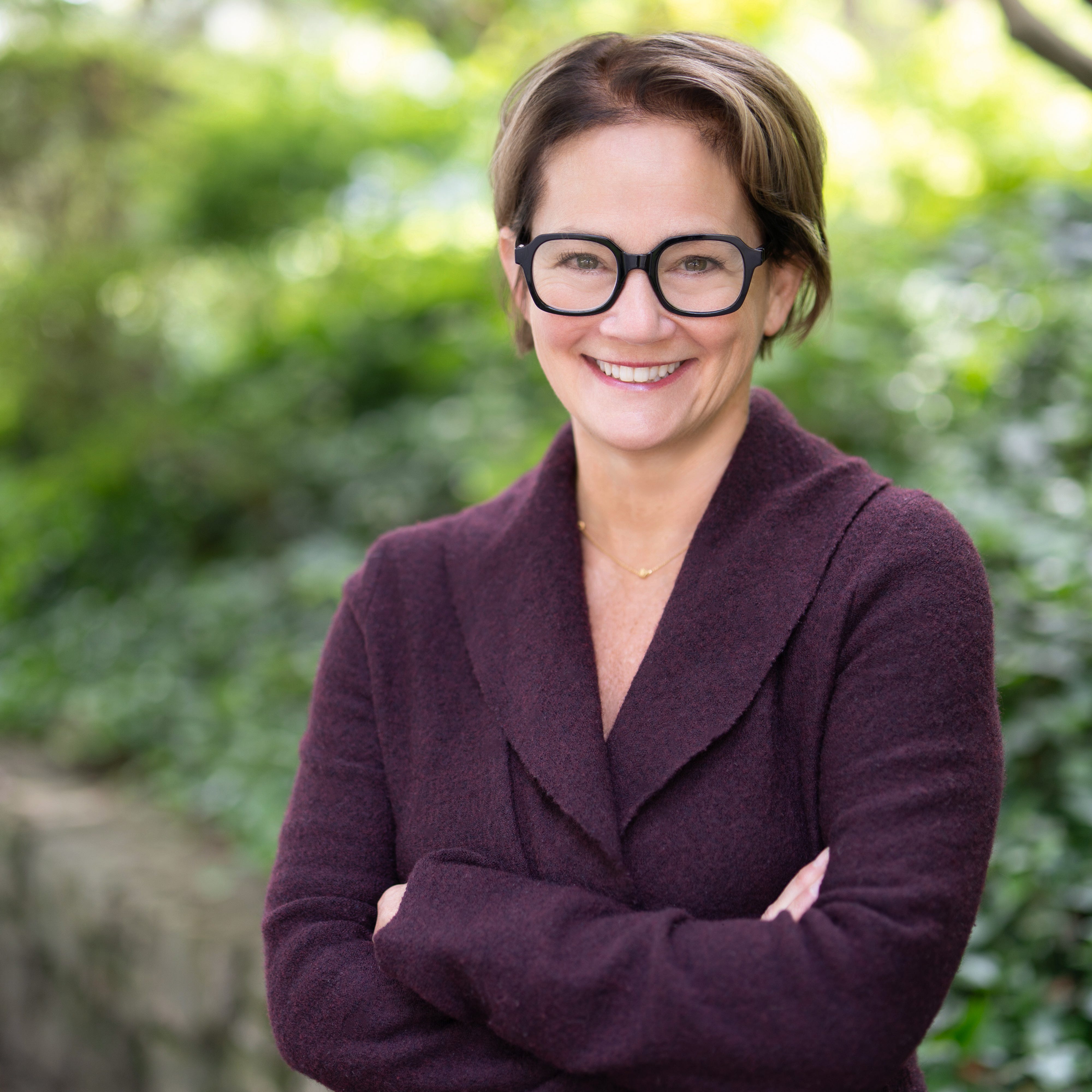
When Caroline Bicks was 12 she became a fan of William Shakespeare. Around the same time, she became a fan of Stephen King. Though the two are rarely lumped together, Bicks—who is an internationally-recognized Shakespeare scholar as well as the Stephen E. King Chair in Literature at the University of Maine—says she discovered how much the two had in common after a yearlong sabbatical spent researching five of King’s early novels. Thanks to her role at UMaine, she was given unprecedented access to King’s archives, and throughout the research process kept in touch with the author himself. What she discovered was that despite living centuries apart, the Bard and the King of Horror had more in common than one might think.
“Part of the pleasure of this project is I had a chance to talk to Stephen King as I went,” Bicks says. “He’s very supportive, I think because there hadn’t been people paying attention to how he writes—the actual language, his word choices—and he clearly cares so much about that. He hadn’t had a scholar come forward and want to do that kind of work. So when I got a chance to talk to him about word sounds, like the attention to the word ‘grit’ that I saw him pulling out as he was redrafting Pet Sematary—that’s a book all about digging things up and what comes out of the ground, and grittiness and grating and terrifying gravelly voices—he was like, ‘Yeah, I always think about how words clang on the reader’s ear.’ That was a revelation. That’s why Shakespeare’s poetry sticks in our heads, but I don’t think people think about how Stephen King’s words stick in our heads. They have that same lyrical sonic power.”
Bicks shares all that she learned during her year of research in her new book, Monsters in the Archives: My Year of Fear with Stephen King. Part-memoir, part-master class on the craft of writing, it’s a fascinating exploration into King’s process as well as Bicks’ relationship to his work. The book has already received acclaim from numerous sources, including King himself, who told his social media followers that it’s “the best book about my process that I have ever read.”
I recently spoke with Bicks about her year spent in the archives, shaping her research into a book, and how it felt to revisit King’s stories as an adult.
This content contains affiliate links. I am an affiliate of Bookshop.org and I will earn a commission if you click through and make a purchase.
SANDRA EBEJER: You were in your job for roughly four years when Stephen King called you to say hi. What was that moment like when you first heard from him?
It was crazy. I had been a King fan since I was 12 and I first read Night Shift. I took this job at UMaine. It’s an endowed chair. It comes with this great fund to support the public humanities, and they wanted a Shakespearean, so it was everything I’d been doing in my career plus. It was endowed in his name because he’s our most famous alum, but he didn’t endow it. I took the job and they were like, “You’re never going to meet him. Don’t even reach out to him.” So when he called me at home, I was like, “What?!” [Laughs]
We had a nice introductory conversation and then I reached out to him via email. I said, “Would you come talk to our students?” I do my homework. I know he cares a lot about Lisey’s Story. He’s said that’s the novel closest to his heart and I knew he was working on a streaming series of that. So I was like, “Would you come and talk to the students about adapting a novel that you love for the screen?” And he said sure. And I said, “How about also talking about On Writing, because that’s coming up on a big anniversary?” And he said sure. He said, “I’ll come for two days in a row.” I was completely flabbergasted, but I knew I had to keep it secret because he wouldn’t want upper administration or media involved, so I was carrying this secret with me for months organizing this visit.
He insisted on driving himself to campus. He gets out of his car, a totally unassuming sedan. I don’t even remember the color of it. He puts me immediately at ease and we just chat. He talks to the students. He was so generous with his time and loved talking to them. You can tell that he’s a teacher at heart.
Creative Reverberations is a reader-supported publication. Each interview takes many hours of work. To read all posts and support ad-free, independent journalism, please become a paid subscriber.
You’re a Shakespeare scholar and also a big fan of Stephen King. Do you find that there are similarities between their works?
Oh, yeah. Shakespeare’s always in my head, in part because I’m teaching and reading the plays, writing about them and thinking about them, and I do this podcast with Michelle Ephraim, Everyday Shakespeare, where we’re having fun with Shakespeare stories and thinking about how they relate to our everyday lives. So it wasn’t completely odd that I would start reading another writer and see echoes.
What I was most surprised by—and this came across day one when I started with Pet Sematary and got a chance to look at this remarkable manuscript they have in there—is the second-to-last draft of it with all of the copy editor’s sticky note questions to Steve and all of his handwritten responses. And what came through loud and clear was his attention to word sounds. The copy editor was like, “Is that really the word you meant?” He’s like, “Yep. That’s the word I meant. Say it out loud. You’ll see.” And he’s not talking down. He just wants to explain why he cares about that particular word sound. And of course, Shakespeare was writing to be heard. He’s writing for the stage or he’s writing lyric poetry, which has its origins in a spoken tradition. So that was the first surprise for me. It was like, “Oh, wow. He really cares about word sounds.”
Shakespeare’s work is held in high regard. Stephen King, not as much. There aren’t a lot of people who love both.
You know, there are a lot of Stephen King fans who know their Shakespeare and they appreciate it. But, to your point, I don’t think there are a lot of academics or Shakespeare scholars [who like King]. I think Stephen King fans have always understood; I think the Shakespeare scholars police the boundaries.
What would you say to those who snub their nose at King’s writing?
I would say Shakespeare was not taken seriously in his own time by academics. Both Shakespeare and Stephen King were writing for popular audiences. Shakespeare took a lot of flak from the university-trained writers of his day, who were calling him an upstart crow. There’s always been this association of popular writers with something that’s not elite and literary. That boundary has been in place, usually set up by people from a particular academic background who have a lot at stake in keeping those boundaries up to justify their own high literary standards. And the more I’ve leaned into this project, the more I see that those boundaries are completely false. When you’ve got a brilliant writer like Stephen King who’s so well read, who knows all of the writers and is referencing all of them in his writings, you can hear the echoes of them. He just straight-out references them. He knows his high elite literary readers.

The novels you cover in the book are ones you read as a teen, and you revisited them for this project. Did you find that the stories feel different now that you’re older?
This is part of what was driving this project for me, which is so unlike an academic project in some ways. Even though I was doing the same kind of close reading I do when I do my academic writing, it was important to me that I was coming into this with my scared little kid self and that I didn’t lose touch with the emotional reactions that I had to his books when I read them the first time. I really wanted to reconnect with them, even though that was sickening and scary at points, because I’m not drawn to horror books now. So going back and reading them again, in terms of what I was feeling in my body, felt the same. And that was a lesson in fear and horror. You process those emotions in the same parts in your body. That’s not going to change.
What does change is—and this is why these stories endure—yes, the monsters are terrifying, but it’s really about that way he has of being able to home in on those human fears of loss, whether you’re going to lose your child or your mommy or your ideals or your friend or your pet. These are fears we all will experience, and he knows how to capture that and make that the real core horror. Like “The Boogeyman,” which was that [Night Shift] story that had scared me so badly when I was 12. The first time I read it, I was feeling that fear of, “Something’s gonna come out of my closet and kill me.” And that story focuses on three small children who meet that fate. But as an adult talking to him about why he wrote that story, he told me it was because he had two small children and he was worried about crib death. So returning to that story as an adult now, of course it’s going to hit [differently]. I mean, I don’t think I’m ever going to lose touch with that core fear, but there’s another layer. Like, “What about my kid?”
Did you know all along that this was going to be a book? Or did you go into the archives thinking you were just going to explore?
I went in thinking I’m just going to explore. I had a sabbatical year. The Kings were very generous and said, “You can spend that year in the archives.” They hadn’t let anyone in there before for an extended period of time. And I was very clear about the parameters with them. I said, “I’m just going to look at these five books that scared me terribly when I was a teenager. I just want to understand why they’re still sticking in my head, and I want to see how you crafted those iconic moments.” I had no idea what I’d find, because you can’t actually know what’s in the archives until you’re there. It’s all digitized, but you have to go into the archives to have access to even the digitized copies of things. Even as I was doing the research, I wasn’t thinking, “Oh, this will be a really good chapter on this.” I really wanted to let the whole experience just happen.
And that was a first for me, because usually when I embark on this kind of research, I have a book in mind. That’s a very academic approach. “I need to write a book to get tenure or to make full professor.” I mean, I always care what I’m writing about or researching as an academic, but it has a goal that I’m trying to meet. This I had no goal. Part of what made it so pleasurable was I wasn’t putting pressure on myself to make this into something.
How did you go about crafting all of your research into a compelling story?
I was in the fortunate situation where I got a book contract with just one chapter. I had just written the Pet Sematary chapter, and I didn’t have a ton of myself in it in that first draft. I got to work with David Ebershoff at Hogarth, who’s an amazing editor, and he was the one who encouraged me. He said, “Bring more of your story in.” I had done first-person essay writing as a separate track from my academic work, but I didn’t imagine that I could put together my academic voice with my memoir voice. Once I gave myself permission to do that, it flowed really easily, because I could pick the parts from what I had discovered in the manuscripts that spoke to me in a personal way.
You know, it’s such a great question. It’s getting me thinking about how it’s also renewed my relationship to my academic work. Because we get taught as academics not to have emotions about what we study or what we write. That’s ridiculous! You write about what you love as an academic; you just aren’t allowed to say that you have a personal connection to it. [Laughs] But I’ve been writing about girls and women in Shakespeare my whole career because it matters to me as a female-identifying person that I want to write about these aspects of Shakespeare’s plays, and that’s fine. That’s still really great scholarship.
What surprised you the most as a result of this research?
There were surprises every step of the way. Again, because I was leaving myself open, I didn’t know what I would find. There were a lot of surprises as I was moving deeper into the research. It wasn’t until I was done that I realized I was moving backwards. I was starting with his most recent book, Pet Sematary, and ended with Carrie.
There’s so much that’s already known about Carrie. If you’re a King fan, you know that in the first draft of Carrie she’s an alien that sprouts horns, so I knew that. But when I actually saw it on the page, I was like, [gasps]. There was still something very shocking about it. I think because I read her when I was 13, I had a certain attachment to her, and she was the only teenage female character of his that I had read during that time. So to see her so alien was a shock. And then he’s drafted this, he’s redrafted it, he’s changed her into a more sympathetic character—I was reading all those drafts. That was fascinating.
Then I found that note from Bill Thompson, his editor, to the compositor and the copy editor, saying, “Note: locale has changed to Maine.” I had noticed that the first couple drafts were set in Boston. That was a very cool discovery, something that was surprising to me, because that’s his first novel. That’s the one that put Maine on the map for people all over the world. I don’t think there had been a writer that famous who had written a book based in Maine. So I was like, “Wait. This isn’t a Maine book?” That was a surprise, even though there were bigger, more shocking surprises, like the ending to The Shining that I found in the archives. It’s totally different. I won’t spoil it here, but that was shocking.
But this was shocking in another way because I was like, “Oh, she’s not a Maine girl.” That led to all kinds of great conversations with him about how he was thinking of her as an all-American girl. And that just got me thinking about why Carrie does have such staying power. Because this could happen anywhere in America, in any high school. It’s not a Maine story in the way that ’Salem’s Lot [is]. The conversation I had with him about ’Salem’s Lot and growing up in Durham, Maine, was really revelatory for me. I was like, “Oh, this is not a vampire novel. This is a novel about his love for his hometown.” That’s a Maine novel.
What do you want people to get from reading this book?
Two things. Obviously I’m hoping this casts light on what an intentional craftsman he is, just by showing those examples. I’m very grateful that he’s allowed me to publish manuscript page images, so that people can see it. I’m not making this up. So, I’m hoping that will be put to rest. This is someone who’s intentional about his writing process. On a bigger scale, I hope I’m contributing to a conversation that’s already out there among horror writers, that you can be a popular writer and a literary writer. You can be a brilliant craftsman, beautiful writer, and a writer of popular fiction all at once.
Also, one more layer is thinking about the purpose that horror serves. The way it helps us metabolize our very real fears, and that it doesn’t have to be a traumatizing experience to read it. In fact, it can actually help connect us to one another. That’s really come through more as I’ve been talking to people about the book, just seeing how it brings people together at a time when we’re all so siloed off from one another and from our own emotions. I think I’ve cried more talking to people about this book, and they’ve cried too. And that’s good! We need to get in touch with our feelings again. We’ve had a really crappy time as a planet, and we continue to have a crappy time. We need these stories, I think, more than ever.
There’s an acknowledgement in the book that we’re in a difficult time with books being challenged or banned throughout the country. Carrie, as you point out, is one of the most banned books in America’s schools. Having spent some time with King’s books, what do you think we lose when they’re taken away?
That’s a great question. I think about what impact those stories had on me the first time I read them as a kid. Even though that was a horrifying experience reading those books, it was also a way for me to metabolize my own anxieties. I was a really anxious kid. I think we lose a tool for metabolizing anxiety as kids. I think we also lose this ability to connect with one another through these stories that we’ve all read together.
The good news is he’s inspired so many great writers over the past 50 years and will continue to do so. They’re brilliant writers who are taking up the torch and are continuing to write, so we could ban his books and there will be other wonderful books. But I think we’re going to lose a lot of urtexts that influenced [his work]. It’d be like taking away Shakespeare. You want to take away Macbeth? That’s probably one of the earliest English language horror stories.
Are there any other authors who have had an impact on you?
I have so many core memories of reading particular writers’ prose. Like Virginia Woolf—I still remember To the Lighthouse. That just hit me, through both her prose and what she was saying. And Toni Morrison, Beloved—huge impact. I just taught that for the first time last semester in a course on American Ghost Stories, along with The Shining. Her works always hit me in a particular way because they’re so lyrical and painful and beautiful at the same time. [William] Faulkner, Flannery O’Connor, the Southern Gothic writers really hit me. I don’t know if it’s influenced how I write prose. I don’t think I’ll ever be as brilliant as any of them, but I appreciate how they’ve fed me.
What would you recommend as an entry point for a Stephen King or a Shakespearean work?
It depends on what your tolerance level is. I would never recommend Pet Sematary to someone who doesn’t like horror because that is probably the most horrifying book I’ve ever read. So if you’re someone who doesn’t like reading horror or are scared of it, I would say start with On Writing, his memoir of the craft. It’s just brilliant. If you feel like you’re ready to read some horror, I would say The Shining. That’s my favorite of his books, in part because of getting to talk to him about how he was thinking of a Shakespearean tragedy when he was writing it. I see all the layers, and I’ve come to appreciate that that is a book about intergenerational trauma in a way that is so powerful, much like the Shakespeare play he was thinking of. And yes, it’s horrifying. But I still think that’s the one that has the psychological layers that people will connect with in a way that you can metabolize. Because it is a more slow-moving book, you can close it. You can be like, “I’m gonna stop at that chapter.” Others of his books you have to just keep going, but The Shining actually allows you to [pause], because he was imagining a play.
If you’re not comfortable with Shakespeare or you think you’re not going to be able to understand it, watch a film or see a production. Don’t sit down and read a play. The Kenneth Branagh Hamlet is amazing. Any of the Macbeths that have come out recently are all brilliant in different ways. If you’re lucky enough to live somewhere where there is live theater, go see a production. I don’t think there’s one that’s like the gateway one. They all have their different wonderful qualities. Macbeth is probably the one that’s the tightest. Unlike The Shining, you can’t actually look away from that. [Laughs] You’re gonna have to just stick with it. There’s so many ways you could go in with Shakespeare.
To learn more about Caroline Bicks, visit her website.
To purchase Monsters in the Archives, click here.
This interview has been edited for clarity and length.
You might also enjoy…

