

CR 104: Catherine Adel West on Research, Writing, and Choreographing Fight Scenes
The author discusses her latest novel, “Strangers Behind Closed Doors,” and her newfound love for writing thrillers.

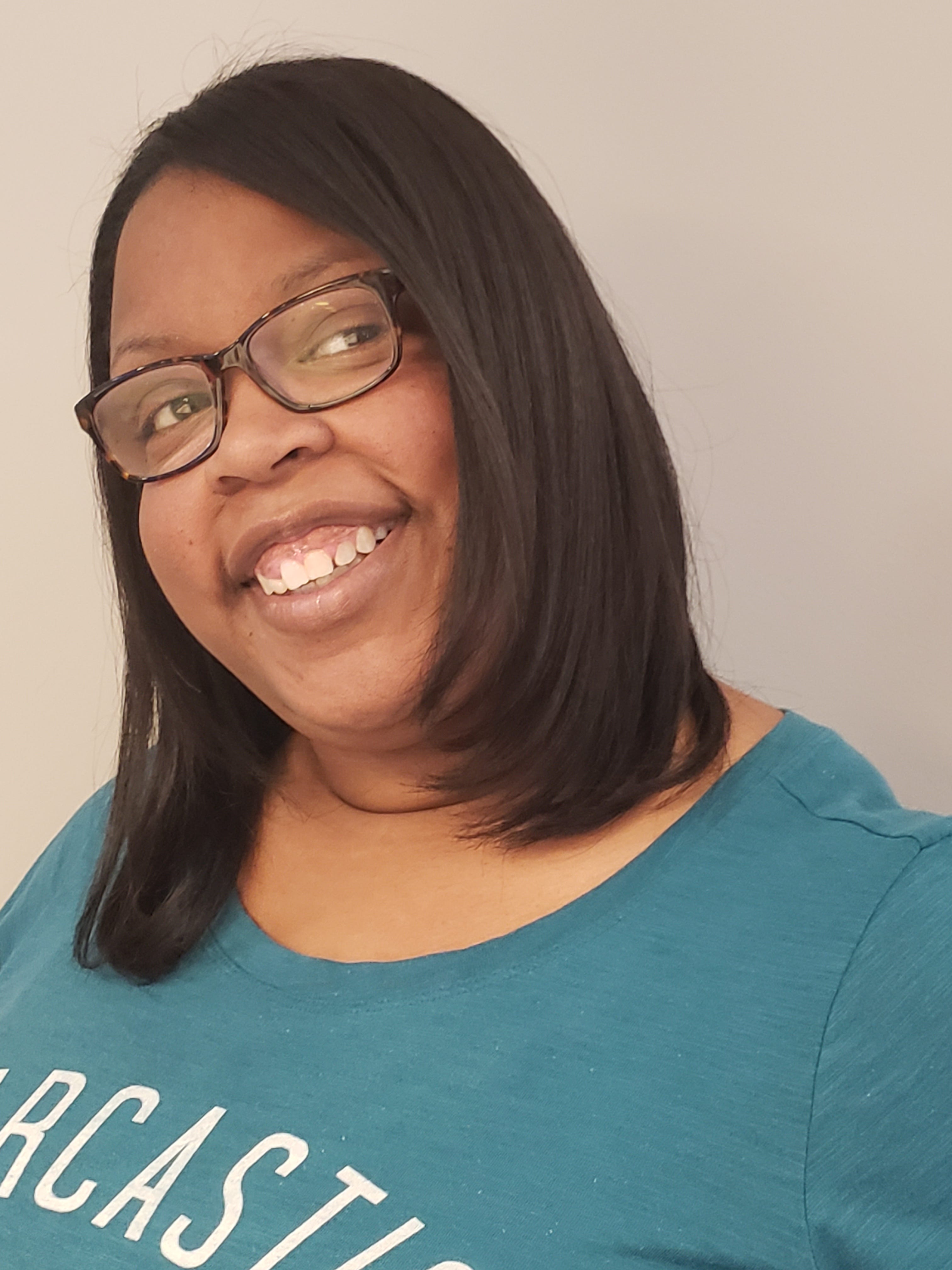
Though Catherine Adel West is fairly early into her career—her first book was published just six years ago—her work has already been called “keenly observant” (Publishers Weekly), “masterfully suspenseful” (Booklist), and “multilayered” (Kirkus). Her latest novel is Strangers Behind Closed Doors, a page-turning thriller in which a police detective, Redding Stark, works to uncover who is behind the recent disappearances of Black women in Chicago. The book, which is West’s first thriller, has already received significant praise and has been optioned for TV by Universal Television. And though she’s thrilled the book is getting such great recognition, West admits that seeing it through from inception to publication was an extraordinary amount of work.
“The first draft of the book was 122,410 words,” West says. “My editor, God bless her, was like, ‘Ummm, you think you can cut some words?’ I knew it was coming, because I basically wrote a book-and-a-half. I cut over 22,000 words. It was a lot. I keep saying this with each subsequent book, but I don’t think I’ve ever worked this hard. It paid off. But, oh God, the work that went in...”
The novel was written over the course of six months, primarily on nights and weekends, as West juggled her writing career and her full-time job as an editor at a financial services company. It was a long process, but one that she thoroughly enjoyed.
“I found that I really love to choreograph and write fight scenes,” West says. “I don’t know if I can go back to my contemporary fiction. Writing fight scenes is really cathartic. That’s what always happens when you’re writing a book. You learn something new about yourself.”
Over Zoom, West chatted with me about her writing process, her message to unpublished authors, and the physicality involved in writing her book.
This content contains affiliate links. I am an affiliate of Bookshop.org and I will earn a commission if you click through and make a purchase.
SANDRA EBEJER: You have a line in your bio that says, “I’ve always wanted to become a writer. I just didn’t know it until now.” When did you start writing? When did this become a career goal for you?
CATHERINE ADEL WEST: I have two degrees in journalism, a bachelor’s and a master’s. I always wrote [fiction], but it was a hobby. I never considered myself a writer until I was about 32. Looking back on it, it was a transformational moment. I just didn’t recognize it when it was happening. I was at a friend’s wedding, and I ran into an old college friend of mine. I was telling her how I just got back into writing short stories and I was giving her an idea for one, and she was like, “Oh, that would be a great book.” She had already written a book, and it was traditionally published. So I was like, “Oh yeah. It would make a great book! I’ve got two degrees in journalism. I can write a book. It’ll be so easy.” Girl... It was so hard.
I made the mistake everybody makes, just thinking about the images associated with writing and not the actions themselves. So I’m thinking of myself sipping coffee and typing on my laptop, and not the blood, sweat, and tears that it takes to write a book, plot a book, character development, research. You’d be amazed at the amount of research that goes into a book. I was even amazed. They taught us how to research at U of I [University of Illinois], and I’m still like, “This is a lot.” I’m reading articles, I’m reading books, I’m interviewing people, I’m going through documents. It’s crazy work to write a book. So, I didn’t know until I was 32 that this is something that I want to do for the rest of my life. Come hell or high water, this is something that I want to do.
Why did you decide to write a thriller?
My publisher asked if I wanted to pivot into a different genre. At first they were thinking something like Kennedy Ryan or Tia Williams, and I am not gifted like that. I cannot write romance to save my life. What I always wanted to do is write a thriller, but an action thriller, not a psychology “I’m going crazy” or “my husband isn’t who I thought he was” type thing. I wanted a more action-oriented, female-led crime thriller, and that’s how Strangers Behind Closed Doors came to be. Also, I wanted to talk about the issue of Black women, brown women, indigenous women, people who are not white, going missing, and nobody cares. So I decided to meld those two.
Creative Reverberations is a reader-supported publication. Each interview takes many hours of work. To read all posts and support ad-free, independent journalism, please become a paid subscriber.
To that end, this book is very much about the lack of media and police attention given to disappeared Black women. That is something that absolutely deserves to be written about, but you need to balance that with the storytelling. Was it a challenge at all to keep that theme throughout the book but not have it feel too heavy handed?
I didn’t care. I’m going to put this in your face, and you either deal with it and figure out how you’re part of the problem and how you can be part of the solution, or you don’t deal with it and say stuff like, “Well, I just didn’t identify with the characters.” People have absolutely valid criticisms of books, and I’m not discounting those, but we all know that some—I’m gonna just call a spade a spade—white people will close a book because it’s making them feel things that they’re just not comfortable with feeling, and I didn’t care about any of that. I just wrote the book and did the best I could. Did I try to balance it? I feel like I did, but again, I don’t care if I did or I didn’t. I just wanted to write about this social issue and twist it into this mystery, and it being a Black female-led book.
Well, the characters are great. I love the character Giovanni. You’d mentioned all the research you had to do. There’s a lot of police work in the book, but then there’s also Giovanni’s job as the chief concierge at an exclusive hotel. How did you go about researching these roles?
I read a couple of books about hotels and being a concierge. I interviewed a concierge at a five-star luxury resort. I also interviewed a Black [female] Chicago police detective. But I interviewed a concierge because I wouldn’t have known things like an R&R is really like what it’s described. It’s the turning over of a room. You’re only given 15 to 25 minutes to turn over each room. You only have so many housekeepers. You have back of house; you have front of house. All of these things I wouldn’t have learned had I not interviewed her. That’s how I got Gio’s technical aspects down.

Were there any authors or books or other works of art that really influenced or inspired you while you were working on this book?
Absolutely. S.A. Cosby is a fantastic crime writer, and I read all of his books. I really like Reacher. I love that show. I enjoy John Wick. It’s a combination of different media—books and TV and movies—and those are always my inspiration. Movies especially when I have to deal with fight scenes, because I need something visual.
Also, my mom. Both of my parents are Army veterans, but my mom taught me how to fight, and she can kick people’s ass, so I would run fight scenes past her, and she would tell me if this is feasible, if it’s not feasible. I also try to be creative with some of the instruments and tools that were used in the fight scenes, like the meat tenderizer. Because of course you’re gonna have guns and knives here and there, but what’s something different, you know? I was just going through different things. My Google search history on my laptop—I swore somebody was gonna come for me. But I was like, “Oh, meat tenderizer. That would hurt!” So yeah, just an amalgam of different things.
That was actually one of my questions. You shared on Instagram that your mom helped you choreograph the fight scenes. And I will say, when I was reading some of these fight scenes, I was struck by how detailed they are. You really get into the specifics of what punch lands where. How did you bring all of that together?
I’m so happy I live alone sometimes. I would physically work out how things would go. So I would stand up and I would throw a [punch] and then stand on the opposite side, and be like, “Okay, if it’s left-handed, it’s gonna hit the right [side of my] face. If it’s right, it’s gonna hit the left side of my face. If I hit the stomach, then how will that look?” So I’d work all of that out, and then I’d read it to my mom, and my mom would give me further pointers. And again, I read a lot of books, so I was reading a lot of fight scenes. But the thing is, these are fight scenes [primarily] between men. I’m sure they’re out there, but I can’t think of any books where it’s a woman fighting a man or a woman fighting another woman. And I mean fighting. I don’t mean hair pulling, windmilling. I mean duking it out.
So reading a lot of books, physically acting it out, and then running it past my mom. Because women, we hold our bodies different, we fight different, and I needed to make it as plausible as possible. That’s why I was trying to be so detail-oriented about what punch would land where, and then how you’re physically going to be feeling. Because you need to know that if Giovanni gets hit in the face, she’s dazed. It’s not like, “I got hit in the face and I’m a superhero, so I’m just going to keep fighting.” I felt like I needed to encompass all of the senses because then it made it more realistic.
There are some twists that happen in the book. Did you plot them out in advance? Are you a plotter or a pantser?
I am a reformed pantser, and I was reformed against my will. You have to write whole book outlines for your publisher, so I had no choice. With Saving Ruby King, I pantsed. I jokingly say that’s why it took me five years to write. Because I pantsed and it’s my first book, and I didn’t know what the hell I was doing. But The Two Lives of Sara, which is my sophomore novel, took me five months, and Strangers Behind Closed Doors took me six months. So outlining drastically reduces how long it takes for me to write the book.
Was there anything you learned from the publication of your first two novels that you used in the writing of this one?
I tried to make sure to adjust my pacing, so it’s more of a page turner. I learned to shorten my chapters, how to end on a very important question. These are the things that I had to learn from my first two books. I also learned that I love incorporating references to movies and music and television shows, but how to do that in a decent way, so that it’s not distracting. Just little odds and ends that I’m going to take with me into all my other books going forward.
I love when authors write about their hometown, warts and all. You’re a native of Chicago and that city is almost like its own character in the book. What is it about the city that makes you want to write about it so extensively?
Because I grew up there. I was born and raised on the South Side. And it gets such a bad rap sometimes from the ogre in charge. You know, the person who’s in Washington now. And it really pisses me off. How are you going to talk about a city that you don’t know? All you’re seeing is what you want to see, which is the ugly. You don’t see the great. You don’t know anything about it. I have a chip on my shoulder about it, so I try to do any and everything I can to show all of the city—its grit, but also its beauty and its glory, and the people and the food and the little intricacies you don’t know about if you don’t live here. I just need to make my city a character. I feel like it’s some holy mission on my part to show Chicago.
You do a really great job promoting your book on social media. Writers aren’t always known for loving the promotional aspect of the job. How do you feel about it? Do you enjoy the social media experience?
I enjoy it. I’ve always been super social. I know that there are some authors who are like, “Ugh, no.” And I get it because writing takes a lot out of you, and then you also have to put yourself in the spotlight and be like, “Hey! Buy my book!” And how do you do that and not seem hokey with it? But I’ve just always been really extroverted. I love talking about me, so I love talking about the book. I’m just going to find entertaining and different ways to do it. it’s one of the more fun parts of my job. I enjoy it.
What do you want people to get from reading this book, other than simply be entertained?
I want people to see where they fall within a racial system that was and that is regulated to continue to oppress people who are not white and Christian. I want you to see where you fall in that category, and if you’re not satisfied with where you fall in that category, freaking do something about it. Okay? Read a book; search out knowledge. Do not pull every Black woman or man you see and ask us a whole bunch. Do your own research, please, because we’re not here to educate you like that. Let me just say, I can and I will if I must, but I’m not the representative of my people. We’re not a monolith. So I want people to get out there, do their research, see where they fall, and make steps to just do better. That’s it.
You’ve been open about your frustration that the publishing industry doesn’t give enough marketing support to Black authors or books with predominantly Black characters. With that in mind, what advice would you have for aspiring Black authors who want to publish novels and have their work be seen but feel like there’s no way their books will reach audiences without the support?
Don’t do it for the acclaim; do it for you. Do it because you have something important to say and everything else will follow. Because we need our stories out there. And I don’t like to say “aspiring” authors. If you write, you’re an author. I don’t want any authors out there who haven’t yet been published to feel like this is a deterrent. Figure out what’s going to work for you, but don’t not get your story published. The disparity is so unnerving and it’s really irksome, unless you happen to hit it big. But if you don’t, you’re relegated to smaller things, and it’s frustrating. It’s frustrating for me in a lot of respects, but I am going to keep pushing and keep doing what I need to do, because our stories are important, they’re relevant, they speak to the history, the present, and the future of this country, of the world at large. You’re too important to not want to get your story out there.
To learn more about Catherine Adel West, visit her website.
To purchase Strangers Behind Closed Doors, click here.
This interview has been edited for clarity and length.
You might also enjoy…

