


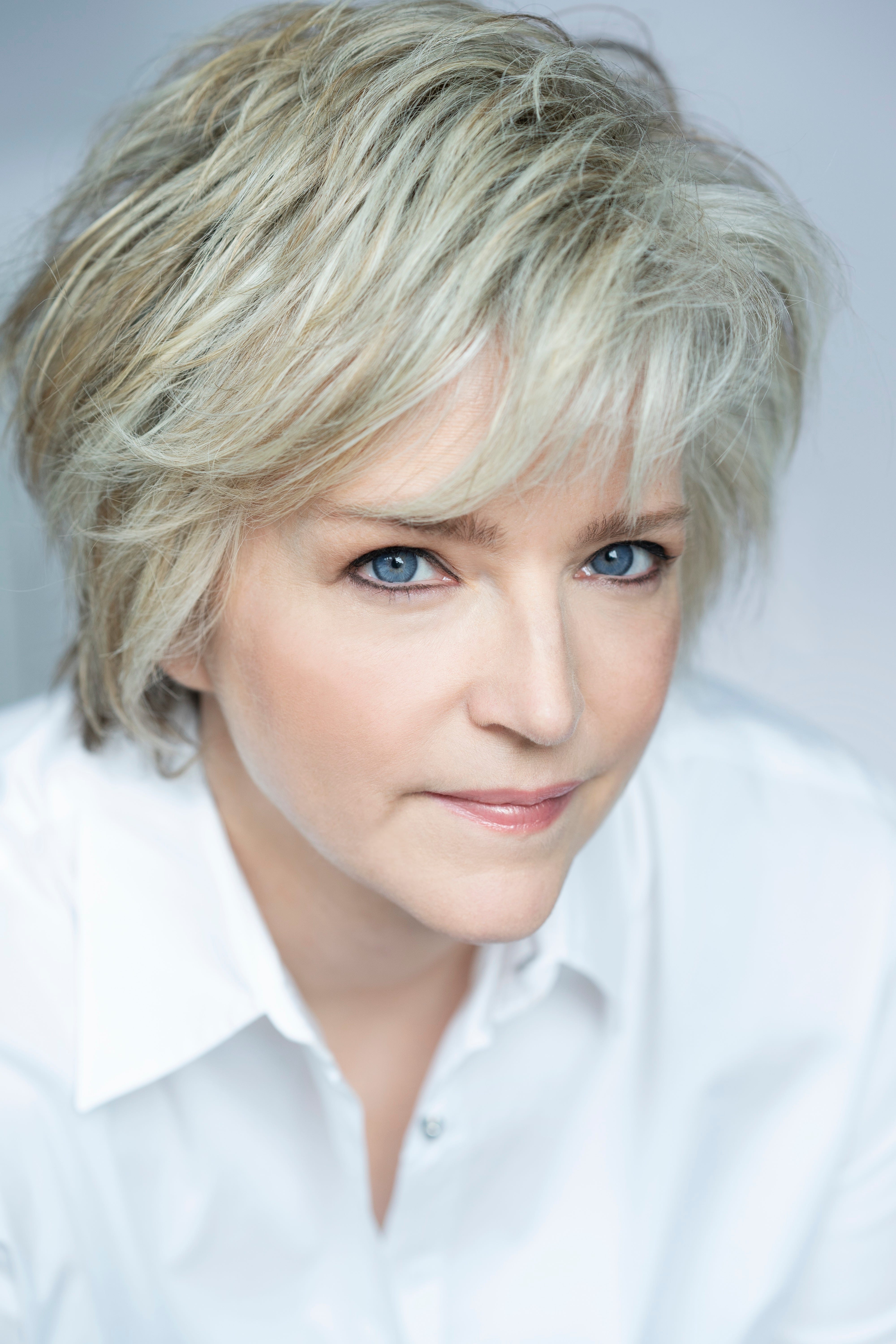
Few authors are as prolific as Karin Slaughter, who has published one novel a year, many of them instant New York Times bestsellers, since 2001. Her books have been published in 120 countries, selling more than 40 million copies worldwide, and her 2018 novel, Pieces of Her, was adapted into a Netflix series starring Toni Collette.
But it’s her Will Trent titles that generate the most interest. Since 2006, Slaughter has penned 12 novels featuring Georgia Bureau of Investigation special agent Will Trent and his partner, Faith Mitchell, as they track down criminals and solve cases while confronting past traumas and navigating complicated personal relationships. The books have since been adapted into a hugely successful multi-platform series airing on ABC and Hulu.
In her latest novel, This is Why We Lied, Trent and his new bride, medical examiner Sara Linton, head to a secluded lodge to celebrate their recent nuptials. But their blissful honeymoon goes awry when the lodge manager is murdered, and they quickly learn that nearly every guest at the site has a motive. The book then travels back and forth in time, taking the reader along on a riveting mystery.
When I chatted with Slaughter, she shared that coming up with the idea for the book was easy; it was the story’s off-the-grid setting that made writing it a fun challenge.
“The idea isn’t the hard part,” she says. “I mean, somebody gave you the idea to interview me. But figuring out, ‘Well, I talked to her last year. What are some new things I can say? What’s my entry point into this story?’ For This is Why We Lied, I’ve got two people who are incredibly happy—that’s great if it’s the end of the book, but it’s at the beginning. And I’ve got to have a murder, right? I’ve got to let people know the murder happened, and then I’m going to wind back the clock a bit, and I’m going to present all the suspects. And you’re going to have to pay attention to the clues in the midst of this happiness because they don’t know what’s coming, but you do. That puzzle of figuring out how to do that within the context of a locked-room mystery was really exciting to me.”
Over Zoom, Slaughter and I discussed her writing process, the importance of research, and how she creates memorable secondary characters.
This content contains affiliate links. I am an affiliate of Bookshop.org and I will earn a commission if you click through and make a purchase.
SANDRA EBEJER: Given that you publish a book a year, what’s your timeline? How far in advance are you thinking about the story, and how much time is spent actually writing versus just coming up with ideas?
KARIN SLAUGHTER: Generally the back part of my year is crunch time. The physical writing is about four to six months, depending on the story. But you’re right about thinking about it, because this book, This is Why We Lied, I got the idea for when I was writing The Silent Wife, which was several books ago. Usually at any given time, I’ve got a lot of different story ideas in my head, [and I’m] trying to figure out: I’m going to spend at least a year of my life with this story, so is this the one I’m passionate about right now? That’s how it’s always worked.
That’s a good segue to my next question. You did an Instagram post where you said a future story for Will and Sara has been set up really well in This is Why We Lied. So I have two questions: How do you keep track from one book to the next so that you can remember all the little details about the characters and the story? And two, do you intentionally plant the seed for future stories when you’re writing a novel?
Well, as I’ve gotten older, it’s harder to do this because I forget. [Laughs] But from the very beginning, with the first book I wrote, Blindsighted, I had ideas for two more books. And that’s generally been my process. As I’m writing a book, I usually have an idea for the next one. Like when I was writing This is Why We Lied, I was like, “Huh. I’ve got this great story that’s more Faith-centric that I’d like to write.” Because I kind of switch. One time it’s about Sara, this one’s clearly about Will. And so I was thinking about this future Faith story in a way that let me lay down some foundational things in this book for that next story that nobody will really notice unless they read all the books back-to-back, which some people do. They’re like, “What? I just read all 3 million books before this one, so I could be ready.” It’s such a compliment that people would do that, but I want to make sure that they’re going to be like, “I remember this from This is Why We Lied.” So yeah, those clues are very deliberate. It’s a way of saying to longtime readers, “Hey, I see you. Thank you” that new readers won’t even notice. I’m conscious of those two different types of readers.

You’ve written about Will, Sara, and Faith for so long. Do you have an end in mind for the series? Or are you just going to write about them until you die?
I think until I die. I killed a character many years ago and I still get hate mail for it. [Readers are] unforgiving. It’s been almost 20 years and they’re like, “We’ll never forgive you.” So yeah, I do see more stories. I don’t want to just write Will Trent stories because people want Will Trent stories, though. I have the idea for the next Will Trent, but the one I’m working on right now is a standalone for next year. I think it’s important to do that. I think taking a step out from it, coming back to it, refreshed and interested, is important. If I’m going to spend a year, at least, of my life working on this story, it needs to be something I feel really interested in and passionate about.
Creative Reverberations is a reader-supported publication. Each interview takes many hours of work. To read all posts and support ad-free, independent journalism, please become a paid subscriber.
I want to ask about the world of this book. As you mentioned, it’s a locked-room style thriller, and in the beginning of the book there’s a map of the property. How much time did you spend developing the world that the characters inhabit in the novel?
My editor would say too much time, because I was so focused on that map. I had so much fun coming up with it. I referenced a lot of old Girl Scout maps from the ‘70s, just trying to figure out the topography. The hard part was, it was very fungible as I was writing. So I’m like, “Wait, I need this cottage to be here, so I can move it.” But once I had delivered the book and it was in copyedit, then I had to give the map to the copy editor. And she’s like, “This is not where it should be. You can change the map, or you can change the copy.” So I had to look at each one—fortunately, there were only a couple of instances—and decide, am I going to bother the guy who did the map, because this needs to move a quarter of an inch? Or am I going to [rewrite]? In the Netherlands, they did a colorized version of the map that’s really cool.
Your books have several well-written secondary characters. I could read an entire series just about the victim, Mercy. How much time do you spend fleshing out new characters for each book? Do you have character bibles?
I don’t have bibles. But every character, no matter how much time they get on the page, has a story in my mind. They have something about them that makes them memorable. I think on a very practical level, if you’re writing a thriller, you need to do that, because everyone should be a suspect. If you write every character as fully developed, then the reader is going to have a harder time figuring out who the bad person is. So even a secondary character is going to have some kind of story and some kind of life.
Part of the reason Mercy gets so much of the story [in This is Why We Lied] is because I didn’t want her to be the dead woman in a book. I wanted her to have a real life and a real story. And part of her message is, “I want somebody to know that I existed.” Because we do let these women get lost. They’re framed through the man who attacked them or the man who killed them, and they’re not really people, they’re victims. We have all kinds of criteria for whether or not we’ll feel sorry for them. Nobody says, “This guy was murdered. What was he wearing? What kind of person was he?” You instantly feel sorry for the murdered guy. But with women, there’s all these value judgments and social judgments we put on them.
And Mercy is a complicated person. She’s funny. She has a dark sense of humor. Sometimes you’re like, “Jesus, why are you putting up with this?” But, as the book goes on, you start to understand how her life has affected her choices and how insular and limited her choices were even within that life. That felt very important to me because she does matter. Victims do matter. And whether or not they’re sexually promiscuous, in our opinion, or they like to drink or whatever, that doesn’t take away from the fact that they have people who love them, and they exist in the world, just like we do. And they deserve respect for that.
When I began reading your novels, I had a specific idea in my mind of how Will, Sara, and Faith look and sound. So when I first saw a trailer for the Will Trent TV series I was surprised because the characters didn’t look or sound as I envisioned them. As the creator of these characters, how is it for you to see your work adapted? Is it jarring for you at all?
Not really. The fact that the cast of Will Trent looks differently from how I write them [doesn’t matter]. Because Iantha [Richardson] is fantastic as Faith. I mean, she’s just got that attitude nailed. But Faith describes herself as being like the color of Elmer’s glue, so there’s a very big difference in descriptions. Ramón, though he is a very, very sexy man, is not six-three and Scandinavian looking. In many ways, it helps me write the books by not seeing them physically. And I always say the books are the books, the show is the show, but they’ve so captured the essence of the characters, particularly Ramón. I mean, he really understands who Will is and what drives him and his sense of right and wrong and the fact that he listens to and respects women—the little things that make him interesting. Ramón is all those things and has done such a great job. So I’m really happy because he could look like a Scandinavian guy and be a total asshole and not understand the character. I’d much rather have Ramón who understands him and gets what I’m trying to do.
This is Why We Lied references several literary works: Agatha Christie’s And Then There Were None, Shirley Jackson’s “The Lottery,” and Stephen King’s “Children of the Corn,” among others. Who are some of your biggest influences as a writer?
My biggest influence would be Flannery O’Connor, a fellow Georgian. I was this very strange little girl in a small southern town who liked dark stories and would laugh about things no one else laughed about. I was told I was weird, and I needed to tone down my personality. And, “Oh, you’re never going to get married.” Phew! Because I don’t want to. And, “You can’t be funnier than the guy.” You know, all the stupid, horrible messages girls get. Then a librarian gave me Flannery O’Connor’s collected short stories. And I was like, “Oh my God, she’s really strange. She grew up in a small southern town, people were constantly telling her to tone it down.” I mean, she was in the newspaper when she was a little girl because she taught her chicken how to walk backward. It was really eye opening, because I thought, “Wow. This is what I want to do, and this is what she did.” I mean, representation matters on every level, and to have that in my life was really inspirational. It made me think it’s possible to be a writer.
That’s awesome. I noticed there’s a Spotify playlist for Will and Sara’s wedding. Do you write to music?
No, I don’t. I can’t. I have to have silence. I don’t even have my cat with me. I have a cabin in North Georgia, and I go up there, completely sequestered. It’s just me and the trees outside the window. I’m so easily distracted by other things that I can’t have noise.
You were kind enough during our interview last year to give some advice to aspiring authors, but I have a follow up question to that. I know you do a lot of research on medical jargon for your novels. What advice would you have for authors about research? How do you know when to research something versus just make it up? And how do you know when you can stop researching? Because a writer could easily spend eons just focusing on that.
Yes, I still would love to go back to that map. Here’s the best advice: I get a lot of people who come up to me at my signings, and they’re like, “You wrote about tumors on the metacarpal blah-blah-blah and that is my specialty. I’m a world specialist. So if it comes up again, I’m here to help you.” And that’s great. But you need the person who can articulate what their specialty is that makes sense to you that you can then take and fictionalize.
There’s a medical doctor, David Harper—he was a professor, he’s married to a pediatrician, his brother works at a body farm, so he’s the perfect guy. He can explain things to me in a way that makes sense. I can take what he says, and I can make it interesting on the page and make it feel authentic without deep diving into a lot of stuff that is not necessary. And he understands that. It’s a very collaborative relationship. Very early on, I had other people who tried to help me, and I would say, “Okay, what if this happens?” And they’d be like, “That would never happen.” I’d be like, “What if it does?” “No, it would never happen.” And David is like, “Well, that would never happen. But if it did, this is what you would do.” He does give that level of authenticity to Sara that I think readers appreciate.
The last part of your question was, when do you decide you need to stop? With David, I’ve learned to get to that moment in the book where the medical thing is going to happen and write it in a skeletal sense. Then ask him, “This is the scenario. Where would you be stabbed in this part of your body where you can still solve a crime but it kind of hurts?” I’ve learned to not take those big swings at, “Now I’m going to give someone an appendectomy and I have to Google which side it’s on first.” It is knowing your limitations. But the hard part is not getting the information, it’s distilling it into something that keeps the story moving, is interesting, feels authentic—so that you know someone who’s a healthcare practitioner wouldn’t be like, “Are you kidding me?”—and keep the story moving. That’s the difficult part. Because you can find all kinds of information, but being able to interpret it is the thing that makes you a writer.
Do you ever get writer’s block?
I don’t think so. I’ve never been to a point where I’m like, “I’m never going to write again. What’s wrong with me? I’m going to jump off a cliff.” I’ve learned over the years if something’s not working, that’s my brain saying stop and go do something else. Take a shower, go on the treadmill, do something else other than this. And then my brain usually relaxes and figures it out.
You’ve had so much success as an author, you’ve written many incredible books, and you’ve done great work through Save the Libraries. Looking back on your career so far, what has been the most rewarding aspect of your career overall?
Being able to do what I’m doing. To be at this point in my career, and still able to write the books I want to write and tell the stories I want to tell and no one’s telling me, “You need to write a Will Trent because there’s a TV show.” They’re saying, “Write the book you want to write.” I mean, that is such a gift to have that kind of support from my publishers and from my readers who are patient enough to say, “I want a new Will Trent, but I’ll wait because this one’s really good, too.”
To learn more about Karin Slaughter, visit her website.
To purchase This is Why We Lied, click here.
This interview has been edited for clarity and length.
You might also enjoy…

