

CR 073: Cinematographer Nicholas Kraus on the Art of Capturing Unscripted Moments
The Emmy Award-winning DP discusses his work on the high-profile documentaries “Bad Influence” and “The Alabama Solution.”

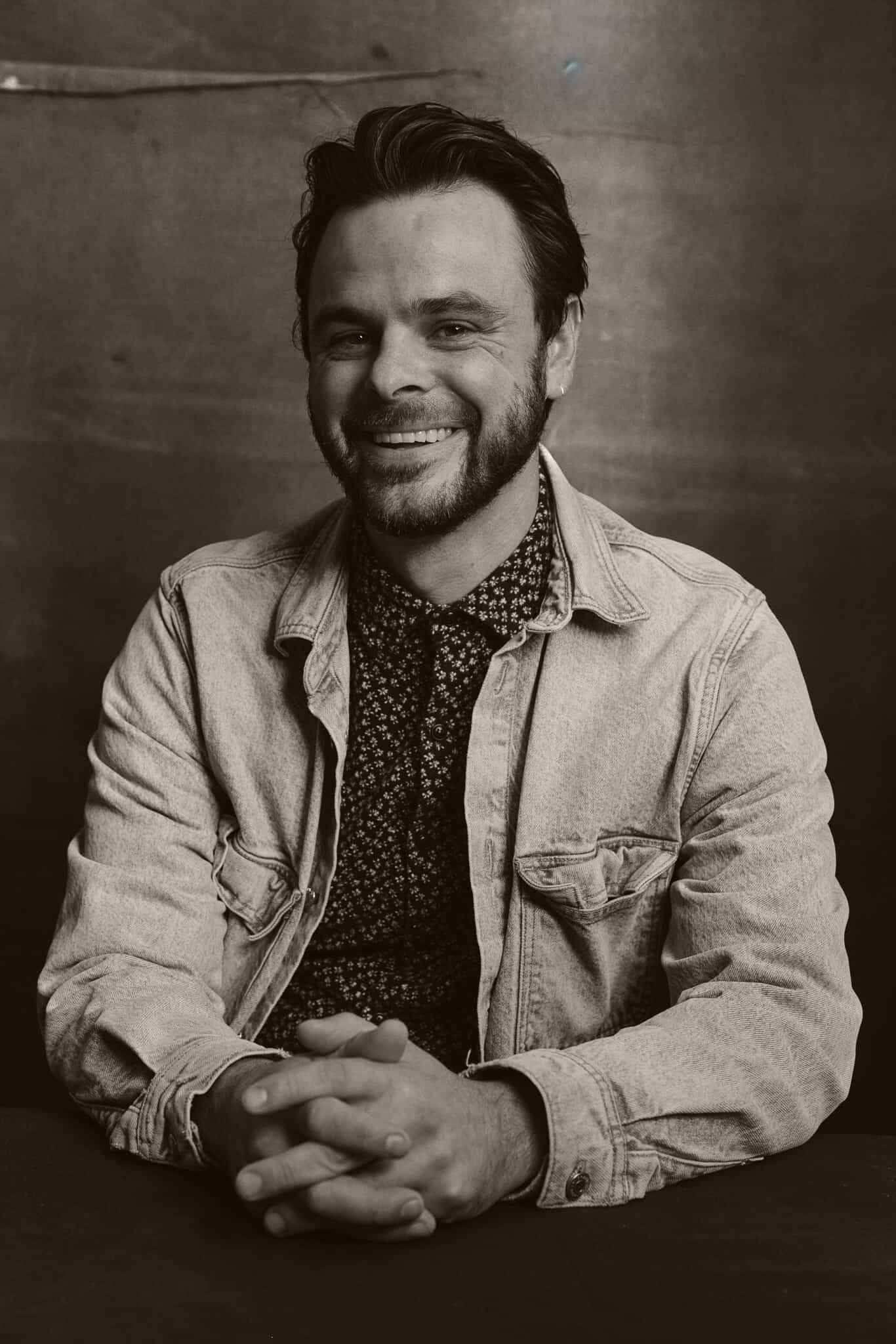
Nicholas Kraus has shot everything from music videos and short films to television series and investigative longform documentaries. A graduate of Columbia University, Kraus spent three years as the in-house cinematographer for VICE News Tonight and in 2021 won an Emmy Award for Outstanding Cinematography in a Documentary for his work on Showtime’s The Trade. This year, his versatility was on full display with the release of two highly publicized and wildly different projects: the Netflix kidfluencer tragedy Bad Influence and HBO’s The Alabama Solution, an exposé of corruption and abuse inside Alabama’s prison system.
Though the two films are entirely separate projects, Kraus admits that it’s interesting to discuss them in tandem. “They are similar in that injustices and potentially illegal things are happening,” he says. “And in both, the camera is searching and uncovering.”
Over a recent Zoom call, Kraus discussed the disparate visual language of the two films, how he puts documentary subjects at ease, and what he loves most about his work.
Creative Reverberations is a reader-supported publication. Each interview takes many hours of work. To read all posts and support ad-free, independent journalism, please become a paid subscriber.
SANDRA EBEJER: According to your bio, you have a degree in socio-cultural anthropology. How did that transition into a career as a cinematographer?
NICHOLAS KRAUS: Really, really well. It more squarely fits for a documentary cinematographer versus a narrative or commercial cinematographer. As part of the anthropology degree, we read a lot of ethnographies. Then when I started working on documentaries, there was a part of me that was like, what is a documentary but a visual ethnography that has perhaps a bit more focus on the entertainment? [With] many documentaries, a primary aim is to look at an element of society or culture or the economy or the political sphere and investigate it, ask questions, try to answer them, and add to a conversation that is already happening. I thought that was so cool. It was like the camera becomes the pen.
What made you decide to pick up the camera to begin with? Were you interested in cinematography when you went to college?
The first time I picked up a camera was in high school when I made an autobiographical documentary about myself and my experience with ADHD and ADD. And then in college, as I was studying anthropology, I kept messing around with the camera. It just felt like my most natural tool for exploring different topics. For whatever reason, perhaps fear, I was hesitant to choose it as a career path. It wasn’t until I was working as an editor and producer at an agency on brand campaigns—and as part of my job, I would be working with cinematographers—that I thought to myself, “That’s what I want to do. How do I do what that person’s doing?” And at some point, you’ve just got to go for it. So I quit that job and started calling myself a cinematographer.
Each of the projects you’ve worked on is so different. What is the process when you take on a project? How do you determine what the look of the film will be?
It’s contingent upon the director, because different directors will come in with different levels of preconceptions of how they want it to look. Some directors are naturally more visual than others. Another contingency is the level of risk that a director is comfortable with in terms of the visuals. But essentially, what happens is you ideate with the director, and you pitch the director on various looks. And in order to do that, you must immerse yourself in the [subject matter]. So you’re having a series of conversations with the director. You’re doing your research, you’re reading about it, you’re watching the references that you and the director have been talking about, and you’re trying to [decide], based on what I know, what look and what visual elements of a film and a series do I think not only fits the subject matter, but can advance the story? And sometimes you pitch three ideas and they like one, and you go with that.
The Alabama Solution kicks off with a barbecue at a prison. The prisoners seem to be having a great time, but off camera they begin to share horrific stories of incidents happening inside the prison’s walls, which is what leads to the investigative nature of the film. There is no script, so the story could go in a million different ways at any given moment. I’m curious when you came onto that project specifically, and if the visuals of it changed at all as a result of those prisoners’ stories.
I was there pretty much from the beginning. I shot that scene, and that is a really good example of how malleable [you have to be]. You have to be willing to improvise. That was a verité scene, where we were entering into an environment where not only do we not have any control, we had no idea what was going to happen and how people would react. In advance of something like that, I’ll have had many, many conversations [with the director]. Me, Andrew [Jarecki, director] and Charlotte [Kaufman, director] have shot together, so I understand the visual language they like. You take that framework and then you apply it to the scenarios that unfold in front of the camera.
I can talk about that scene, but I think your question actually was about how the look evolved over the entire show. Really the biggest evolution was over the course of years of investigating they came into contact with the film’s two protagonists, and they decided that those voices should really be foregrounded when telling this story. It was a two-part decision. One, we couldn’t physically be in the prison with them. They were in solitary confinement. And two, it is so powerful to see their own cell phone footage. It feels so compelling and raw and poignant. I think it was the best tool to tell that story. And so, yeah, it was a decision that was made over the course of years, really. I mean, we shot for seven years, so a lot is on the cutting room floor, but that’s how great documentaries are made.
It’s interesting that these two specific projects came out most recently. You have The Alabama Solution, which is visually dark and bleak. And then you have Bad Influence, which is all kids and color and brightness. In The Alabama Solution, you weren’t allowed into the prison, whereas you were invited into the kids’ homes with Bad Influence. Given how different they are, how did you decide how each film would look?
The circumstances within the prison system are much more dire in many ways than they are within the world of social media creation. Although sexual abuse is certainly very, very grave and very serious, it feels like there’s more hope. There’s more hope with the storyline with Bad Influence, [whereas] there’s more urgency in a lot of ways with the incarceration system, because that’s a matter of life or death. They both are a story about the victims taking control of their own narrative, but with Bad Influence, those kids, with the exception of Piper, are now outside. They’ve escaped from the immediate danger, so to speak. And so there’s hope and resilience and perseverance. Part of the whole reason of them telling the story is to set an example for other kids interested in entering into that world. And that influenced a lot of our decisions to make it brighter and more vibrant and to have sunlight in a lot of the scenes. It’s still a scary story, but there’s a little more hope involved.
When you shoot a film, are you at all involved in the post-production process? Do you have any say in the footage that is used or do you have to just accept whatever decisions are made?
Again, it’s very dependent upon the director. My closest collaborators will oftentimes send me cuts along the way for me to submit notes and feedback. And most of my notes are centered around the visuals of it. Because I shot everything, I can weigh in. “This shot might be nice here” or “Can you extend this out a little bit more? Because I know something happened in that time.” Oftentimes, other than perhaps the editor, I know the footage better than anyone on the team, so I think it is a good idea to have more conversations encouraged between me and the editor. It just depends on the director, but I love it when it happens, and I’m very happy to take part in the post-production process.
In working on these or any other projects, do you turn to other films or works of art in order to gain inspiration?
Ideally, inspiration comes from anywhere. It comes from other films, photography, walking around your neighborhood, conversations. I think cinematographers, either figuratively or in actuality, have banks of images that feature different kinds of looks. And it’s like drawing from your pool of everything you’ve seen that you’ve liked in your life. You’re pulling together and collaging it in your mind to come up with this new look that’s suited to the project.
When you watch something just for the pure enjoyment of watching it, whether it’s a television show or movie, do you find yourself watching more as a cinematographer, or are you able to actually just enjoy it without dissecting every shot?
It’s hard to do that. If I’m watching something and I like the cinematography, I’ve got to watch it a second time. Because I’m so focused on being filled up by the images that I’m seeing and wondering how they did it and thinking about how they did it, and I’m connecting it to other things I’ve seen. So I do miss some of the story that happens, especially if it’s a foreign film and there are subtitles. I’ve got to watch that again.
Being on camera can be incredibly stressful, especially if the subject is sharing deeply personal information. Is there anything that you do as the DP in order to make sure they feel comfortable and at ease?
Definitely. I mean, in documentary, oftentimes the work you do off camera is just as important as the work you do on camera. Documentary cinematographers have to have a couple of skill sets. You have to have the ability to go into a room and take in the environment and ascertain which visual elements you should subtract or add or work with. But you’re also taking in the emotional environment of the room, the emotional undercurrent that’s happening within your characters, and you have to meet them where they are. And everyone’s different. There are some that are introverted; there are some that are extroverted. There are some that are humorous; there are others that are sad. And I want to try to match that energy. So sometimes it requires being just a sounding board and listening and being present and giving them their space. Other times it’s a more active encouragement or support or attentiveness.
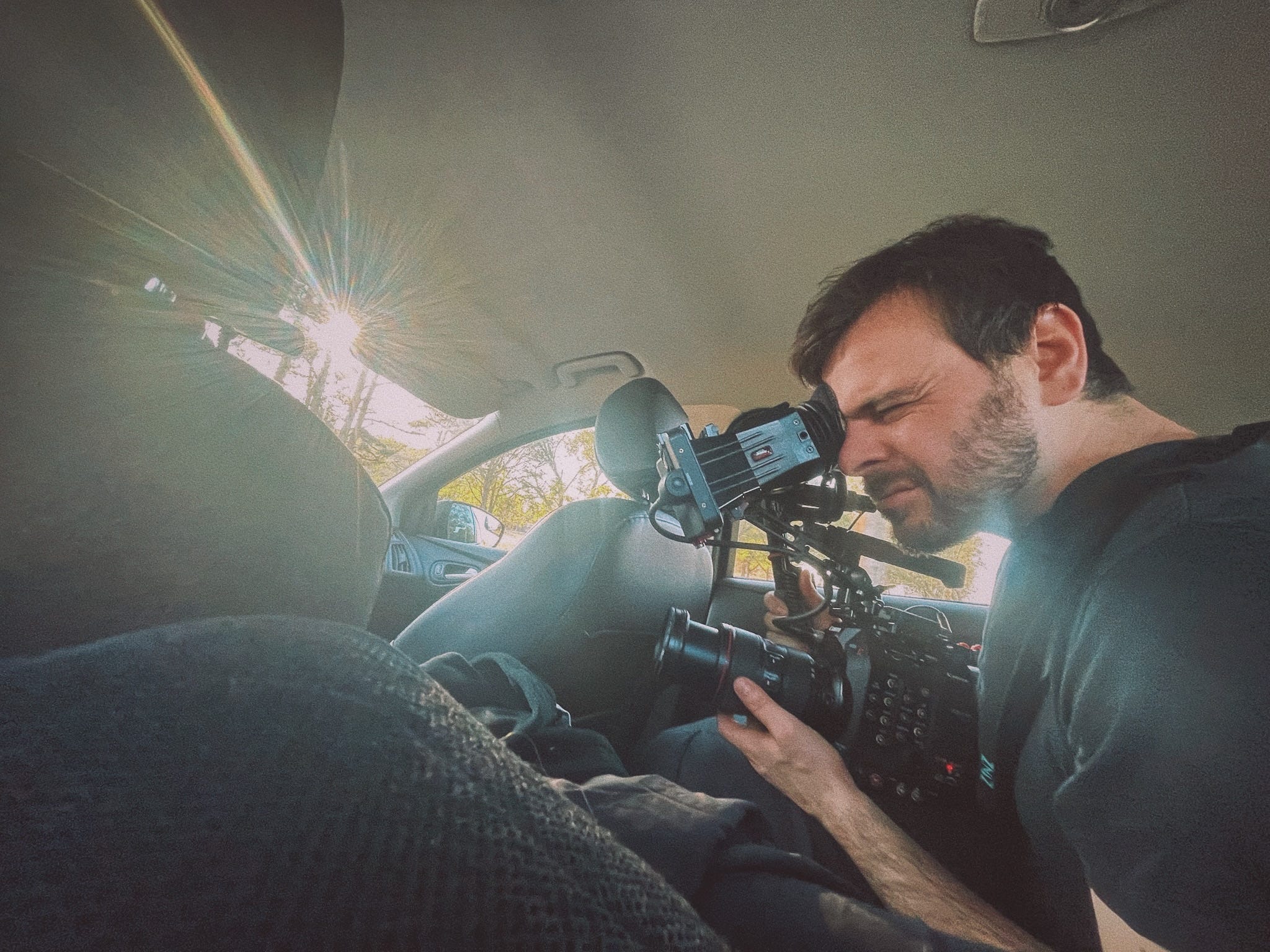
I think part of what makes me good at my job is I can be a bit of a chameleon. Cinematographers go from project to project much faster than [other roles]. It can be from week to week, whereas an editor or director, even a producer, is on a project for over a year sometimes. I mean, those two projects are a great example. One week I am with a 14-year-old girl who is a social media star and is doing TikTok dances, and then the next week I’m with an old preacher who is going into prisons and talking about men with no chance of being released. You have to be malleable, and you have to like being around people. Cinematography is funny. It’s like you’re part artist, part technician, and part therapist in some ways.
Documentaries can take many years to film. How do you ensure that you don’t get burnt out or overwhelmed from the subject matter?
I feel like I’m a pretty engaged person with the world. I’m constantly reading works of nonfiction, and I’m aware of a lot of the crises that are ongoing in my backyard, in my country, and around the world. I already feel angst and some existential dread about these things, so when I’m able to engage with them head-on and even take them in from a first-person basis, it helps me process them in a way that is meaningful. Let me give you an example: L.A. has been through a series of historic fires and immigration raids this year, and for both of those moments in time I was on the front line capturing them with my camera, and it allowed me to feel the phenomenon much more. A lot of the data and statistics I’m reading about became human in a way that fleshes out the entire picture and allows me to understand things and process things better, and that’s helpful to me.
You’ve worked on so many different types of projects. Is there anything you haven’t done yet that you’d like to attempt?
I mean, so many. I’ve been shooting some narrative this year, and that’s been really fun because it exercises a different part of my brain. In some ways, it’s more proactive instead of reactive, and you’re able to layer your image in really fun ways [that] sometimes you can’t do in documentary. Within documentary, I’d like to do another climate-related story. It just feels so urgent and pressing to me, so it would be cool to work on a big climate-related story again.
What brings you the most joy about your work? What do you love about it the most?
A lot. I really love my job so much. On different levels, I appreciate it. The first would be [the ability] to learn. My job is a gift of education. I’m constantly dropped into worlds that are very different from my own, and that contributes to an overall open-mindedness. Being creative and making art with other people is very fun. And being able to work on things that can actually move the needle on real social issues is very satisfying.
To learn more about Nicholas Kraus, visit his website.
This interview has been edited for clarity and length.
You might also enjoy…

