

CR 077: Brad Meltzer on Thrillers, Kids’ Books, and Writing Across Genres
The prolific New York Times bestselling author discusses his latest novel, “The Viper.”

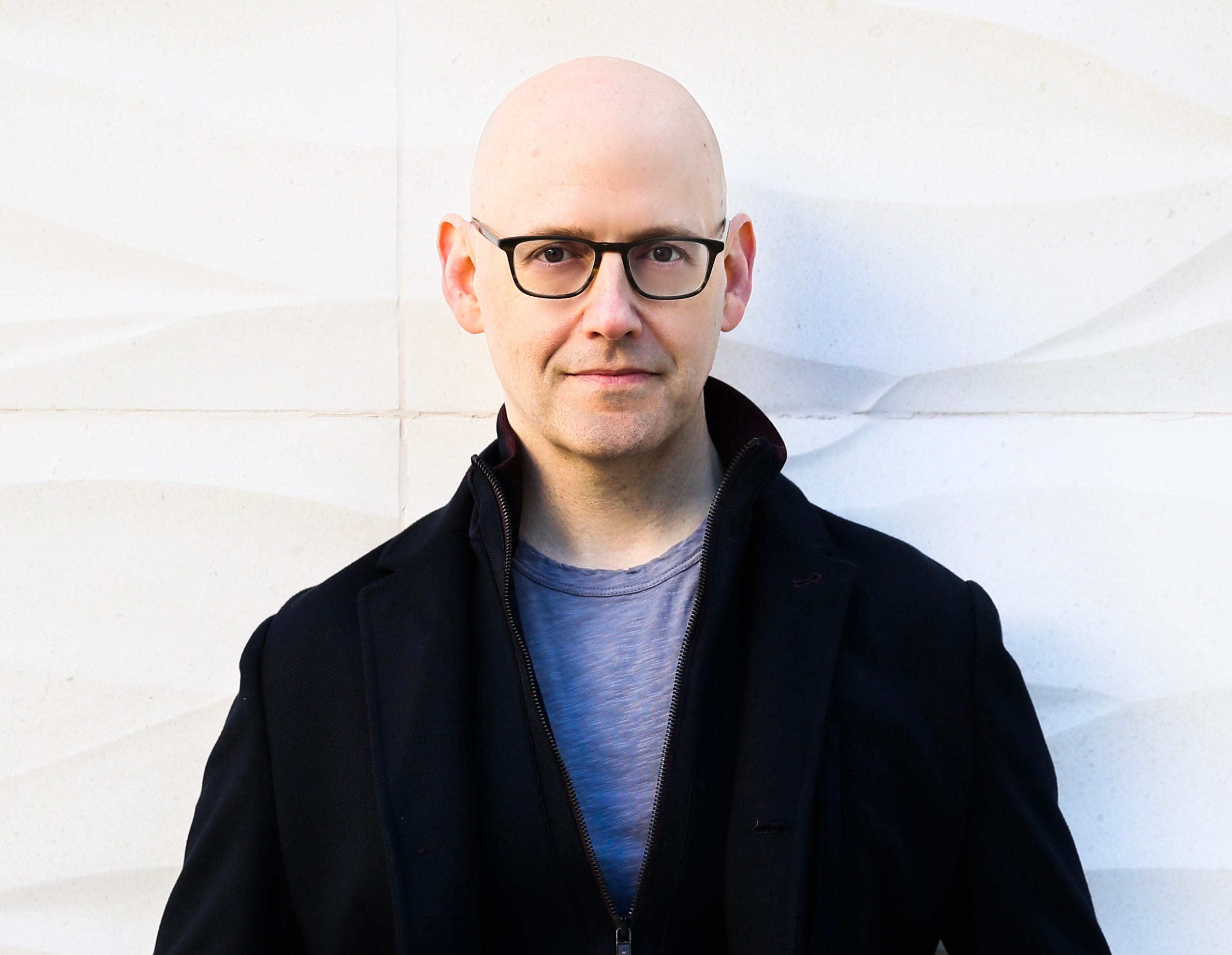
Many writers spend their entire career staying in one lane, focusing on a specific genre or format. Brad Meltzer doesn’t have a lane. Since 1997, the prolific author has published more than 60 books across multiple genres (fiction, nonfiction, how-to, children’s, comics, and advice), with each of them making it onto the New York Times bestseller list. He was the host of two History Channel series, Brad Meltzer’s Lost History and Brad Meltzer’s Decoded, and was the co-creator of the television drama Jack & Bobby. He has won numerous writing awards and earned an Emmy nomination for Xavier Riddle and the Secret Museum, an animated show based on his kids’ book series Ordinary People Change the World. His 2024 commencement speech at the University of Michigan went viral and became the basis for his book Make Magic. He’s also one of the few contemporary novelists who has befriended multiple U.S. presidents. When President George H. W. Bush was on his deathbed, Meltzer—the president’s favorite author—was invited by Barbara Bush to read to him.
Meltzer’s latest novel, The Viper, is a fast-paced page-turner that has received glowing reviews from Publishers Weekly, Booklist, and Kirkus, which calls it “dark and quirky fun.” The third in Meltzer’s popular Zig & Nola series, the novel takes readers on a wild ride as mortician Jim “Zig” Zigarowski, sketch artist Nola Brown, and Nola’s brother Roddy LaPointe, a New Jersey cop, try to determine who is killing off a group of former friends one by one.
Over Zoom, I chatted with Meltzer about his extraordinary career, what he learned from writing The Viper, and why his I am Albert Einstein book holds such a special place in his heart.
This content contains affiliate links. I am an affiliate of Bookshop.org and I will earn a commission if you click through and make a purchase.
SANDRA EBEJER: You’ve worked in so many different formats and genres. How do you decide which projects to say yes to? What does something have to have in order for you to say, “Yes, I want to dedicate my time to that”?
BRAD MELTZER: It’s the project that after six months to a year, I can’t stop thinking about. It is as unscientific as that. When I started, it was, “If you’re a thriller writer, go write thrillers.” I said, “I want to write comic books.” And they were like, “No one does that.” And I was like, “Well, then I really want to do it now.” [Laughs] And I started doing comic books. And then I said, “I want to do kids’ books.” I said to my publisher, “If you don’t love the book, don’t buy the book. I don’t want you to service this just because I sell a lot of thrillers for you.” And I sent them my kids’ book, and they said, “We appreciate that. We don’t like it.” And I’m like, “What do you mean you don’t like it? It’s great!” And now that I’m answering this question, I’m realizing I’m not sure it’s what I’m thinking about or just when people say no to me, it makes me want to charge even further ahead. I’m sure stubbornness has something to do with it.
To directly answer your question, when I did The First Conspiracy, that was when I knew my test. I had found the secret plot to kill George Washington, and I loved the story. I put it in a paragraph in one of my thrillers, and six months or a year went by, and I still couldn’t stop thinking about it. And when I had free time, I kept researching it. That’s when I was like, “This needs to be a book on its own, because I can’t get it out of my head.” That was the litmus test that I’ve applied to everything since then.
You’ve been given access to government operations that many of us don’t know exist. When you were early in your career, how did you go about getting into those places? Or even learning about them in the first place?
Part of it was that I lived in Washington, DC at the time and my friends were the interns in those buildings. So my friends were letting me in, which was great, because I had no name, but I had the access of every 20-something in Washington, DC. And if you know Washington DC, 20-somethings can let a lot of people into a lot of buildings. [Laughs]
But I also think, and this is honestly the real answer today, it’s just being nice to people. I mean, I remember the first time I met with the Secret Service. My first book had come out. I went to meet with them. I’m like, “They’re never going to help me. It’s called the Secret Service. The word secret is in the title.” And I sat down and before I could even say a word, the agent said to me, “I read your book. I really like it. I want to help you.” And the reason I got into his office is I wrote him a nice letter and said, “I love what you guys do. Can I come see what your life is like?” I know that may sound naive, but if anyone called you tomorrow and said, “Hey, I want to see what your life is like. Can you spend 10 minutes talking to me about it? It’s for fiction. I’m not going to quote you so you don’t have to worry about me putting a knife in your back,” most people will say yes.
Creative Reverberations is a reader-supported publication. Each interview takes many hours of work. To receive new posts and support my work, please subscribe.
Did you learn anything new or interesting during the writing of The Viper?
Oh my gosh, yes. There’s always multiple things I get obsessed with. One of them was witness protection, which has always been a fascination. I will say, of everything I’ve tackled, it’s one of the hardest. It’s easier to get into the White House, it’s easier to find the secret tunnels below the Capitol, it’s easier to go to the Supreme Court than it was to figure out witness protection, because the people there are really good at keeping secrets.
And then the other was my obsession with America’s most secretive funeral home at Dover Air Force Base. I’ve been writing about that now for a decade, and there’s still brand-new things you find out. Dover is where all our fallen soldiers go. It’s where the astronauts’ bodies went when the space shuttle blew up. It’s where all the Pentagon victims went after 9/11 and it’s where the bodies of all of our spies across the globe, our CIA equivalents of 007, go. That means Dover is a place that’s filled with secrets, so talking to people there and finding out the stories always influence what you’re seeing in the book.

I’ve interviewed many authors and they all have different ways of starting a novel. Some start with a “what if” question, others start with a character, some just have a title. What’s your process? For example, how did The Viper come about?
This came from a funeral home, of all places. It was a really dear friend of mine’s funeral home. I’m always asking people, “Where are the best hiding spots?” And I remember he opened up a closet, and the closet was filled with all the clothes that people want to be buried in. It was all people that had no family, so they could pick out in advance what suit they were going to be buried in, what dress they were going to be buried in. It was such a crazy idea. I was standing there and I watched him close the door and put a little lock on it, and I thought to myself, “If you open up a bank account, paperwork will get filed and the government will know about it. If you open up a P.O. Box, paperwork is filed that someone can later find. There’s cookie jars now that come with built-in Wi-Fi. You can find out if a chocolate chip is missing. But if you hide something in the suit you’re going to be buried in and you put it in the local funeral home in that closet, no one will ever find it. It’s the perfect hiding spot.” The whole book came from there. It was that one moment looking at this closet.
The book bounces around in time and takes place in multiple locations with a group of characters that have very complex histories. How do you balance all the information so that you don’t lose track of where or when you are in time while also maintaining momentum on the story?
When I was younger, I would keep it all in my head. I will say that middle age has taken that ability from me. I have to write it down now. There was one point in The Viper where there was one character and their motivation—I remember [writing] the motivation and maybe a month or two later, I was like, “What’s the motivation for this character again?” I went looking for where I wrote it down and couldn’t find it. So I redid the entire motivation, and then a month after that, I found the original motivation. And the great part was, they matched! So it’s trickier, but I am consistent. [Laughs] The truth is, it’s just how my brain works.
And for me, jumping in time is never the issue. I feel like we all live in our past a little bit, especially these days. It used to be you didn’t interact with your past unless you went to your high school reunion, but open up Instagram and there’s your old girlfriend, your old boyfriend, the person you dated in high school. They’re all floating there in front of you. So I think we all live in our past a little bit every day, more than we used to.
When working on a book, what brings you the most joy—the writing or the research?
Research is the best way to avoid writing. [Laughs] I always wind up getting suckered into it. At the end of the day, obviously, I love the writing, because that’s what gives me the finished product, but research is my favorite procrastination.
When did you first develop a love for writing?
I came out of college with all this debt to pay off, and an entrepreneur in Boston said to me, “Don’t go to grad school. Come work for me. I’m going to be your mentor. I’m going to take you under my wing.” So I moved all my stuff to Boston and the week I got there, he left the job. And I thought, “Oh my goodness, I’ve wrecked my life.” And I did what everyone would do in a situation where they think they wrecked their lives. I said, “I’m going to write a novel.” I didn’t know what I was doing. I just thought everyone has one story, and I’m going to take my shot.
My first novel got me 24 rejection letters. There were only 20 publishers; I got 24 rejection letters. But in that year that it took me to write that novel, I fell in love with the process. I never thought I was going to be a writer. I never planned to be a writer. I just had this job that didn’t work out. And the week after I got my 23rd and 24th rejection letter, I said, “If they don’t like that book, I’m going to write another. And if they don’t like that, I’m going to write another.” And the week after that 23rd and 24th rejection letter came, I started The Tenth Justice, which luckily sold and became my first published work.
You have many fans, including a number of U.S. presidents. What authors are you a fan of? Who are your influences?
Oh, Alan Moore is probably the preeminent. And Agatha Christie and Judy Blume. You know, in my head, I don’t have a genre. I think Gillian Flynn is an incredible thriller writer, but I never would just read thrillers. I read kids’ books and comic books and nonfiction. I read everything I can get my hands on in every different genre. When I was a kid, I loved Agatha Christie and Judy Blume. They have nothing to do with each other, except that they were great stories. To me, that’s all that ever mattered.
I want to also ask you about the Ordinary People Change the World series. I have a son and when he was younger, we always got the latest title. We have 24 of them in his bookcase.
I love you for that.
I am Albert Einstein is probably the one we’ve read the most. When he was little, I would get so emotional at the end. The books not only teach kids about the lives of these incredible people, but teaches them that they, too, are incredible people. So, thank you for that.
I can’t change the minds of adults, but for over a decade now, I’ve been arming the youngest generation I can find with lessons of kindness and compassion and perseverance and trying to arm this little army of do-gooders. And I will take that battle any day. So I love that you are feeding your son that. He’s lucky to have you. I will also tell you why you’re getting me choked up—let me tell you, it may be my favorite story that we’ve ever had. And I can’t believe out of 40 books, you pick the one that I have the story [about] that nearly wrecked me.
That I am Albert Einstein book is all about one thing: being weird and different. We got a letter one day from a mother who said she wanted to thank me for I am Albert Einstein because it was her son’s favorite book. Her son, C.J., was autistic. He used to read the book over and over because it was about being weird and being different. It helped him feel like he belonged. She goes on to say that her son died. She just wanted to say thank you, but I found out that she was going to read I am Albert Einstein to the kids in her son’s class after he died, as closure. So we had the entire class outfitted with I am Albert Einstein books and surprised her, so when she walked in, she just fell apart, seeing what we had done.
But the craziest part of the story is this: she then writes to me and says, “I got pregnant again.” And eventually writes and says, “I had a new baby. The name is Finn Bradley,” after her favorite Jedi and her favorite author. And of all the things that have ever happened with these books that we put out in the universe, you happen to mention the one title of the story that I never tell, but I felt like I had to share with you.
That’s great. Thank you.
It’s so moving to me that you picked that one out. Every person who has someone in their family who’s weird or different comes to us with that book, and tells us, “This is the one.”
I remember when we got the I am Anne Frank book and I thought, “How are they going to handle this?”
“Why are you writing a children’s book about the Holocaust?” [Laughs]
Right? “I guess we’ll read this before bed and see how it goes...” Obviously, you’re writing these stories to engage kids, so they’re colorful and cartoonish. But how do you approach the writing for something like that, when you know the story does not end well?
Listen, that is the hardest book we’ve worked on. That and Harriet Tubman. I mean, you’re dealing with slavery, you’re dealing with the Holocaust. You know the ending. You can’t just put a bow on it and say everything turned out great for everybody. We worked with the Holocaust Museum in Washington, DC, and said, “You know far better than we do in terms of what’s appropriate and what’s not.” And they were very supportive.
We don’t show you Amelia Earhart disappearing, we don’t show you Abraham Lincoln getting shot in the head, but we couldn’t end this book without saying that Anne Frank dies. It would be a disservice to the story. We figured out how to do it in a way that [served all ages]. Because some kids are reading that book and they’re 5 years old, and some are reading that book and they’re 11 years old, so we put it as a verbal thing, instead of showing you. That way parents of younger kids could edit or not. But it’s there. We don’t hide from it.
It is one of those ones where we worked with whatever the expert is in that field. When we did I am Jane Goodall, Jane Goodall proofed her book. Billie Jean King spent two hours on the phone with me for I am Billie Jean King. John Lewis helped us proof I am Martin Luther King, Jr. We just try and find who’s the best person that can make sure we’re doing justice to this incredibly complex story. I am Princess Diana comes out in February, which is a book that’s completely about empathy. We just did Simone Biles because I wanted to do a book on mental health for kids, and I was like, “I’ve got to do a book about empathy.” I am Princess Diana becomes that book.
Has researching and writing about historical moments and notable individuals helped you navigate the challenges of today?
It gives me perspective. Listen, you think we hate each other now? Go to the Civil War. I mean, we hated each other. I take some solace in that. I also think that cooler heads did prevail. Can they prevail now? I don’t know the answer, but you will never be able to convince me the majority of people in America aren’t rooting for decency and aren’t rooting for kindness. It may not seem it at all times and we certainly are at a point where we seem to be at a low for it, but people are starving for decency right now. They’re starving for empathy right now. I think that can only be a good thing. It’s a sad thing, but it can only lead to, I hope, eventually, a good thing.
You’ve had an unbelievable career with so many achievements. Is there anything you haven’t done that you’d still like to attempt?
I don’t know. On the writing side, I’ve been very lucky. I cannot complain. Every time I come up with some crazy idea, I’ve been able to at least convince a publisher to let me do it. So at this point I’m just thankful. And my book tours—I don’t even think count them as book tours. They’re “thank you” tours at this point, where I get to say thank you to all these people.
I remember the first book signing I ever did. It’s your family at the first one. You know everyone in line, every single person. Even your second book, it’s still your relatives. And I remember the first time someone showed who I didn’t recognize, and I was like, “Did I go to high school with you?” They’re like, “No.” I’m like, “Did we go to grad school together? Do you know my family?” They’re like, “Nope.” I’m like, “What are you doing here?” My parents used to tease me. They’re like, “You can’t know every person who buys your books.” I’m like, “I’m going to try to!” I would love to continue saying thank you.
I’d love to get to 100 books for the Ordinary People series. That was what I originally pitched. We are about to be at 40, so I’m almost halfway there. That’s the only kind of big, long-term goal.
Do you have any advice for aspiring writers or novelists?
I had 24 people who told me to give up. I had 24 people who said, “You cannot do this.” I believe that whatever it is you’re trying to do, don’t let anyone tell you no. Sometimes it just takes one yes to change your whole life, and sometimes our job is just to find that yes. So go find it. Go chase it. It’s out there.
To learn more about Brad Meltzer, visit his website.
This interview has been edited for clarity and length.
You might also enjoy…


Loved this interview, I just ordered his first Zig and Nola book on Amazon. Great interview Sandy❤️