CR 078: Elizabeth McCracken on the ‘Long Game’ of Writing Fiction
The award-winning author discusses her love of a good sentence, the importance of community, and why most writing advice is useless.
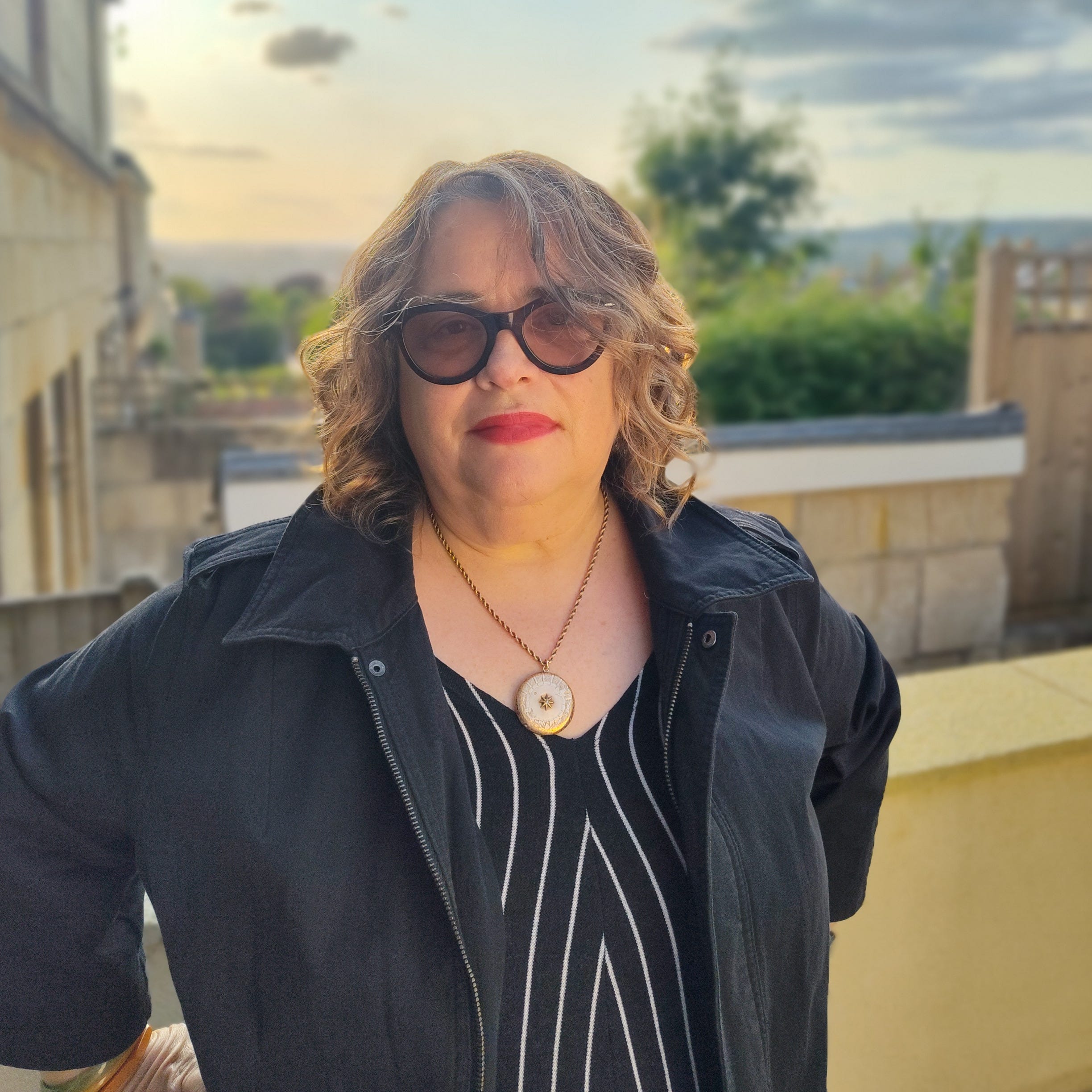
Elizabeth McCracken wants you to know that if you don’t know how to write a book, it’s okay. She doesn’t either. This might sound odd coming from the author of four novels, three short story collections, and a memoir. Yes, she’s been awarded numerous honors, including the PEN New England Award and three Pushcart Prizes. Yes, her 1996 novel The Giant’s House was a National Book Award finalist. Yes, she’s taught fiction writing at University of Texas at Austin and the Iowa Writers Workshop. But in her latest work, A Long Game: Notes on Writing Fiction, she points out that much of what we think we know about the craft of writing—all the rules, the advice, the guidelines—is, to put it bluntly, hogwash.
If McCracken has learned anything from her decades of writing, it’s that there are no hard and fast rules when it comes to writing. That is why A Long Game is almost an anti-craft book. In it, she encourages the reader to let go of the musts, make mistakes, embrace their “particular oddness,” and perhaps most importantly, “don’t follow writing advice like a recipe.”
From her home in Bath, England, McCracken chatted with me over Zoom about why she wrote A Long Game, her thoughts on social media for writers, and her biggest writing pet peeves.
This content contains affiliate links. I am an affiliate of Bookshop.org and I will earn a commission if you click through and make a purchase.
SANDRA EBEJER: You begin A Long Game with the line, “Nobody knows how to write a book.” So, with that in mind, what made you decide to write a book about writing a book?
ELIZABETH MCCRACKEN: It’s a good question, because I always vowed I never would. I didn’t know that I was going to be leaving UT [University of Texas] when I wrote the book, but I did have a sense that I didn’t want to be one of those people sitting in the university position until I was 75. I don’t mean that I was like, “Oh, I must free it up for a young person,” although I do think that people who are sitting in academic positions for too long should free them up for young people. I’ve known people who have stayed in the position, perhaps like Congress, a little too long. [Laughs] They think, “Well, this is what I do.” And some of whom continued to teach brilliantly, but some who didn’t. I just knew that I wanted to stop teaching while I still thought I was doing it well, and more to the point, when it seemed like other people also thought I was still doing it well. So I did think, “Well, maybe I’ll try to write down some of the things that I think I know.” And you’ve read the book, so you know that I’m very uncertain about the things that I think I know.
The last book that I wrote was a novel that I had originally thought was going to be a pretty autobiographical novel, and I thought the way I could write an autobiographical novel was by making fun of it with a craft book attached to it in the form of notes. And it didn’t work. A little bit of that writing went into my last novel, but I had this other stuff. I thought, “I’ll just chuck it.” But then I thought, “Well, maybe I can figure out how to write a craft book that I actually believe in.”
There’s a sentence in this book that sums up so much of what I think you’re trying to get at, and that is, “No process is wrong that leads to a first draft of a book.” Do you find that when aspiring authors read craft books, they get too concerned with rules and what they should and shouldn’t do?
All the time. Even students who know that I believe there are really not that many firm rules in fiction. I still have people who come to me and say, “I don’t know whether this is the right way to go about this. I’m writing a draft, and there’s this one character I just don’t understand. Should I keep on going?” And I think, yes, if you’ve got momentum, keep on going. Or people who say, “I’m only writing in the mornings. I think I should be writing eight hours a day, but I can’t do it.” Or people who say, “I’m writing eight hours a day and people have told me that nobody can write for more than four hours a day. I don’t know if I’m doing it right.” I think because there’s so much uncertainty, people are looking for reassurance. So yes, I often have students full of doubt over the process itself, and I think they ask me those questions because they know I’ll reassure them that it’s possible. Because if they say, “I’m thinking about making this character not his sister, but his half-sister. What do you think?” I say, “I don’t know. Could be great, could be terrible. There’s only one way to find out.” But when it comes to process, I can say with great certainty, if it’s working for you and you’re not damaging your health and it ends up in the first draft, it’s the right process.
According to your bio, you’ve taught writing off and on since 1989. During that time, the internet, smart phones, tablets, social media, and AI have been introduced. Have you found that the craft, the way your students respond to things, their writing style, or any aspect of the work that you do has changed over the course of those 30-some years?
I don’t think the stuff that people write has changed in any way that’s unusual or bad. In fact, I do think, generally speaking, the work I read now is more interesting than it was when I was first teaching, because there was a much stronger belief that literature was one sort of thing and genre was in another room or in a different building. I think the openness to different sorts of stories and different sorts of forms is very exciting to me.
I think people are just wired a little differently. I could not work in a coffee shop at gunpoint. I need as few distractions as possible. And [for] young people who’ve grown up in a world with more distractions, that keeps them in place. They can concentrate in a coffee shop. I know way more young people who can write while listening to music, which amazes me. I think it actually is a generational neurological training. I was brought up with fewer distractions, and that is how I work best. Almost like people for whom stimulants put them to sleep and sleep aids wake them up, people are different, and so things that are distracting actually can keep people at their work in a way that’s interesting. I haven’t had any run-ins with AI and graduate students. Happily, graduate students tend to be full of enough ego that I think they wouldn’t want to use AI to write their fiction.
So many creatives these days feel like they have to be content creators. What are your thoughts on social media when it comes to a writing career? Is it something aspiring authors have to pay attention to, or is it possible to be primarily offline and still have a career?
I’m sure there are ways to be successful and be primarily offline. And my feelings about this have shifted just because I used to be on Twitter, when Twitter was Twitter, and I really loved it. I am not on Twitter anymore, and I have not since found my footing on social media. The thing I always said when I was on Twitter was it’s only good if you enjoy it. It’s a leisure activity. And there are some people who get really good networking done during leisure activities, but only if you enjoy the thing that you’re doing. I’m on Instagram a little. I’m on Bluesky a little. I have a Substack that I really need to update. It’s been quite a while. I do think it’s probably useful; I don’t think you need a platform. I don’t think you need to have a certain number of followers.
It’s interesting. I have a good friend who was also a student of mine named Lucas Schaefer, whose book, The Slip, won the Kirkus prize. It’s an amazing book, and he is incredibly good on social media. I realized one of the things that he does is he’s never self-aggrandizing and he’s never self-deprecating. If he talks about his book, it’s just fact or to say, “This is what the book is about.” He goes to different places and makes little videos, and he’s charming, but it seems like it’s been very effective. I look forward to seeing his videos. And it’s really interesting to me that he never said, “This dumb thing happened to me today.” He’s just talking about his book like a normal and sane person and I love that.
Creative Reverberations is a reader-supported publication. Each interview takes many hours of work. To receive new posts and support my work, please subscribe.
Is there anything you see over and over in other people’s writing that drives you crazy? Any pet peeves?
[Laughs] Ooh, what drives me crazy? I read for the National Book Award this year, so I read a whole bunch of published books. This is not something I’ve seen in my student work, but it was very prevalent, is what I can only call detailed exoskeletons, in which chapters had the names of the character, the year of the events, epigraphs. There’d be like a million parts, and the parts would have epigraphs, and there’d be prologues.
I love a beautifully deployed epigraph. I probably almost never love a prologue, although I don’t mind something that acts just like a prologue that doesn’t say “prologue” at the front of it. I want to sink into the world of a book as quickly as possible, and nothing keeps that from happening to me like epigraphs at the beginning of a chapter. That drives me nuts. And also, long passages in italics always drive me crazy.
You write in A Long Game that you outline your book after you’ve written the whole thing. Can you describe your process and how the post-draft outline helps you?
Part of it is that if I outline beforehand, I just can’t do it. It feels like I’ve drawn part of a map that I have to follow for no reason other than I drew it just before I started writing. So I really do very little note taking before I write a novel. But then once I have a whole draft, I will put each chapter and if it’s a novel with parts in it, each part. And in each chapter, I will write a little, in sentences, not really narrative, the things that happen, how many pages long each chapter and section is. Generally speaking, it only fills a page or two. First of all, it’s like a form of speed reading of the novel. But also, I can look at it at one time and see how the end of the book relates to the beginning of the book. And often I can see that I’ve put things in the wrong chapters, that something that’s in chapter three actually belongs in chapter four.
You’ve said in other interviews that what gives you pleasure is writing a good sentence. What does a good sentence mean to you? How do you know when you’ve achieved it?
I mean, that’s one of those things that if I really described it, it would sound so self-indulgent. I guess it is self-indulgent in that the only measure of a good sentence to me when I’m writing—not when I’m reading, but when I’m writing—is something that just gives me pleasure. [A Long Game] is a book that’s 90% figurative language about writing. I really like figurative language. I very rarely describe anything in a straightforward manner. I am always comparing this to this. So there’s some of that. And I read my work aloud, so it also has to sound good to me when I’m done with it. I like peculiar vocabulary, maybe like 5% antiquated vocabulary. I like coining words, but nothing too obscure. I think the balance between vocabulary and visual imagery is what gives me pleasure.
Who are your influences as a writer?
Grace Paley is a huge influence on me. In the case of this book, I also had two really important teachers in fiction when I was young: Sue Miller, who I had when I was at Boston University and Alan Gurganus at the University of Iowa. They were huge influences on me as a writer, and how I think about fiction in general. And I was talking the other day to my kid about Maurice Sendak and how much I, particularly as a child, loved the book Higglety Pigglety Pop! There’s something about his work, that intersection of darkness and beauty and a kind of lack of optimism but also joy, that is something I’m always aiming for.
When did you know you wanted to be a writer? Did you start writing as a child?
I was a little kid who wrote little poems. My brother was a really good artist, and I was, I think, looking for a way to show off. Though everybody in my family, my brother and both parents, were writers, as well. Not creative writers, but they all wrote for living one way or the other. My brother still does. So, it was not an unusual thing to do.
In the book you write that your number one piece of advice to young writers is “find the hardest-working writers you know; take one another seriously.” Are there any writers you befriended along the way that have provided you with guidance or mentorship?
I would say there are four who are all from different parts of my life. I’m married to Edward Carey, who’s a writer and illustrator. Sometimes people say, “What’s it like being married to another writer?” Edward is, among other things, just hugely disciplined as a writer. And I think living with somebody who works so hard and is so devoted to art has changed everything for me. Also, I met Ann Patchett when we were both fellows at the Fine Arts Work Center in Provincetown. It’s this amazing place where every month they give you a little money and they pay for your bills, and they don’t require anything of you. And I understood that there were some people who were going to waste their fellowships and then there was Ann, and that I couldn’t be friends with Ann if I wasted my fellowship. [Laughs] It was incredibly useful. I was trying to keep up with my friend who was working so hard so that we could be friends and be happy about the same things. And then I have two other dear writing friends. Paul Lisicky, who I went to graduate school with and then we were at the Fine Arts Work Center a couple of years after Ann and I were there, who has been a huge influence on my work and the way I think about writing. And Yiyun Li, who was my student, which is how I met her at first, and is a genius and devoted to writing and thinking about writing and has been a big influence on me.
I love that your answer pulls from all these different areas of your life. That’s great! What do you want people to get from this book?
Oh, gosh. You’re asking me questions, by and large, that I have not been asked before, and that’s a great question. For a novel, I would go, “Oh, that’s up to them.” But obviously, this book is different. I think the big thing I want is to give permission to people to write their strangest and dearest work. That’s really important to me when I teach. But also, I just hope it makes people want to write. I mean, there’s certain fiction that when I read it, I just think, “That makes me want to write!” To some extent, I want nobody to ever finish this book, because I want them to be reading along and then go, “Oh, I really want to write.”
To learn more about Elizabeth McCracken, visit her website.
This interview has been edited for clarity and length.
You might also enjoy…