

CR 080: Joy Ngiaw on Returning to Her Musical Roots in ‘Solo Mio’
The composer discusses her work on the Kevin James film and her Emmy Award-nominated score for Apple TV’s “WondLa.”

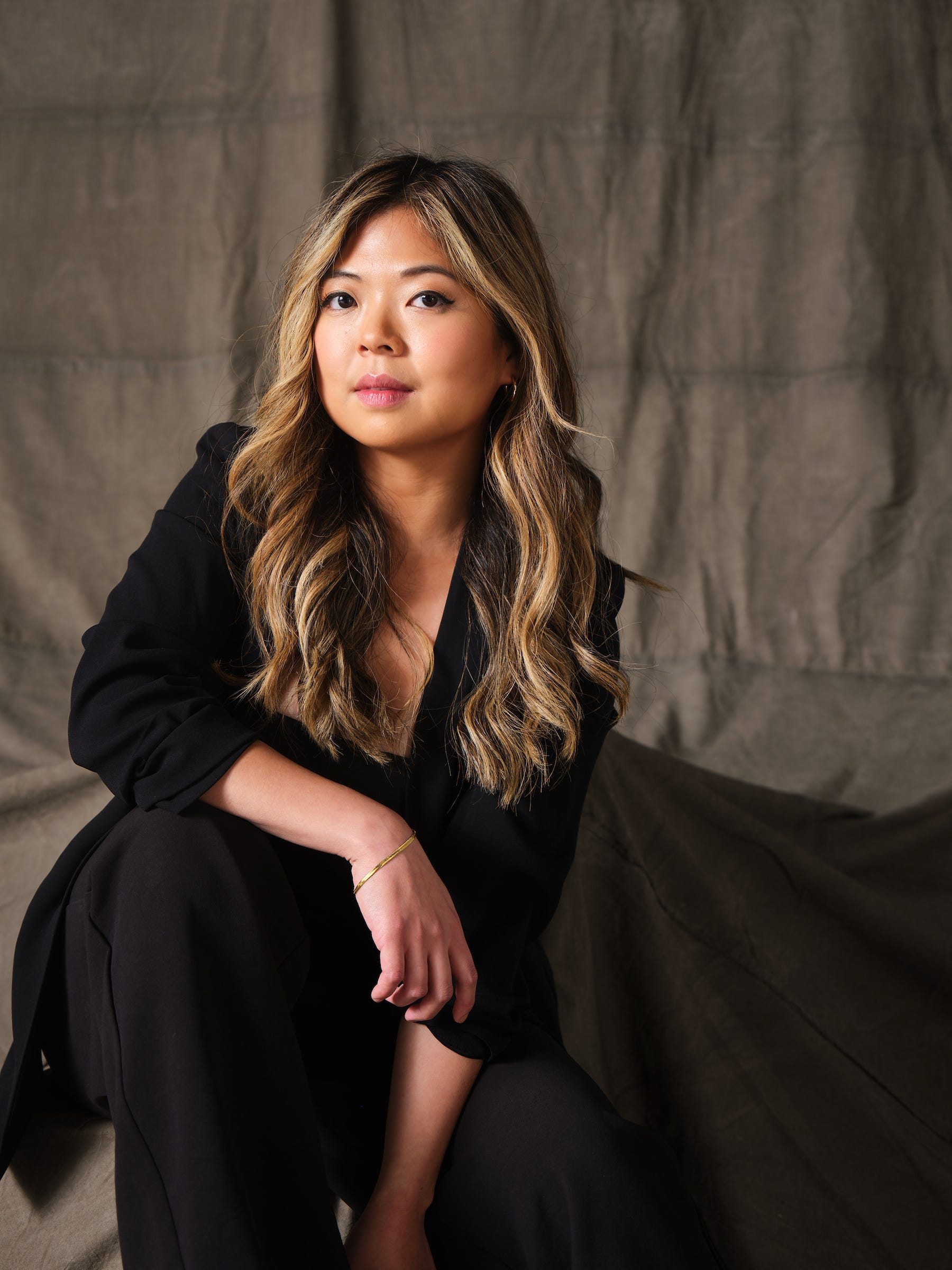
Malaysian-born composer Joy Ngiaw graduated from Boston’s Berklee College of Music just a decade ago, yet she’s already amassed an impressive list of professional credits. A 2024 BAFTA Breakthrough honoree, Ngiaw has provided the scores for Skydance Animation’s short film Blush, the Netflix series Glamorous, and the horror short The Pigs Underneath, produced by Jordan Peele’s Monkeypaw Productions. A current Emmy nominee for her work on Apple TV’s animated series WondLa, she’s become known for her inventive compositions. (IndieWire referred to her work on WondLa as “magnificent” in its 2025 list of “Best TV Scores of the Year.”)
On February 6th, her work can be heard in theaters, when Solo Mio—a romantic comedy starring Kevin James, Alyson Hannigan, and Jonathan Roumie—premieres on the big screen. Creating the score for the film, Ngiaw says, was a nice return to her roots.
“Solo Mio’s great,” she says. “It’s such a sweet film. It’s about a guy who got stood up at the altar and ended up going to his honeymoon in Italy anyway, and [finds] love. The filmmakers wanted to make a rom-com that’s focused more on the romance, instead of slapstick comedy. We really focused on the genuineness of finding hope and finding yourself. And so the core is nostalgic. It’s bittersweet. Very simple piano melodies and strings, and sprinkle in some Italian flavor, because we’re in Italy. So a lot of guitar, mandolin, percussion. We wanted to create something timeless that people can enjoy.”
I recently chatted with Ngiaw about her upbringing, her creative process, and inequality in the film industry.
Creative Reverberations is a reader-supported publication. Each interview takes many hours of work. To read all posts and support ad-free, independent journalism, please become a paid subscriber.
SANDRA EBEJER: I read that you began playing classical music at age 6. Were you raised in a musical family?
JOY: NGIAW: Actually, I was very fortunate. My parents were really encouraging of their kids trying new hobbies. So we took a bunch of different classes. I took piano lessons, singing lessons, art lessons, dance lessons—just to see which one landed. My parents were musical, but they didn’t have the means to study music. They were born in a countryside in Malaysia, but they loved the arts. They loved music. I grew up playing piano, and it just stuck with me. Piano is my first love. I feel like I am able to express myself whenever I play piano. My siblings play piano and violin, as well. So technically, in the end, we ended up being quite a musical family.
I’ve heard you talk in interviews about “intentional scoring.” Can you explain what that means to you?
Yes. That was amazing advice by John Lasseter, who I collaborated with on Skydance Animation’s first short film, Blush. I owe a lot to Skydance Animation and John. They believed in me since day one. I didn’t have an agent at that time, and when I was brought on to score Blush, it was through a blind audition. The biggest advice he gave me was to always score with intention. And that just means, we have so many instruments at our fingertips as composers. Whenever we write a melody or use an instrument, it should be to serve the story. That advice stuck with me, because now whenever I approach scoring, I can override a lot of things, but does this serve the story? Does it help convey what the characters are feeling? That, to me, can marry the music and whatever is going on in the story very well.
I was watching the videos on your website of the way you created the music for WondLa and The Pigs Underneath, which are obviously very different projects. What is your process when working on a film or series? How do you determine what instruments to use or what unusual sounds to incorporate?
It always starts with the story. If there’s a script or an outline that the directors have, I like to have a conversation with them first and understand why they want to create the story and the motivation behind it. These discussions are before [I talk to them] about music. It’s just to understand what inspires them, what motivates them. To me, understanding the core of the story informs all the musical decisions that I make, because then I feel like I can be intentional about why I’m selecting this instrument.
For example, for Pigs, when I read the script, Charlie [Dennis], the director, also gave me his pitch of, “This is why I wanted to tell this story. I wanted to show how my dad used to work as a coal miner. And I want to show that this community has been repressed by the government.” And as I’m listening to his stories it, hearing the words “coal mining” or “metallic carts,” I’m like, “That sounds cool. Let me see if I can use some metallic instruments and metallic strikes to put into the score.” Or he’s like, “I want to show the community is running out of time.” Then I’m like, “Okay, time. I’m thinking about grandfather clocks. That might be cool.” So these conversations inspire me to think outside of the box and choose unconventional ways to marry the music with the story.
I find that quite cool because you’re really immersed in that world building, whether it’s through an animation like WondLa or a horror short like Pigs Underneath, or [an animated short] like Blush. That one, they were talking about how family’s like your oxygen. So I was like, “Oh, oxygen. Human breath. That’s cool. Let me see if I can put some vocals and breaths in.” I’m always trying to be inspired. And also, that creates a score that’s very unique to that specific project.
Was that the first time that you began using your own vocals as part of your compositions?
Yeah, with Blush. I never claimed myself [to be] a vocalist, but when I was scoring that film, in the demos I recorded myself singing, thinking that the filmmakers would replace that with a professional vocalist. And once the demos were approved, they were like, “No, we’re not touching that. We want your vocals in there. That’s the exact feeling we want, someone that sounds a little shy and genuine.” So that was a big encouragement for me. That really encouraged me to sprinkle in vocals when I can. Because I do think it becomes like a signature sound.
That’s very cool. Is there anything that you’ve tried that didn’t work?
Yeah, of course. If it’s not what the directors are looking for, then I try to understand what it is that’s not working. Is it a specific tone? Is it the tempo? Is it the timbre? Does it sound too sharp or too dull? I ask these questions because it’s about problem solving. How can I take their notes and translate into the musical terms? Do I need to swap out an instrument? Or do I add some effects to achieve the effect that they want? I think it’s great that filmmakers are really open to trying things, and if it doesn’t work, then let’s pivot and figure something out.
Every year, as I’m sure you know, USC Annenberg puts out a study on inequality in the film industry. And in their most recent study, they found that of the 100 top-grossing domestic narrative films of 2024, only 8% of the composers were women. Have you found that the industry has been welcoming? Or do you feel as though you have to break through more blocks to get your work noticed?
It’s definitely trending in the right direction, though there’s so much more work to be done. There’s so many times where I’m in a room and I’m not only the only female, but the youngest one, the only person of color. I’m grateful for all the amazing role models that paved the way for us, but I definitely feel that we have to work harder to break through those glass ceilings and challenge stereotypes. For example, if you look at action films, it’s rare that they’re scored by a female. There’s always a stereotype, like women composers can only score rom-coms or something intimate. I really had to challenge myself to showcase these giant action, epic, scary cues that I can write. I got to demonstrate that in WondLa.
Skydance Animation has believed in me since day one, but that’s only one studio. It takes all the studios to put us in the forefront. And that study can be disheartening, for sure, because you go to the movies and it’s always the same names. There’s still a lot of work to be done for us to be in those conversations where the big blockbusters can also have the perspective of a woman. And as much as there’s a lot of great groups out there, like the Alliance for Women Film Composers, something we always share is, yeah, [there are] a lot of projects available for us to score, but it’s limited for the biggest blockbusters in theaters. So there’s still a lot of work to be done, and something that studios should look at, for sure.
Do you ever play music just for the fun of it, and not for a project?
I do. It takes a little longer because I tend to get in my own head. When it’s my own music and it’s a blank canvas it always takes the longest, but I try to find inspiration around me. Like recently, I went to Minneapolis to visit my partner’s grandma for the first time, and she is about to move out of her longtime home. Her home was so beautiful, with a beautiful backyard. It was October. Leaves were falling, and there were animals like rabbits and deer in the backyard. And I don’t know why, but that moment really touched me, knowing this old lady is about to say bye to her longtime home. I was just sitting there observing, and suddenly I did hear some music in my head. I’m like, “Let me quickly take a video of this scene, because I don’t want to forget this. Something about this is special.” So I took my phone and I took a video of everything—trees, sun, whatever—and that became an inspiration for me to score to. There were a lot of emotions in my heart that I wanted to express. So I came back from that trip and immediately wrote a piece as a present for my partner and his grandma. I like to find little life moments that inspire me, and I feel that allows me the canvas to be creative and express a lot of the emotions that I maybe don’t know how to put in words.
Who are some of your influences? Are there any artists that you turn to for inspiration?
I love Thomas Newman. His music has influenced me since I was young. Whether it’s from a beautiful dramatic score like Shawshank Redemption or The Green Mile, or his animation scores like Finding Nemo, I really love his sense of melody. But also, his music gives the audience a lot of space to feel. His music doesn’t try to influence you to feel a certain way. It’s just there. And I gravitate towards artists like that. Joe Hisaishi is another composer that I gravitate towards. The emotional ambiguity is something I’m very drawn to. And the greatest [composers] like John Williams, Alan Menken [are] definitely some of my influences.
You’ve worked on everything from short horror films to animated TV series. What projects excite you the most? When a project is presented to you, what makes you want to say yes to it?
It’s the collaborators. I get really inspired and motivated when I see the passion from the filmmakers. And it can be any genre. If they’re like, “Let’s add our specialties to create something,” that really excites me. It motivates me as their collaborator to be like, “Yeah, I want to help you achieve that goal,” whether it’s writing a really scary, haunting score or something emotional. It always comes down to the heart of the story, whether it’s a horror, a documentary, a romance, an animation—nothing excites me more than to see other people excited. I feel like we always create the best product that way. When I get inspired by them and vice-versa, the product itself always ends up being the best one. I’m inspired by the visuals; the visuals are inspired by me. That excites me, and that can be any medium, honestly.
I read an article about an experience you had while attending Berklee College of Music. You were one of 8 students selected to compose new music for the 1922 film Nosferatu, which was then performed live by the Boston Pops. What was that experience like, to not only work on creating new music for a classic film but to then have it performed by such a renowned orchestra?
That was really a thrill. I mean, I was still in college at that time, and that program was hard to get into. People had to apply and I felt really honored to be chosen as one of the students. I never had my music performed [by an] orchestra live to picture before, let alone by the prestigious Boston Pops Orchestra, conducted by Keith Lockhart, who was also a legend. I’d go to Symphony Hall to enjoy music as a student when I lived in Boston, so it was surreal to attend rehearsals and see the orchestra. They just nailed it immediately. And if there were issues during rehearsal—and there will be—it was a great learning process for me. Like, “So maybe this passage is hard for the violins to play. What can we do?” And then we go back and we refine our scores. It was an amazing masterclass into a glimpse of the real world as a student. I remember when the show premiered, my family flew from Malaysia to see the concert. It was really, really surreal. It was a great experience. If I think back about highlights of my life, that is one of the highlights, for sure.
You are just at the start of your career. You undoubtedly have so many great projects coming your way. Is there anything that you would really love to do someday? Any bucket list projects?
I’m really inspired by A24 films. Past Lives is one of my favorite films. We Live in Time, Eternity. I think they’re a cool company that does such edgy and unique films and scores. The music that comes out of those films is incredible. I’m very inspired by all those composers, as well. That will be a bucket list for me, to score something like Past Lives, where you’re not afraid to lean into the emotional restraint in the film, but also be very poetic with the scores. That’s something I want to experiment with—write more unique scores that’s able to resonate with others.
As we’re all aware, the world is crazy at the moment. And a lot of people are saying, “Now is not the time to focus on the arts. There are more important things in the world.” Why do you feel that the arts matter? Why is what you do important?
Art is a way of communicating with others. Music transcends age, language, where you’re from, gender, everything. And I find in such chaotic times, we all feel so much for everybody around us, and I find a lot of peace and comfort in listening to music, or escaping through watching movies or reading a book, just detaching for a second and finding some comfort. And reading other people’s feelings, other people’s experiences, through their art gives me a lot of comfort. It’s important to hear different perspectives, especially with the country right now not wanting to hear a lot of perspectives. It creates empathy.
What advice would you have to those who want to follow in your footsteps, especially women or women of color?
Trust in your perspective. I didn’t grow up seeing a lot of women composers or Asian female composers in mainstream Hollywood. I definitely felt like, is there a place for me here? But as I’m starting to score more projects and the more I write music, the more I collaborate with others, the more I trust in my own voice. Of course, there are times where I’m uncertain. I get nerves when I tackle a new project. But I feel like the more I do it, the more I start to realize people do want to hear unique voices. People do want to hear different perspectives, and what I can add is different than what you can add. And sometimes, the story calls for someone else’s voice, but the more I dive into this, the more I realize there is value to that. I am starting to trust my own voice, my own path, my own story, that I do have something to offer. So for the up-and-comers who want to dive into this, find your community, trust that you do have an important story to tell, and keep going.
To learn more about Joy Ngiaw, visit her website.
This interview has been edited for clarity and length.
You might also enjoy…

