

CR 087: Kim A. Snyder Explores the Chilling Effects of Book Bans in ‘The Librarians’
The Oscar-nominated documentarian discusses her latest award-winning film.

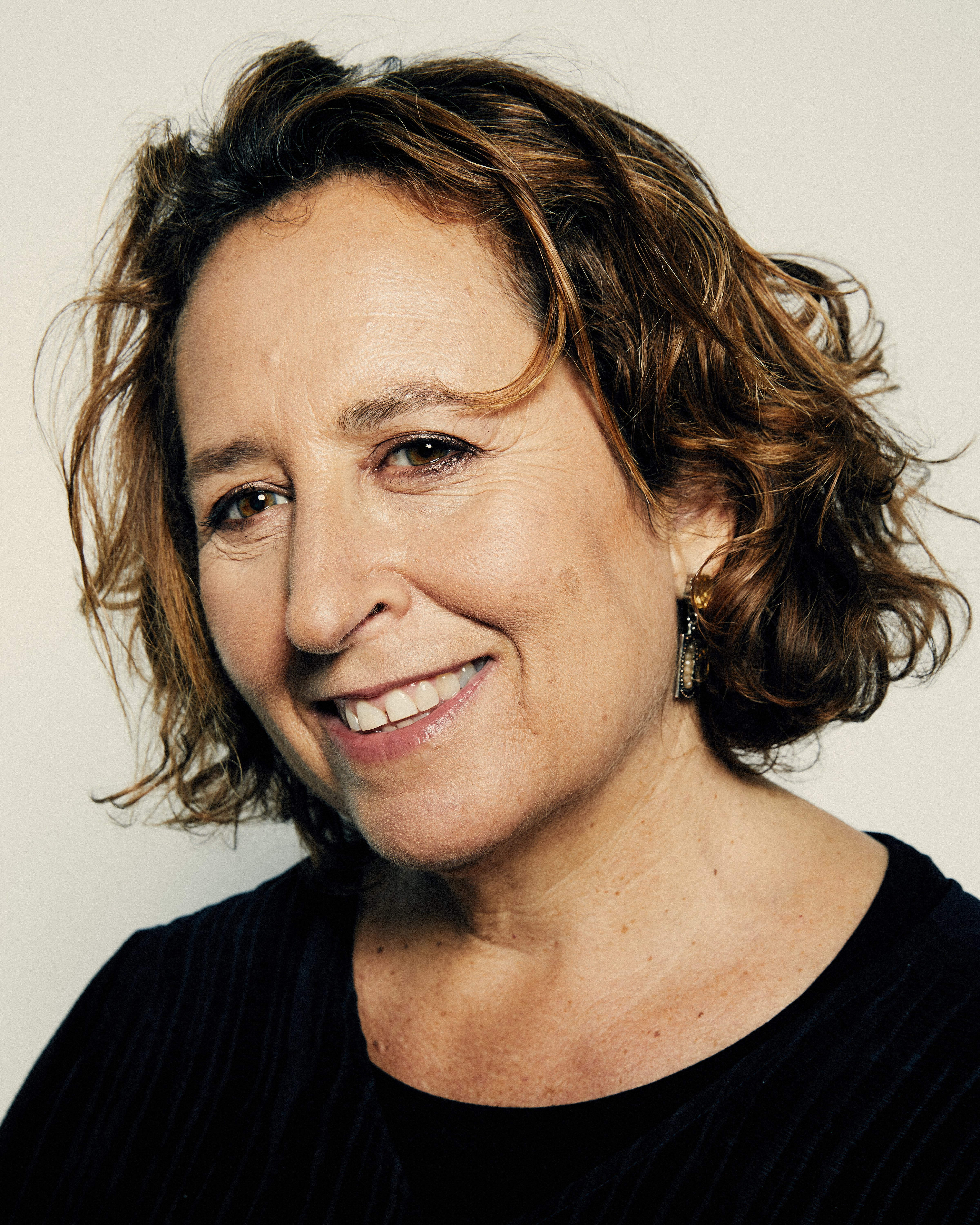
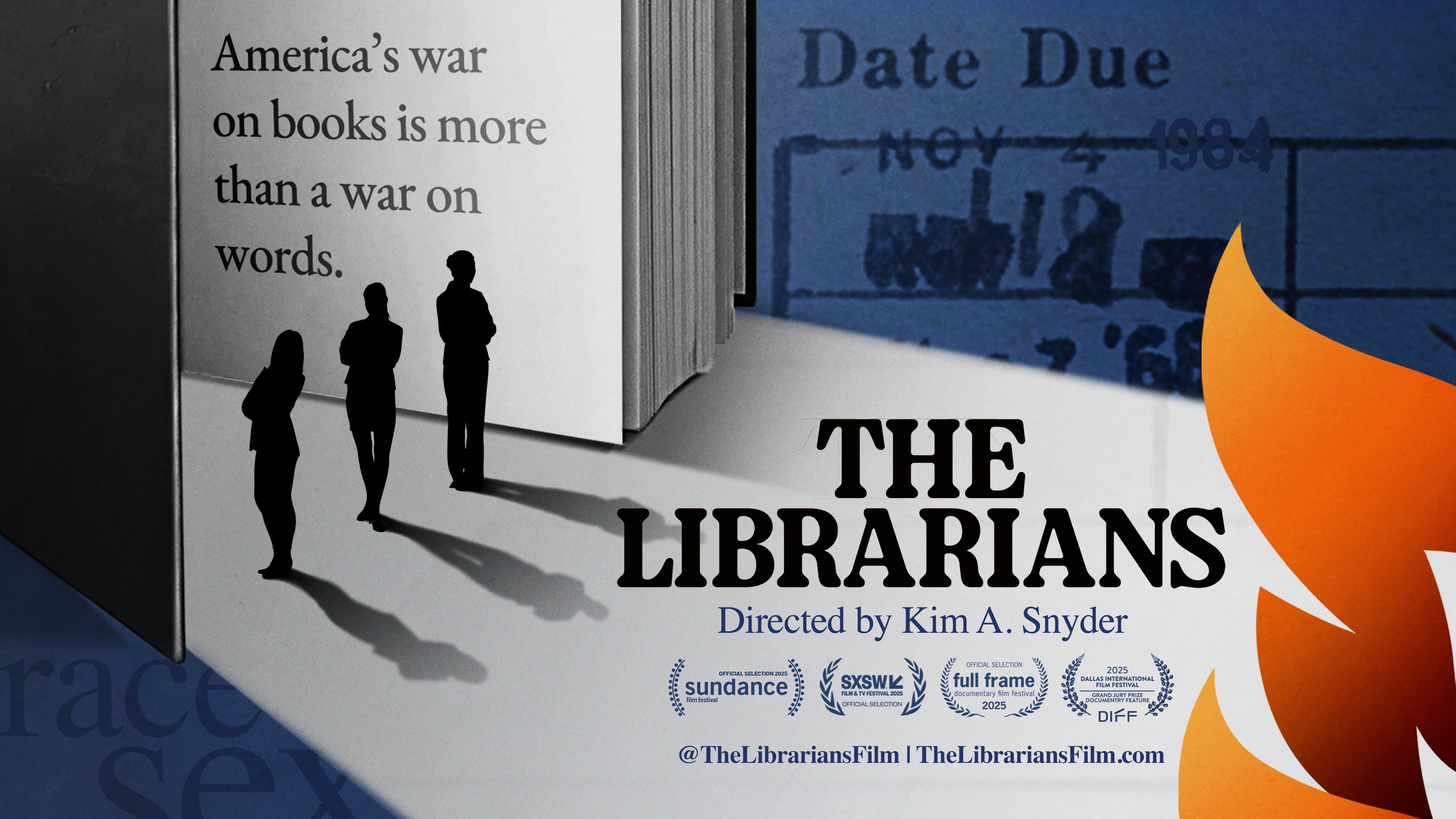
For more than two decades, Kim A. Snyder has directed and produced more than a dozen films on critical social justice issues, including gun violence, homelessness, and immigration, earning a Peabody Award and an Academy Award nomination. Her latest film, The Librarians, delves into the heated debate over book bans, as it follows a group of school librarians in Florida, New Jersey, Louisiana, and Texas who face job loss and death threats for the simple act of doing the work they were hired to do.
“I saw this news that broke back in the fall of 2021,” Snyder says. “State Representative Matt Krause in Texas issued a list of 850 books that became known as the Krause List for school librarians to review and remove from their shelves. This list was in some ways surprising and random to many librarians, but very much targeting, almost exclusively, books about and by LGBTQ+ authors, authors of color, books about race, history, Black history, and sex education, and really any marginalized voices. I learned that there was this group of librarians calling themselves the Freadom Fighters in Texas that were beginning to organize, and to their surprise, they began to get a reaction, not just across the state of Texas, but throughout the country. And librarians were traumatized because this list was being used as a boilerplate in so many places, and they were being put in this Sophie’s choice of whether to comply or do what they knew was right.”
Executive produced by Sarah Jessica Parker, The Librarians premiered at Sundance in 2025 and over the past year has been screened for audiences around the world, winning numerous awards and generating significant praise. In addition to dozens of screenings scheduled in theaters and libraries nationwide throughout the spring, the film is also available to stream on PBS through May 9th.
I recently spoke with Snyder about the bravery of the librarians, challenges facing documentary filmmakers, and how she handles burnout.
Creative Reverberations is a reader-supported publication. Each interview takes many hours of work. To read all posts and support ad-free, independent journalism, please become a paid subscriber.
SANDRA EBEJER: The librarians in your film are literally risking their lives to do their jobs. One of them chose to stay anonymous and have her identity hidden. Was it difficult to get them to trust you and agree to tell their stories?
KIM A. SNYDER: In the beginning, there was a lot of reluctance. We had to gain their trust. I think having former work helped. They vetted me. They’re librarians and could see the kind of films I’d done. We were partnering pretty early on with PBS’s Independent Lens, and that has a certain built-in trust when it’s public television. It’s not likely to be a salacious, exploitative process. And it’s the ethics of how I go about my documentary work, where I make it clear that I understand their welfare needs to come first, their livelihoods, their safety. That continues till this day, and I’ve been lucky that those values are very much shared by my team. So there were a lot of conversations early on about, yes, there’s an appearance release, but one of the things people may not know about the threat to our public television and a strand like Independent Lens is they actually require that the filmmaker have copyright. So the buck stops with me, and I’m able to say to a librarian, “You’re signing a release, but if there’s a point where you feel threatened, I will honor that first. The contracts don’t matter if you feel in any way threatened.” I think that went a long way. And we did have those situations of someone saying, “I’m no longer comfortable” with this or that, and we honored it.
The film has screened at festivals across the country and is currently streaming on PBS. What has the response from audiences been like?
Beyond anything we could have expected. It has struck a nerve across not only this country, but beyond our borders. That was not something that was a given. I’d say maybe the given would have been librarians would feel a catharsis, emboldened, empowered—that has definitely happened. There’s the core libraries and teacher communities that have been so responsive, thankful, enthusiastic, and then there’s what I call the choir of people who are interested in stories of resistance in the times we’re living in. We did not expect 200 theaters to book this throughout the country. That doesn’t usually happen.
We’ve heard from across the partisan divide, from Republicans and people of faith, that this is something that they are aligned with. They’re not down with the idea of censorship and what’s behind it. So that’s been heartening. We’ve gotten direct evidence that those kinds of audiences are being reached across the country. The international audiences wasn’t a given. We’ve screened in so many countries outside of this one. Europeans, in particular, are like, “We understand what this can mean. We understand the historic precedent, maybe more than a lot of Americans.” That’s been really strong.
And I did not necessarily expect young people. I mean, there are a lot of middle aged women in our film and there are some voices of youth, but they’ve been totally on track with understanding the importance of this and what it means for marginalized voices to be taken off the shelves. And then there’s been conferences where we’ve screened it, like a publisher’s conference or film commissioners from around the world. That’s been exciting because even though authors and publishers are not in the film, we know it’s part of the bigger ecosystem of censorship and media, so it’s exciting when you have the head of Penguin Random House and Macmillan and these important voices saying, “This film’s important, and we need all of our agents and all of our editors to see this film so they are aware of succumbing to a chilling effect.” And then there’s the whole legal field. We’ve screened at law schools. What’s exciting about this film is it has so many tentacles because the issue of censorship affects so many aspects of society.
I used to work in Advancement at the American Film Institute and one of my biggest donors was CPB—the Corporation for Public Broadcasting—which funded AFI DOCS. Now, thanks to the gutting of federal funding, CPB is gone and PBS is at risk. As a documentary filmmaker focusing on social justice issues, how do these cuts impact your ability to have your work seen by audiences?
I’ve partnered on three projects now with Lois Vossen at Independent Lens. She’s a hero to me. She’s got to remind people, yes, CPB is gone, but Independent Lens is here this season, and she’s determined to keep that going. The game’s not over there. On the other hand, yes, with the advent of the consolidation of streaming, this news about the merger and Paramount, we as documentarians are suffering from a chilling effect. I would be lying if I said I am not thinking, how am I going to sustain myself? How do I stay viable financially and have these things funded? Because the Open Call [funding] that we were so honored to receive from PBS and ITVS is gone right now. There is no pipeline. They’re trying to keep that open with funding that would come from private sources, but right now, as you well know, the streamers are not going for political fare. So these projects, some of which I have in the vault, where will they get seen? Do I spend more money trying to continue it and revive that project? That’s a chilling effect. Do I say I need to take a break and do a true crime or a music doc? That’s what I would consider a chilling effect. I’m being very transparent, but I think that we have to be crafty if we want to continue to document the times.
I don’t want to take private money if the film can’t get seen. So the idea of where will it be distributed—I think one thing that’s interesting is [because] this film has had such resonance abroad and in Europe, to go back to an older model of looking at partners from broadcasters over in Europe and at least have the light being shown from afar, either the funding or the distribution. I think we’re seeing it in the media, where people who are being purged from our regular mainstream media are going to Substack. We [documentary filmmakers] have to do the same. We have to find work arounds.
I had a part early in my career where I was very involved in post-communist Central European film, and I think a lot about, what did those creators do? Artists have found a way, under the most repressive circumstances, to continue to generate art that is a commentary, and they do it sometimes through animation, they do it through code, they do it through metaphor. So I do find myself looking at scripted things, looking at history, looking at stories that are important because they resonate. It doesn’t have to be, at this moment, necessarily a verité film. I’m considering all options.
I like to ask people about their influences or sources of inspiration. Do you remember the first documentary film you saw that made a big impact on you?
There have been so many, but I do remember being really struck with Capturing the Friedmans. I know Andrew [Jarecki, director] well now, but I remember learning the story about how he set out to make a story about a clown, and it just went in a whole different direction. And that’s something that we’ve talked about, having the flexibility and the nimbleness to not have a prescribed script in documentary of what you think the story is going to be, but the openness to let it take you where it leads.
A lot of my references have been scripted. I think story’s story. I think a lot right now with [The Librarians] about a film that I loved, The Lives of Others, that was about East Berlin in the end of the communist era, because someone wrote about our film that censorship is not only an affront to democracy, but to personal integrity. I think about that because the Sophie’s choice that these librarians are facing has to do with their integrity and the things that they’re being asked to do, to take books like How to Be an Antiracist or The History of the Ku Klux Klan off the shelf. Are you going to do it or not? That’s about personal integrity. That’s about a change in people’s behavior, and that is what happened in the most repressive communist countries.
And then the snitching part, these policies that are about “report your librarian.” We remind audiences all the time that this phrase of “parental rights” has been commandeered. There have always been parental rights. The protocol was always there for people to go to their librarian and say, “I have an issue with this book. I’m not sure this is appropriate for my kid.” And they would talk about it or they would challenge it, and there was a committee, and the committee was comprised of partly librarians who are trained and have master’s degrees in the selection of age-appropriate materials. And now that’s been completely thrown out, with the objective to have it being taken over by church members who have a certain agenda.
In the beginning of this, how librarians get hired and fired might have seemed arcane, but it became fascinating in understanding there’s workarounds in the policy of pitting the principal against the librarians. Like the school board decisions that reestablish some of these criterion is what makes this kind of snitching thing, where you could land in a place where Martha Hickson is in our film and is called a pedophile. How did that happen, where her principal, who had known her for 17 years, stood idly by and said nothing? Why is that? It’s because these things were being configured so that they would be isolated and singled out and attacked. That’s what happens in authoritarian [politics]—it seeps in. It’s a reign of fear. People become afraid and they start to comply, and that’s what they count on.
Do you ever go into a project thinking one thing and then having your viewpoint changed?
All the time. [In the] short film I did, which was nominated last year for an Oscar, Death By Numbers, we follow a young gun violence survivor from Parkland who has to go to the murder trial of her shooter and confront him, and she’s compelled to show up and testify. Because it was in Florida, it was a death penalty case. I would tell you that I went in being a person that is not for the death penalty. I wouldn’t tell you that I came out of that film feeling like I’m for the death penalty—I am not—but it definitely gives you a completely nuanced view about what does justice look like. It wasn’t a treatise on the death penalty, and he didn’t get the death penalty. But you can feel a lot of things at the same time. You can feel that maybe the verdict was complicated in that we both came out feeling that there were problems in why he was defended the way he was.
Or even in the film I did back with Independent Lens on immigration, which feels more relevant than ever, in a small Bible Belt town in Tennessee called Welcome to Shelbyville. It’s easy to be a liberal sitting in Manhattan and in theory have all these liberal feelings. I still have the same feelings about welcoming immigrants, certainly now in light of what’s happening. But when you go to a small town and you understand why they might be challenged with suddenly having a whole new contingent of people, it’s like, okay, I have some new understanding of what it might be like for them. It doesn’t mean that I would change my opinion about immigrants being welcomed into that community, but you understand that it’s complicated and there’s nuance in everything.
And the gun issue—I’ve sat in hot tubs in hotels where I’ve traveled with my films and been curious, “Why do you have an AR-15?” I ended up talking to a guy in Texas and learning stuff. Doesn’t mean that I think people should have assault weapons. Didn’t change my mind. I think there should be a ban on assault weapons. But I come out of it understanding where he’s coming from, and actually having hope that there can be conversations where you’re not like, “You’re an idiot.” It’s like, “Okay, I get where you’re coming from. I have other facts that I would love for you to hear.” It makes you think there is a place for civic dialogue. People talk about having been more present in our country in years back and the polarization—I think a lot of that is the media. I mean, I’ve been around naysayers of the mass shootings of Newtown, who believe that it was all made up and constructed. It’s because they don’t even understand what documentary is, that I actually was on the ground with those parents. They think everything is kind of an AI world where you can just fake everything and construct it. So it’s about exposure. I love being in the field for that reason alone. If you really want to understand what’s happening in America, go to a school board in the heartland, and you will get a better idea of what’s happening.
The films you make cover heavy subjects. Newtown, for example, is one I haven’t been able to bring myself to watch. The reviews of it alone made me cry. How do you take care of yourself to ensure that you don’t get burnt out from your work?
It’s interesting you asked. I just returned from Kenya, where I was at an impact storytelling retreat, and I was asked to give a talk on the greater body of my work. I’d never actually put them all together. And it was a real epiphany, because the listeners in the group were like, “Oh my God. How have you...?” And It’s true, I do have secondary trauma, and I’m not proud of the fact that I don’t think I’ve acknowledged or gotten enough professional input around that. I think as a community of independent filmmakers, we should have that support. We don’t have it. You take in a lot, and you end up wearing these hats that sometimes go into [being a] community therapist. The kinds of films I make are a lot about bearing witness. I like to think the trauma part of it is mitigated by knowing that there’s a healing that goes on for the subjects. That helps a lot, to feel like you’re living a life that’s so involved in meaning.
But it is hard, and I have to do better at the self-care part. I’m getting better as I go along. There was this term I learned when I made Newtown from some mental health professional. The term was existential trauma, when everybody’s experiencing trauma all at once, and that happened to me with Newtown. It’s like, who am I to say that I have trauma when you’re around these people who are just at the epicenter? I think we feel that looking at Minneapolis. “Who am I to say I feel traumatized getting up in the morning and learning about the war in Iran? Look at those people in Minneapolis.” There’s always this survivor’s guilt, if you will, of “I can’t be complaining. I’m privileged, I’m white.” Whatever it is. But I’m also a journalist, and it can come to my door in a different kind of way.
I think right now as a nation, it requires everyone understanding that unless you’re a white Christian nationalist, this will come to your door in any which way. I think, being that kind of citizen, where we realize that you can’t turn away from our fellow immigrants and you can’t turn away from our young trans people who are being exiled because they can’t get care, all those groups that are on the front lines of target. In terms of the self-care, it’s everybody right now realizing, how do you get up in the morning? I say to young friends that part of resistance right now is finding joy in each day—proactively working on it. That’s part of the self-care is knowing that if you can do it, and you’re fortunate enough to do it, you should, and not feel bad about it. You can’t spend 24/7 fighting the fires. I’m not always good at it, but I do think that’s a good prescription right now is finding your joy every day. Because part of what the evil other relies on is wearing people down so that they’re just so exhausted that they spin into a depression.
What advice would you offer to filmmakers who want to work in the social justice documentary field?
We need young people doing it. It’s just so rewarding to feel like you’re part of history and fighting the good fight. The part about the distribution—I think we have to rely on younger people and their far better understanding of social media to start to think creatively about how to [have films seen]. We know there are ways to get messages to people. So I would say, if you have a real yearning to express yourself with social impact, don’t let the times we’re living in and all of this doom and gloom talk dissuade you. If there’s a will, there’s a way for this stuff to get out, and it might be beyond these borders.
To learn more about The Librarians, visit the film’s website.
To stream the film, click here.
This interview has been edited for clarity and length.
You might also enjoy…

