

CR 088: Mason Currey on the Financial Lives of Artists
The author behind the “Daily Rituals” series discusses his latest book, “Making Art and Making a Living.”

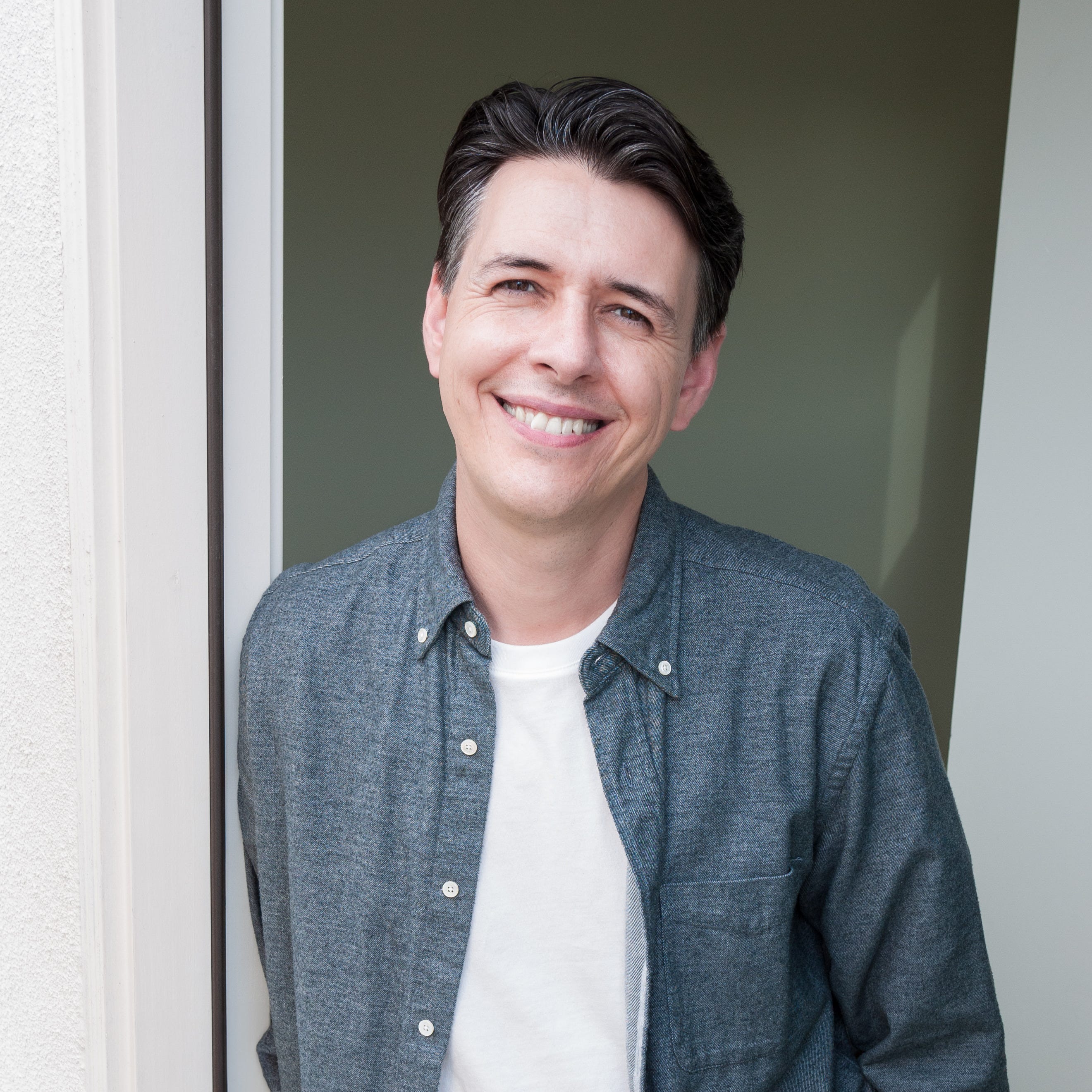
Mason Currey has spent much of his career investigating the working habits of artists, sharing all that he’s learned in two books, Daily Rituals: How Artists Work and Daily Rituals: Women at Work, as well as his popular Substack, Subtle Maneuvers. But in his latest book, Making Art and Making a Living, he takes a deeper look into how artists over the centuries have managed to afford their creative pursuits.
Currey hopes that the stories in the book offer solace to artists who struggle with the financial aspect of their work. “I want people to see that they’re not alone in confronting this,” Currey says. “That as miserable or thwarted or overwhelmed as they might feel trying to confront the whole dilemma of making art and also paying for your life, that they are actually in great company. They’re part of a lineage of people who have confronted this problem and often didn’t have a great solution and still kept making their way forward. And maybe also they will see some solutions or attitudes that they could borrow from.”
Over Zoom, Currey chatted with me about the four-and-a-half years it took to research and write the book, his own writing routine, and why today’s creator economy isn’t as new as we think.
This content contains affiliate links. I am an affiliate of Bookshop.org and I will earn a commission if you click through and make a purchase.
SANDRA EBEJER: What made you decide to write about the financial lives of artists?
MASON CURREY: I think it’s always the question for so many of us. You think, “I want to be a writer or an artist.” And you know it’s going to take all this time and trial and error and experimentation, and yet so much of that work doesn’t attract any income, or not, at least, reliable income, especially when you’re starting out. And certainly for me, thinking about trying to become a writer as a young person, it was like, how am I going to pay for this? How am I going to find a way to do it where there’s some money attached? I’ve always been curious about that question. And in my previous books looking at famous writers’ and artists’ working habits, their daily routines, the money question was always hovering over those profiles. Yes, this is a wonderful creative life, but how do they afford it? Of course, some of them had inherited income and some of them had spectacular success at a young age, but I knew there was more to that story, so I wanted to get into it.
The book includes so much information. What was the research process like, and how did you organize that giant body of research into something that actually made sense?
I really struggled with the structure of it. My original idea was that I would make it more of a history. I would start at the Renaissance and work my way forward and drop in on these famous moments in art and literary history and unpack what the money situation was, and I just totally overwhelmed myself. It was way too much to do, at least for me, and it also was a little dull.
I’m pretty good at telling individual stories, getting into how individual creators did their thing, what their struggles were, how they navigated around them, so I ended up focusing on which individual stories I researched that resonated with me, that I felt I could write in a compelling way, and I tried a bunch of different ways of organizing them. My editor was like, “Look, these stories fall into a few big buckets. You have jobs, you have patrons, you have government money, you have mooching off of family members. Why don’t you just try to organize it into these thematic sections?” I fought against that for a while, because I feel like you don’t want to know too much what you’re going to get in any given chapter, but what I realized is that you still don’t know what you’re going to get, because the way people dealt with their day jobs or their patrons or their family money is still very surprising. So that’s how it ended up being in these four big sections—family money, because I thought that’s the best possible scenario for an artist [laughs]; jobs, because that’s the most common thing all of us have to do; patrons, because that’s the whole other world of getting money from an outside source; and then my favorite, schemes, which is all the rich variety of other often eccentric or oddball or ill-advised ways that people cobbled together income as artists.

How long did it take you to finish the book? Because at one point you wrote that it was taking a lot longer than you anticipated.
I originally budgeted 18 months for the first draft, and then, as I was maybe five or six months out from that, realized I wasn’t going to make that deadline, and I needed to abandon the chronological history idea. I got an extension and I met that deadline, but then that version didn’t quite work, so then I wrote a different version, which also didn’t quite work. And then I wrote another version, which was closer but didn’t quite work. And then the final version finally worked. So I wrote three-and-a-half different versions of the same book with a lot of the same material, but with different ways of approaching it. All in all, it took four-and-a-half years.
Oh my gosh. How sick of it were you by the end of that four-and-a-half years?
Not actually that sick, because I love these stories. And as I was going, I was writing my Substack newsletter, and my frustration and my confusion was giving me a lot of great things to write about. I mean, partly it was procrastination avoidance, like “I can’t figure this out, so I’ll write this newsletter issue.” But also it was a way of trying to think through why this was so difficult or how I could approach it differently. Those two things went together in a nice, generative way. The regular, doable thing and the big, impossible thing energized each other, in a way.
Well, that’s nice to hear. Was there anything you learned in the writing or the research process that surprised you?
Overall, I wasn’t surprised by people’s difficulty, because I went into it thinking the money question is hard, so I felt validated to keep reading about how hard it was for how many people. For me it’s just comforting to read the journals or diaries or letters of these great figures and see they had the exact same feeling. They were just as miserable in their day job, and they worried they weren’t going to be able to make their art because they didn’t have any time or energy or they didn’t have the funding. So overall, I felt relieved that my experience is in line with what people have experienced through time.
Of course, there were all sorts of outrageous stories throughout the book, both ones that I could imagine myself trying to do and ones I could never do in a million years. I was really interested in Jeff Koons. There’s a famous story about him as a young aspiring artist working at the Museum of Modern Art membership desk. He was such a natural salesman and so charming and outrageous that people kept offering him jobs. Somebody offered him a job selling mutual funds, and he ended up selling mutual funds on Wall Street. And for the art community in the 1970s in New York, it was like, how could you go work on Wall Street? Working at a museum was obviously understandable. And he was like, “I need more money to make the kind of art I want to make.” And he pulled it off. So that’s the kind of person where I can never see myself being that much of a bold salesperson, but also I love that energy and find it inspiring.
Creative Reverberations is a reader-supported publication. Each interview takes many hours of work. To read all posts and support ad-free, independent journalism, please become a paid subscriber.
We live in this creator economy, and we all like to think that what we’re doing now is new. But something I learned from your book is there was a poet, Alexander Pope, who was selling a subscription model back in 1713, and he wasn’t even the first to do it. Nowadays that seems to be the route we’re all taking. You have a Substack; I have a Substack. Pretty much every creative I know has some sort of platform that they’re using to trying to monetize their work. How do you feel about that? Do you feel like it’s a sustainable way to make a living as an artist?
I wonder that all the time, as I’m sure you do. I’m in a group chat of other Substack writers and we all are constantly texting each other, “Here’s a story where this person’s doing this. Does that seem like the way to do it?” Again, it’s comforting to know that writers have always struggled with this. I was comforted to read about publishing in the 1700s because it was like the Wild West—it was both prestigious to publish, and also people thought of it as a lowly thing. It was in the league with vagrants and prostitution, this not particularly polite society thing to do, to be engaged with publishers. And Alexander Pope was someone who was like Jeff Koons, just really good at making influential friends and making himself someone they wanted to support, which is a gift that I personally wish I had. [Laughs]
But back to Substack... I don’t know. It’s like the more people come into the zone, the harder it is. But then, what are the alternatives? I mean, a lot of the things that used to be routes for writing in particular aren’t really financially sustainable anymore. I would like to think we’re at the cusp of some new solutions or some new innovations, but it’s hard to guess what they might be.
It’s very easy, as I’m sure you know, for artists to have a million ideas of things they want to accomplish but lack the organizational or time management skills to get it all done. You write very in-depth books, you publish regularly in your Substack, you run a weekly Zoom call for your subscribers. How do you manage your workload? Are you fairly regimented? Or is it like playing whack-a-mole?
I’m fairly regimented, only because I fear that my true self is deeply lazy and a procrastinator [laughs], so I hold myself to a routine for fear of what lurks just beneath the schedule. I get up early and I actually have a daily Zoom call—which I’m starting to think is an insane thing to do—for paid subscribers to the newsletter, every morning, 6 a.m. my time, for two hours. We all say, “Good morning,” we turn off the cameras, and we work separately together on our projects, and then we have a little check-in at the end. It’s a really cool group and has a lot of really nice supportive energy. I am starting to feel, after more than 400 days of this, a little burned out on always having to be on Zoom at 6 a.m., so I’m debating how to manage that. But that’s one thing that does keep me showing up for my work and for myself.
I set an every other Tuesday deadline for my newsletter, and for whatever reason, I feel incredible pressure to stick to that self-imposed deadline. I don’t think people really notice if I don’t make it, but I feel like they’re going to notice and be upset, so that keeps me going. I am in the very fortunate position of being able to afford to be a full-time writer, although it always feels like I’m just barely affording it, so I have to keep things in different stages of progress. I want to always have, if I can, a book project, and also a lot of smaller, short-term things, and if they can all bring in some amount of income, they can all add up to a sustainable practice. I mean, that’s the idea, at least.
One of the things that jumped out at me during the course of reading this was how much we, as a society, love the arts but how little we’re willing to support the artists. The Federal Art Project is something I’d never heard of, but it was an enormously impactful program run by the U.S. government. For those who aren’t familiar with it, can you share a bit about that program?
The book that really clued me into that program was Mary Gabriel’s Ninth Street Women, which is a truly fabulous history of the women artists at mid-century in New York. But the story is that when FDR was launching the WPA [Works Progress Administration], somebody was like, “What about artists?” And he was like, “Okay, sure. Yeah. We can give artists money, too.” [Laughs] And so the Federal Art Project was born, and all these downtown New York artists [who] often lived these barely subsistence-level lives all of a sudden were getting regular paychecks and could afford painting supplies and studio space and restaurant meals. It galvanized the whole community. I mean, all of a sudden they were all meeting to talk about what they were doing and they unionized, and they were making work for public murals. The whole art world as we know it, at least in the United States, was born from this one off-the-cuff act of government generosity. It didn’t last terribly long, but it had a huge impact. So many of the people we think of as monumental figures from that era, like Willem de Kooning, Jackson Pollock, Lee Krasner, in one way or another got project funds or were part of this world that it birthed.
That’s incredible. When you were starting out as a writer, what career did you envision for yourself? Were you looking towards journalism or fiction? What did you hope your trajectory would be?
I’ve been writing about this a little in my newsletter, actually, so it’s fun to think about. The thing I most love to read are novels, and I thought, “If that’s what I most love to read, that must be what I need to write.” I had a few years right after college of trying to write the Great American Novel while working at a library and truthfully, writing almost nothing. I had a professor who told me, “If you’re serious, get an easy day job and live someplace cheap and just write in your spare time.” I got the easy day job, and I got a cheap place to live, and then I wasn’t writing.
So after a while, I thought, “Maybe I need to find a way to get paid to write or be forced to write as part of my job.” So I ended up moving to New York and doing the summer program in the publishing industry, which got me a job at a small architecture magazine, where I did end up on the editorial side, where I was doing a lot of writing, and that was really great training. I learned a ton. I learned how to edit and write on deadline and write in different formats at different lengths, but it wasn’t really the kind of writing I wanted to be doing. So as a hobby, I started this blog about writers’ and artists’ daily routines, and I ended up getting a book deal to do my first book. So, in a funny way, all my confusion about how to be a creative person and how to make yourself do this thing that you want to do but you’re maybe not doing led into this writing niche, which is writing about that and trying to understand how we can help ourselves do interesting, creative work.
Are there any artists that you turn to for inspiration or who have influenced your work?
My whole life is drawing inspiration or strength or sustenance from these different lives. I feel like it keeps me moving forward. My newsletter title is inspired by this letter that Franz Kafka sent in 1912, I think, where he’s complaining about his day job and his living situation and how he can’t write. It’s this really great, over-the-top complaint, and he has this line where he says, “If a pleasant, straightforward life is not possible, then one must try to wriggle through by subtle maneuvers.” And when I first read that, it hit me so hard because I thought, “Yes! Of course! Wriggle through by subtle maneuvers. That’s the goal.” So often you can’t actually fix all the big picture stuff about your life, but you can try to make your way forward little by little and do whatever things help you navigate that. So that’s why my newsletter is called Subtle Maneuvers, and that’s why I look to these people’s biographies, because I think I’m always trying to pick up little habits or attitudes that I can borrow or learn from.
Are there any tips or tricks that you’ve picked up from these artists that you utilize on a regular basis?
I’ve always written best first thing in the morning, the earlier the better. If I can get up really early before the sun is up and no one else is awake and no one expects anything from me, I feel like I have this special kind of focus that I just don’t have later in the day. But as a younger person, I never liked getting up early and actually struggled to not snooze the alarm. Doing the first book, I was also working full-time, and the only way I could do it all was to get up early. And I learned that if that is the window of opportunity I have each day, I should really try to seize it every day and not just when I’m in some deadline crunch. And so I was inspired by seeing how the people in those books arrange their lives around when they could do this kind of work or when they had that kind of focus, and it made me want to do the same thing. I do still get up at 5:30 every weekday morning all these years later, even though I still don’t like getting up early. It is my one stupid writer trick. [Laughs]
I think it’s safe to say that the worst kind of stress is financial stress and the fear of not making ends meet. And there are a lot of people who don’t pursue a creative path even if they want to because they’re so afraid of that aspect of it. Given all that you’ve learned in your work, what advice you would have for somebody who has the desire to do something creative, but is reluctant due to the financial aspect of it?
I would say they should listen to the voice or the instinct that is wanting to do something that may seem impractical. For one reason, I don’t know what qualifies as practical at this moment in time. I mean, so many careers, so much of the world, seems very uncertain. At the very least, if you’re following your pull towards doing something that really interests you or that you feel called to do, at least you’ll always have the satisfaction of that. I don’t quite believe in the phrase I often heard growing up, which was “Do what you love and the money will follow.” I don’t necessarily think the money will follow, but at least you’ll be doing something that you like or you’re interested in, and you may be surprised at how you find ways to pay for it. So don’t ignore whatever that impulse is, because it’s a really good compass.
To learn more about Mason Currey, visit his website.
To purchase Making Art and Making a Living, click here.
This interview has been edited for clarity and length.
You might also enjoy…


Currently reading Daily Rituals Women at Work. It’s fantastic and I’ve already recommended to multiple folks. Great interview.
I've been a reader of Mason's work for years, and Subtle Maneuvers was a big part of taking the plunge into freelance writing full-time, and here I am nearly six years later. These evergreen questions of how to make life as a writer work are always fascinating. The one idea I'm excited, and almost bracing for, in the new book is the role of family money. All too often I'm on calls with other female journalists and I ask them how they feel with their finances and I hear the response, "Well, my husband is an engineer, so I'm fine!"
Perhaps I'm stringent in that I find this to be an affront, and that I can't fathom having my partner financially support me in order to make it (art, career, life, whatever) work.