

CR 084: Paul Rees on Journey, Toto, and the Golden Era of Pop-Rock Radio
The music journalist discusses his latest book, “Raised on Radio: Power Ballads, Cocaine, and Payola – The AOR Glory Years 1976-1986.”

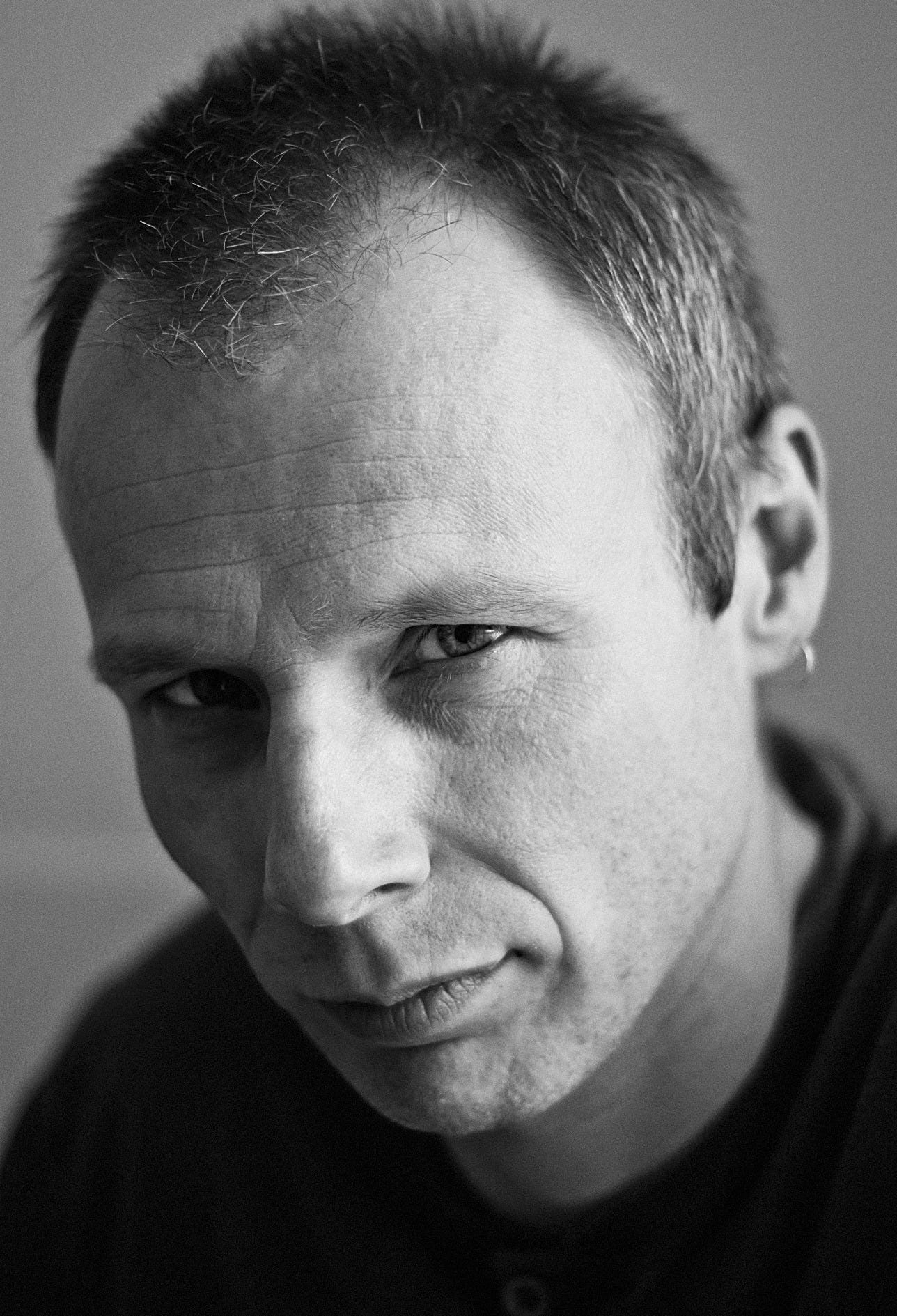
Over the course of his decades-long career, journalist Paul Rees has served as the editor-in-chief of the U.K. music magazines Kerrang! and Q, has written for countless music publications, and has interviewed some of the biggest names (and egos) in the entertainment industry, much of which he dishes on in his entertaining Substack, Access All Areas. In recent years, he’s turned to writing books, penning biographies on Elliott Smith, John Mellencamp, Robert Palmer, and The Who’s John Entwistle, while co-writing memoirs with Toto’s Steve Lukather, Foreigner’s Mick Jones, and UFO’s Pete Way.
In his latest, Raised on Radio, Rees provides a thoroughly researched and fascinating oral history of AOR, or “album-oriented rock,” a genre that you might not know by name, but would certainly know if you heard it. Dominating the FM airwaves from the mid-1970s through the mid-80s, AOR was radio-friendly rock at its finest. And in Raised on Radio, Rees talks to many of its key players, including members of Heart, Journey, Toto, and Styx, among others. In its review, Kirkus calls the book “a tightly edited oral history that manages to be both informative and entertaining.” For Rees, it was just something he wanted to do as a fan.
“So many of those songs have endured and remain in the ether,” he says. “At the time, it was critically lambasted or ignored, and it seems that it hasn’t gone away. There’s also that whole sense of musical history. This was a time when people went into recording studios and made records to tape. It felt like a celebration of the way things used to be done.”
From his home in Scotland, Rees chatted with me about the writing of the book, the evolution of music journalism, and the interviews he wishes he’d gotten.
This content contains affiliate links. I am an affiliate of Bookshop.org and I will earn a commission if you click through and make a purchase.
SANDRA EBEJER: This book provides such a comprehensive history of AOR. When writing a book like this, how do you start? Did you make a list of every possible band or artist who might fall into this category and take it from there?
PAUL REES: I started off by making the playlist on Spotify. It was an entirely personal one of songs that I remembered, songs I liked, and then you work outwards from there. I’m not a fan of quite a lot of the people in the book; I am a fan of others. You just have to accept that certain people have to be in there and are valid in being there. It’s like doing a family tree—you start with the obvious and work your way on from there. I mean, the obvious was Boston, the first record, and then Journey and Foreigner, and then you follow it along. And because of the way those records were produced and the sound of them towards the end of that period—because [the book covers] ‘76 to ‘86—there were people falling into it that were probably making records that justifiably were called AOR records, like Don Henley. I think “Boys of Summer” is a classic AOR song. I mean, Cyndi Lauper, “Time After Time.” People like that. And then some of the prog-rock bands, like Yes and Genesis, made records that were much more accessible and radio-friendly. So it’s just like picking up a thread. You pick up the thread and then follow it to see where it leads.
I was surprised to see Cyndi Lauper in the book because “Girls Just Want to Have Fun” does not sound like it falls within the AOR category. But you’re right in that “Time After Time” definitely fits. I guess it just depends on the artist and their individual songs. It’s not a whole album, per se, that has to fall under the AOR umbrella.
No. It’s the kind of thing that happens when a certain sound is prevalent or successful, or you hear it everywhere. A, the people behind it, like the producers and engineers, get used more widely. And B, people make records with that in mind. A lot of the people in the book said they used to have an FM receiver on the studio, so you could tune your car radio into the FM receiver, play your mixes, and they would come out the car stereo as if on an FM radio. They were consciously making records for radio. And I think that’s why Cyndi Lauper and Genesis started making records that they thought would be friendly to, particularly, American radio.
It was interesting to read how many people would go into their car to listen to the song, or how excited they got when their song was played on the radio for the first time. You don’t get that anymore. Those days are gone.
It’s that celebration of something that’s almost a distant past. From the artist’s point of view, being able to hear your songs on the radio mattered enormously. And for those of us listening to music, the amount of music that you would discover from the radio—there were certain shows or stations that you would listen to religiously, and that just doesn’t happen anymore. That whole journey from hearing on the radio to having to physically go to a record store to buy something has gone away. And at the risk of sounding like some decrepit old person, I think some of the magic and the mystery has gone with it, and the value we attach to music’s gone in that sense, as well.
I agree. In addition to pulling quotes from previously published interviews, there are many original interviews in the book. Were you able to speak with everyone you wanted to? Were any musicians hard to get?
Yeah. Steve Perry from Journey I would have loved to have spoken to. I’m an enormous fan of Steve Perry. I think that’s a voice from the gods. He’s a remarkably talented guy. But I had no way of getting to him. I would have really liked to talk to Tom Scholz of Boston but wasn’t able to do that. With things of this nature, there are always people that you have a hard time tracking, or simply don’t want to do it because it’s not strictly about them.
But I spoke to a lot of people. Billy Squier—I really enjoyed that interview. He’s one of those guys I really loved at the time. He was quite reticent to do it. I found his email and emailed him directly, and he came back and said, “I don’t want to talk about myself, but I’ll talk to you about my favorite radio station in Boston.” And obviously, you get him on Zoom, and within five minutes, he’s rattling away about this and that. But he was great, and it’s been really interesting, because he sent me a song he’d been working on post having done all this. He dropped me a line just the other week, and he’s actually started making a record. It’s lovely to have that sort of contact. It’s almost like bringing someone like that back to life for you.

Something I learned from your book: I didn’t realize Thomas Dolby played on so many of these records. I had no idea that he was such a big part of this genre.
That’s the joy of doing it. I mean, I love books. I read the oral history of the Allman Brothers, and there’s tons of stuff in there that I had no idea happened. You [asked], how do you find out the people and who you want to talk to. One of the things I do is go back and Wikipedia records. You start looking at liner notes, and who’s still alive, who’s contactable, who can I talk to. And I had absolutely no idea [about] Thomas Dolby. I just wasn’t aware that Thomas Dolby had been on Def Leppard records and all that. And he was brilliant. He was really interesting to talk to.
Yeah. Or that Toto played on Michael Jackson’s Thriller album. These little facts that pop up in the book are just incredible.
And “Human Nature” was a Toto song. They weren’t using it and Michael Jackson wanted a pop-rock crossover song, and they sent him that. They literally had it biked around his studio on an old C90 cassette.
There’s a moment in the book where Lou Gramm and Mick Jones each tell the story about getting sax player Junior Walker to play on Foreigner’s “Urgent.” In Lou’s story, it was his idea, and in Mick’s story, it was his idea. Do you worry about fact checking when it comes to a book like this? Or do you let the individual’s story stay as how they remember it, even if it’s not factually correct?
When it’s about dates and the year in which things happen, the order in which they happen, I’ll check those because we’re all getting older and our memories are not what they were. I try not to let someone say something that isn’t accurate in terms of the time frame or stuff like that. But I think part of the thing that works, and it’s interesting about this kind of book, is that people do have very, very different perceptions and very, very different opinions and recollections of things. And in that case, short of some
one refereeing them, I don’t think they’ll ever agree on who said it. It’s illustrative of the relationship the two of them have. The two of them are competitive, quite adversarial, and they both see themselves, in a way, as gatekeepers of what Foreigner did during that period. I think it sheds quite a bit of light on that. So it’s not something that necessarily needs to be corrected. It’s more illustrative.
Creative Reverberations is a reader-supported publication. Each interview takes many hours of work. To receive new posts and support my work, please subscribe.
What was the research process like for the book? How did you organize it all so you could make sense of it?
I think that’s probably from a background of organizing stuff when you’re magazine writing because you have to deliver things to a deadline quite quickly. When I started, I happened across a way of doing research. I’d start with as much written research as I can—reading articles, looking at online interviews, books, and things like that—and then I start noting up and writing up in the order I think the book’s going to go—literally, in chapter order. And then as I do the interviews, I place the transcripts into that order. Obviously it’s not set in stone at that point, but it means when I sit down and write the book, there’s an actual framework there, and you can go in and work within that frame. Otherwise, it is just this spread of jumbled stuff. I found it was really helpful, because the first book I did on Robert Plant had a really short deadline, so it had to be organized. And it worked. I’ve just stuck with it.
I know you’ve interviewed a lot of very, very famous people over the course of your career. Was there anyone you spoke with for Raised on Radio that you were star struck by?
Yeah. Nancy Wilson, just because I love Heart. I mean, I love both the Wilson Sisters, but Nancy was such a powerful female figure, and she was a driving force in a hard rock band, which was unusual at that point. I would really have loved to have interviewed Pat Benatar for exactly the same reasons, but she declined to talk for the book. But Nancy Wilson was great because it was a Zoom conversation. She sat in the kitchen at home looking like Nancy, obviously, and she was delightful. I really, really enjoy interviewing Nancy Wilson.
Any favorite moments or stories from the book? Or was there anything you learned that surprised you?
Lots of stuff. Just the general sense of what a rich history it was, and how much went into the making of those records. I think the perception is that they factory engineered a lot of that music, and it really wasn’t. A lot of it was trial and error. [Toto’s Steve] Lukather said, “We were hammered by critics because it was the time of punk and new wave, and we were seen as the complete antithesis of that. But a lot of the stuff that we did literally happened on the floor, in the moment, in the room, and went down in one or two takes.” I spoke to Steve Smith of Journey, and he said there would be plenty of times when they’d walk into rooms, somebody would be playing, just messing around, and that would, within 20 minutes, become a song. I think it’s the fact of how much creativity and the creative process went into that. It wasn’t so much overthought; they were just very, very good musicians and very adept at the craft. But it was much more organic than perhaps at first thought.
It is interesting, though, that for all the bands that were out there at the time, there were a few key players that made this what it was. For example, producer Mutt Lange had his hand in nearly every album that came out during that decade. So it’s interesting, when you narrow it down and see that there are a couple of people that really made this happen.
Yeah, he’s obviously famously reclusive, but I think you can draw a line from Lang up to Taylor Swift. The sound that he made for those records is everywhere. It’s never gone away. He’s hugely influential, and he’s also a fascinating character, because he’s enigmatic. And in the absence of him talking, all these stories have sort of taken root about his quirks and his obsessive-compulsive nature and stuff like that. But, yeah, there’s him, and I think you’d have to say Tom Scholz [of Boston] and that whole sound they created. And then Journey—I think Journey is just a great band however you define them. They’re just a great American rock band. The way they wrote some of the songs they wrote—they’re just perfect pop songs.
You’ve worked as a music journalist for decades and you now run a Substack. What are your thoughts on the state of music journalism?
[Deep sigh]
Sorry!
I’m a recent convert to Substack, but there’s things I read daily that are beautifully written. There are reviews on Pitchfork that are undeniably great. There was a profile in The New Yorker of Willie Nelson, which is like a piece of poetry. What I think is sad is the music magazines regressed to the point where they were entirely retrospective. So over here [in the U.K.], you’ve got magazines like Mojo and Uncut that are basically recycling the past. Music also has to be about discovery and going forward. For example, I really like Zach Bryan and Jason Isbell and people like that. I don’t see interviews with Zach Bryan or Jason Isbell, and that used to be the purpose of the music press. It brought that to you.
Probably the scariest one for me is when I left Q, I was asked to do some stuff for one of the big broadsheet newspapers in the U.K., and they said, “We don’t want to do anything over 1,000 words.” I think that’s where it went wrong, trying to tackle the digital world at its own game. Music magazines were about the beautiful, deep, rich experience, and I miss that. I don’t think that’s there anymore. And I think that’s an enormous shame.
It’s depressing, I know. What do you want people to get from this book?
Enjoyment. And either going back to or discovering those records. The best books I’ve read on music made me want to go back and listen or rediscover or go out and find records. And if people get that, it’s a good thing. If people find enjoyment from it, especially with the world we’re in at the moment, that’s quite a good thing. A bit of distraction is not a bad thing at the moment.
Any advice to someone who might want to write an oral history of a larger topic like this?
Always still view it as a story. I think sometimes what gets forgotten in biographies and oral history is this narrative—beginning, middle, and end. It doesn’t matter if it’s fiction or nonfiction, the essence and the value of the story is hugely important. So before you do anything, [ask yourself] what’s your story? Where does it start? What’s the meat of it? Where does it end? Where do you want it to end? Everything else fits around that, not to just be a jumble collection of quotes.
Now that this book is finished, what’s next for you? Are there any big projects you’re working on or hope to tackle in the future?
I can’t talk about it, because it’s in the process of going through the machinery that is publishing. And then there’s a couple things that I would like to do after that. But that’s the joy of writing, isn’t it? It’s the joy and the terror of it. You always think there’s something to write, and then you hope that never stops being the case. [Laughs]
To learn more about Paul Rees, visit his website.
To purchase Raised on Radio, click here.
This interview has been edited for clarity and length.
You might also enjoy…

