

CR 098: Tracy Bonham on 30 Years of ‘Burdens’
The Grammy Award-nominated musician discusses the 30th anniversary of her debut album and its hit single, “Mother Mother.”

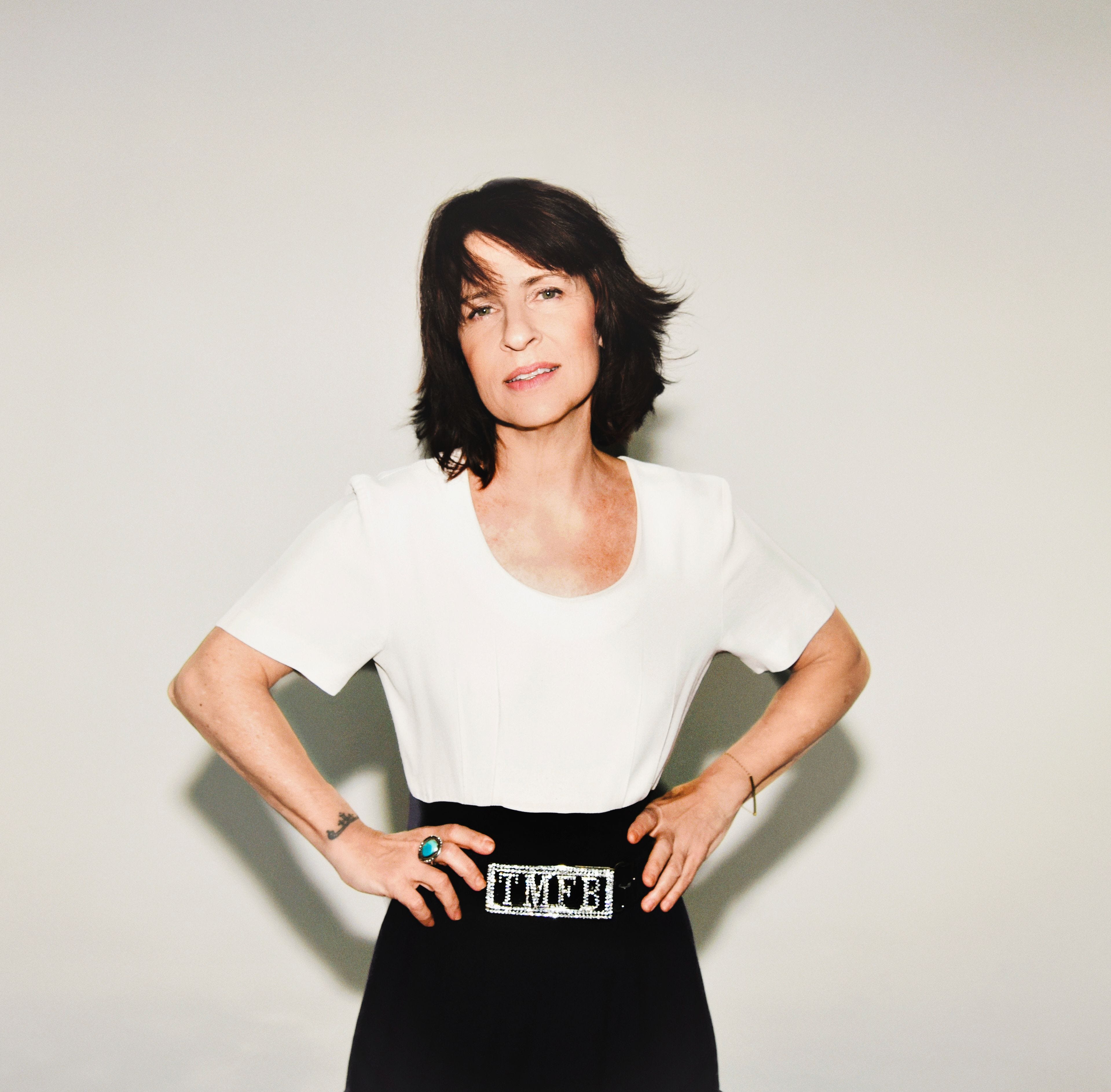
In 1996, Tracy Bonham burst onto the music scene when “Mother Mother,” the first single off her debut album, The Burdens of Being Upright, took over the airwaves. Two Grammy Award nominations, an MTV Video Music Award nomination, and many comparisons to Liz Phair followed. But, as listeners would soon discover, Bonham wasn’t just another, as Howard Stern called her, “angry young woman.” Her work defies categorization. A classically trained musician, she seamlessly incorporates violin and piano into even her hardest rocking songs, and to date has released eight studio albums, each different from the last.
Now, Bonham is celebrating the 30th anniversary of Burdens with an upcoming album, due out in November, in which she will re-record every track. She says it was important for her to reconnect with the songs, which she views differently now that she’s in her 50s.
“When Burdens came out, I was 27 or 28,” she says. “Those songs were trying to figure out young Tracy, and now I’m 30 years older and still trying to figure out young Tracy. So the thread is still there, but I think now comes with it some wisdom. Part of my mission is to alchemize whatever that anger was, whatever that deep sadness was, whatever the loss was that I was dealing with into something beautiful for the world.”
It’s a busy time for Bonham. Last year, she released Sky Too Wide, an album of new tracks alongside fresh takes on a few of her older tunes. And earlier this year, she played a series of shows in Boston, where she lived when her career began, which she admits was daunting.
“I’m so happy I did that because I had so many conflicting feelings about it, having spent 11 years there,” she said. “But I was young and I went through that awful relationship and then I wrote the album about it and then I left. But I also felt as though, because I came out of the gate so quickly, at least in other people’s minds, other musicians were jealous and haters, and I just didn’t feel comfortable.” (Not surprisingly, the shows were a huge success.)
Over Zoom, Bonham chatted with me about crowdfunding albums, the ever-evolving music industry, and how a breast cancer diagnosis changed her approach to making music.
Creative Reverberations is a reader-supported publication. Each interview takes many hours of work. To receive new posts and support my work, please subscribe.
SANDRA EBEJER: It’s crazy to think that Burdens is 30! That album is very much a rock album, but you’re a classically trained musician and you played violin on it, as well as guitar. As a result, your music really doesn’t sound like anything else out there. When you were first starting out as a young woman, was it difficult to convey to others how you wanted your music to sound?
TRACY BONHAM: I would say, “yes, and.” I’ve been discovering, as I look back, the stage and the studio and the rehearsals was really my only place where I could feel comfortable saying what I wanted. So, in a way, I felt like I could be understood. Not always did it turn out exactly the way I wanted it to, but I do feel like I had enough knowledge to be like, “No, this needs to be this way,” and most people could understand that.
That’s great. You’ve been playing music since you were very young. Were you one of those kids who was drawn naturally to playing, or did you kick and scream and fight the lessons like most kids?
No, totally born into it. Just out of the womb, this is what you’re doing. My grandfather was a musician, my mother was a musician and then music educator, so it was just in the water. It was a natural thing for me.
When “Mother Mother” came out, it was a huge hit. Suddenly you were all over MTV and in magazines and your song was on the radio. What was that period like for you?
It did feel rather sudden in that I had only just started writing songs. It felt like only a few years prior I had a handful of songs, and then all of a sudden, I’m a songwriter! And boom, now you’re expected to write more! I was thrust into the limelight, and there was a lot of pressure, and I was not prepared for it. Now, I had been a musician all my life and I was used to performing—I’d been on a stage since age five or seven—but the business was completely foreign to me. I’m still learning that business relationships should not be friends, and I got myself into partnerships that did not work, as far as management or whatever. There was a lot to juggle, and I wasn’t prepared for that in many ways. Also, my self-confidence... You know, fame is a weird thing, because if you’re a little bit insecure, then it really plays with your head. I felt like I had to please people. If people wanted things from me, I didn’t know how to say no. The boundaries were all blurry. So personally, I felt unprepared for it, but musically I felt ready, and I think that’s what connected with people.
“Mother Mother” has turned into an anthem of sorts. You’re doing the “Scream Like a Mother” event to raise money for the upcoming album. What does it mean to you to see all of these women screaming along to this track, decades after its release?
To hear these women’s accounts of what the song meant to them 30 years ago when they were growing up, or even younger people now, because they’ve connected with it, was amazing. I guess ’90s music is kind of back, and my song was in Yellowjackets, so I have some young people discovering my music now. I think this is why I’m doing this re-record. I just thought maybe this is something I wanted to do, but now I see it. I see these women. It’s becoming more and more evident to me. I want to be a voice or at least help women find their voice. It doesn’t even have to be women. I’ve just been feeling this urge to lead by example. I want to start doing this myself. I’ve been a holder-inner my whole life, especially in relationships. I think it’s time. There’s a movement happening. I think there’s this feminine fire that’s emerging, and I want to be a part of it, honestly. I want to help spread it. I want to be a part of it and also benefit from it myself.
Sky Too Wide, your latest album, came out of an incredibly challenging period in your life. What was behind the decision to include not just new songs but revisions of some of your earlier work? And why those songs in particular?
It started with a physical thing. I started having neck issues because I’d been playing the violin and the guitar for however many decades. It hurt to play. That’s why I don’t play as much. So I started playing piano more because it doesn’t hurt and my posture is fine. When I started to gig—and it was mostly solo gigs or duo gigs, because my career had kind of slowed down, I was a mom, I was doing smaller gigs, then Covid [hit]—the piano was my best friend. It was my place of solace. This is where I could work out my new songs.
[On] Sky Too Wide, I think all but one is a piano song, and then the rearrangements of songs were all on the piano, too. And it opened up this world of classical influence that I had from growing up and loving classical. My mom put me in piano lessons when I was seven, and I loved the repertoire, especially Debussy and Ravel and Satie, mostly the Romantic composers, and that started to emerge. It was really more for me and my own heart and soul, and then I started to perform it and then realized I wanted to record it.
Sky Too Wide was partially funded through Kickstarter, you’ve done other crowdfunding campaigns in the past, and you also have a Patreon. How do you feel about these monetization platforms? On one hand, you have more direct contact with your fans, but on the other, it’s a ton of work.
It’s overwhelming. I mean, yeah, you’re right. The silver lining is that there’s direct to fans. It’s really nice to hear from fans and share and also be more real. Gone are the days where the major record label is protecting you from the fans. Now, you can get in there and have so much interaction, which is really wonderful. But it’s overwhelming. What I’m learning is you’ve got to have your people, and there’s so many different hats to wear. I’m trying to do my social media myself, but holy crap would it be nice to have someone else deal with that. And then I’ve got PR, I’ve got all of these different factions, which I guess was what the record label used to provide. It’s a real education. It makes me look back and be grateful and less of a hater of my old record label, because I want to hate the music business in general, but it’s a big job. There’s a lot of rules. So I’m fighting it right now, but I’m also embracing parts of it. Definitely putting a team together is important, and that’s currently what I’m doing so that I can enter into this 30th anniversary with all guns blazing.
After you recorded Sky Too Wide, you were diagnosed with breast cancer. I know from my own experience with it that it’s life altering. How did the diagnosis and the treatment you endured change your approach to making music?
Wow. It really opened my eyes to how much I’d been holding on and allowing stress and anxiety from other people, relationships, whatever it was. It had taken me so far down the wrong path in my life. I wasn’t the director of my life. I let everyone else decide for me. And I honestly think that getting sick was an indicator. It’s a wake-up call. Also, my mom had breast cancer. She’s a survivor. When I watched her, I concluded that she was a holder-inner too, and that’s probably what made her sick. I’m no doctor, but I think that there maybe is a level of truth. My body, before I even was diagnosed, was already giving me signs that I really needed to pay attention. I had some gastro thing that was terrible. I went down to 92 pounds. I was emaciated and I couldn’t figure that out. And then I had the breast cancer diagnosis, so something was telling me to wake up.
What I did with that information was I went more into the present moment. I started to be more present with my music and my performances, more mindful, less chatty. Less like, “Oh, that wasn’t in tune,” or “What are they thinking right now?” It was more like, “This is my love bubble. I’m going to stay right in here and connect to love, God, divinity, whatever.” And that has really helped me come to this place where I’ve found a new mission to help others do that as well. But it’s been a great learning path. And in some ways I look back, and I’m so fortunate. It sounds like you are, too, but I’m kind of like, “Thanks, cancer!” [Laughs] Thumbs up! Can’t say that for everyone, but...
For sure. You have to look for the bright side and the blessings in it, because otherwise you’ll just bring back the cancer with all the anger and the rage.
Exactly! What does that do for you?
I’m really glad you’re doing well, and it’s all behind both of us. I’m curious—I’ve been doing a lot of interviews with people whose albums came out around the same time as yours, and it’s been interesting to talk to them about songwriting. Some of them say songwriting is so much harder now that they’re older, while others are like, “Nope. It hasn’t changed at all!” How about you? Do you feel like your approach to songwriting has changed over time?
Yeah, I do. It’s a different platform; it’s a different set of pressures. Before, in the ’90s and early 2000s, there was so much pressure. All you wanted to do is get on the radio. And then after Burdens I felt like I needed to be something, especially for my second album. I needed to be edgy. I needed to have another hit. I needed to be pop or sexy or whatever. So right now songwriting is not, luckily, about that. It’s more about connecting with something higher. It sounds woo, but it’s really more of a spiritual process for me.
And it comes and it goes. I’m kind of a binge writer. I go for long periods without, maybe because it’s so like [breathes out]. It takes over. But, for instance, “Damn the Sky (For Being Too Wide)”, the song on Sky Too Wide, came in a flow, a stream of consciousness. It’s maybe the second or third time I’ve actually had a song where that has happened, and then I’ve released it almost as is. And those moments, they’re not all the time, but I do try to remain open for that. Even though the Burdens songs are already written, I try to do that, at least with the arrangements. I try to ask, “What would I want to hear now?” and not worry about pleasing others.
I like to ask people about their influences or sources of inspiration, things that they’re listening to that are inspiring them. You mentioned a few classical musicians, but are there any other works of art that you’re influenced or inspired by?
For sure, but why does this question always go [mimics head exploding], and I draw a blank? Like, what is wrong with me? Gosh, you know, I listen to all types of music from all places of the world. Senegalese music really gets me going. I love Fela Kuti, I love Éthiopiques. My son is from Ethiopia, so I really got into that, where there’s like Ethio-jazz. It just makes me happy, and it’s such a different sounding scale, but also with Westernized influence. I love Courtney Barnett. She has humor [in her lyrics]. Every once in a while you’re just like, “Oh my God. She just said that in the song?!” It’s almost conversational and sometimes mundane. It’s like a grocery list, and you’re like, “Why didn’t I think of that? I love that!” I love that kind of songwriting. Lately I just love those guilty pleasures, like going back into my childhood, where it’s like ’70s and ’80s music. It’s fun to dance around to and not give a shit.
You’ve collaborated with a ballet, performed with Blue Man Group, contributed to music made by some of the biggest artists in the world, released incredible albums of your own. Is there anything you haven’t done yet that you’d still like to do?
Yeah! It’s on my 5, 10-year plan. It keeps getting pushed back because I can’t stop being Tracy Bonham. [Laughs] But what is it? It’s not a musical. It’s like a folk opera, but it’s not an opera and it’s not all folk. I have this production that I’d like to put on. It’s called As the Crow Flies. I’ve been working on it for eons and eons. It keeps popping up and then I keep pushing it, but it’s really good. I have all of these songs written and demoed, and some of them are orchestrated, and they’re so good, and I have a storyline, [which] needs work. And I still can’t decide—is it an illustrated book with music? That seems awesome. I remember those from my childhood, where you listen and you turn the page. But it’s about 30 minutes of music, so then is it a stage production?
So calling the universe: I want to know, how do I put that out into the world? Because there’s a message. The crow can’t find his voice. He was teased by all the other songbirds who could sing, but he sounded funny to them, so he’s ridiculed. And so he goes into his own little imaginary world, and he’s got all these songs. One’s called “One Note Joe,” and it’s all like one note, much like “One Note Samba.” But these little characters, they all have their plight, and they all have their self-imposed limitations that they are trying to get over, and I feel like it’s going to be so great when I can actually sit down and really focus on it and bring it out into the world.
It doesn’t have to be one thing. It could be both a stage play and a book.
Right? I know. I just need to start doing it. At one point, I was like, “Maybe I’ll just start by it being a one woman show,” and I’m just workshopping it, you know? I’ll sing all the songs, maybe I want other people to do the voices. I don’t know.
I mean, Hadestown started as a concept album and then blew up to be something bigger.
I just got chills. Exactly! I do think about that.
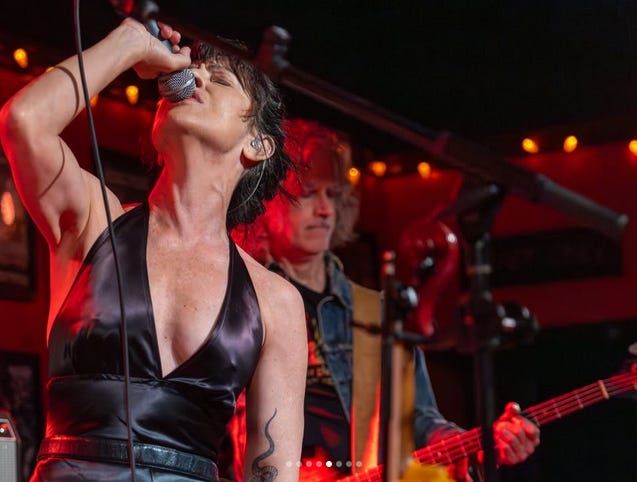
You’ve done a ton of work in the musical education space. What do you say to young artists who aspire to become professional musicians? Do you think it’s still possible for them to build a career in the field?
I think the word career needs to maybe be redefined or something, because I don’t even know what a music career is anymore. But if it’s self-expression and it’s your calling, then no one should ever discourage you from doing that. But you have to be like that Rilke [book] Letters to a Young Poet. He says something like, “If it’s not your passion, if it’s not something you eat and breathe, then maybe you shouldn’t do it.” Maybe you should find another job that pays, because you have to want to eat and breathe it and live it in order to really make any headway in the world.
I think the best music also comes from that place where it has integrity. It’s not just writing a pop song to get a buck. I don’t even know if anyone does that anymore. Now we have AI to do that. So, in a way, maybe the true artists, the young ones, will rise above. I’m hoping there’s going to be some kind of movement that is more about real artists, live music, things that we can see and feel and touch that are not based on artificial intelligence. I guess I would just talk to a young person and try to instill some kind of fire and passion, or have them ask themselves truthfully, “Is this something I really would want to hold my feet over the fire for?”
To learn more about Tracy Bonham, visit her website.
To see Tracy on tour, check out her upcoming dates.
This interview has been edited for clarity and length.
You might also enjoy…


When your friend interviews your other friend! Love it!
I remember her. Had her album (CD) back in the day. Nice to have a check in with someone who was part of my personal soundtrack back then.