

CR 092: Aaron Reynolds on All Things ‘Creepy’
The New York Times bestselling author discusses his enormously popular series of “Creepy” books, and the challenges of writing for children.

In Aaron Reynolds’ Caldecott Honor-winning picture book Creepy Carrots!, Jasper the Rabbit is terrified to learn that the carrots he loves may be stalking him. Published in 2012, the wonderfully weird story with vivid illustrations by Peter Brown spent 14 weeks on the New York Times bestseller list and was such a huge hit with kids that it spawned two additional Creepy books—Creepy Pair of Underwear! and Creepy Crayon!
Over the years, Reynolds—who is the author of more than 50 other highly acclaimed children’s books—noticed that when he visited schools, kids of all ages, even those in fifth or sixth grade, wanted to talk about the Creepy books. It dawned on him that perhaps Jasper’s tales could be expanded to even creepier stories for chapter book readers.
“I’ve always wrestled with, ‘I wonder what’s gonna happen to Jasper when he grows up?’” Reynolds says. “He’s either gonna need some serious therapy, or he’s going to own this and become the next Steven Spielberg or something.”
The thought gave Reynolds the idea of making Jasper the host of standalone stories. “I thought that could be really fun for kids who have grown up with the picture books to then graduate into stories with a familiar character that they trust as a storyteller but take the stories to a weirder place. So that was where the spark of the idea came, and once I got down the road on it, I got really excited. The idea of having a series of standalone stories where they’re all tied together by Jasper as the kind of Rod Serling host of them, but each one gets to be a standalone episode of The Twilight Zone—man, the possibilities of that. I have a lot of weird ideas for stories, but I don’t always know where to put them. Not everything I come up with is a good fit for another Creepy picture book, but this new series opens the lid on that. Any weird, out-there story that I think of now, I feel in a lot of ways could work with this series.”
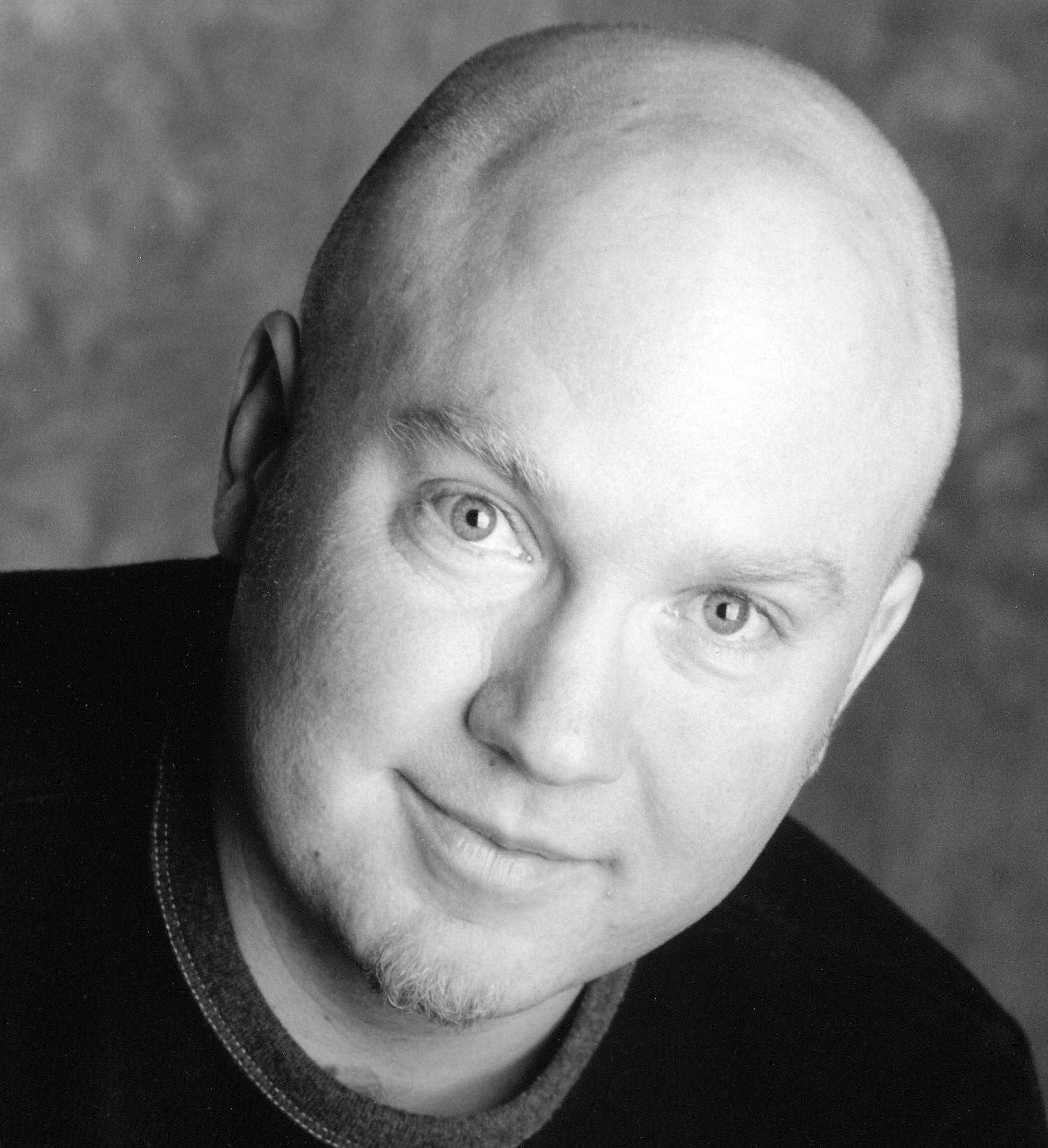
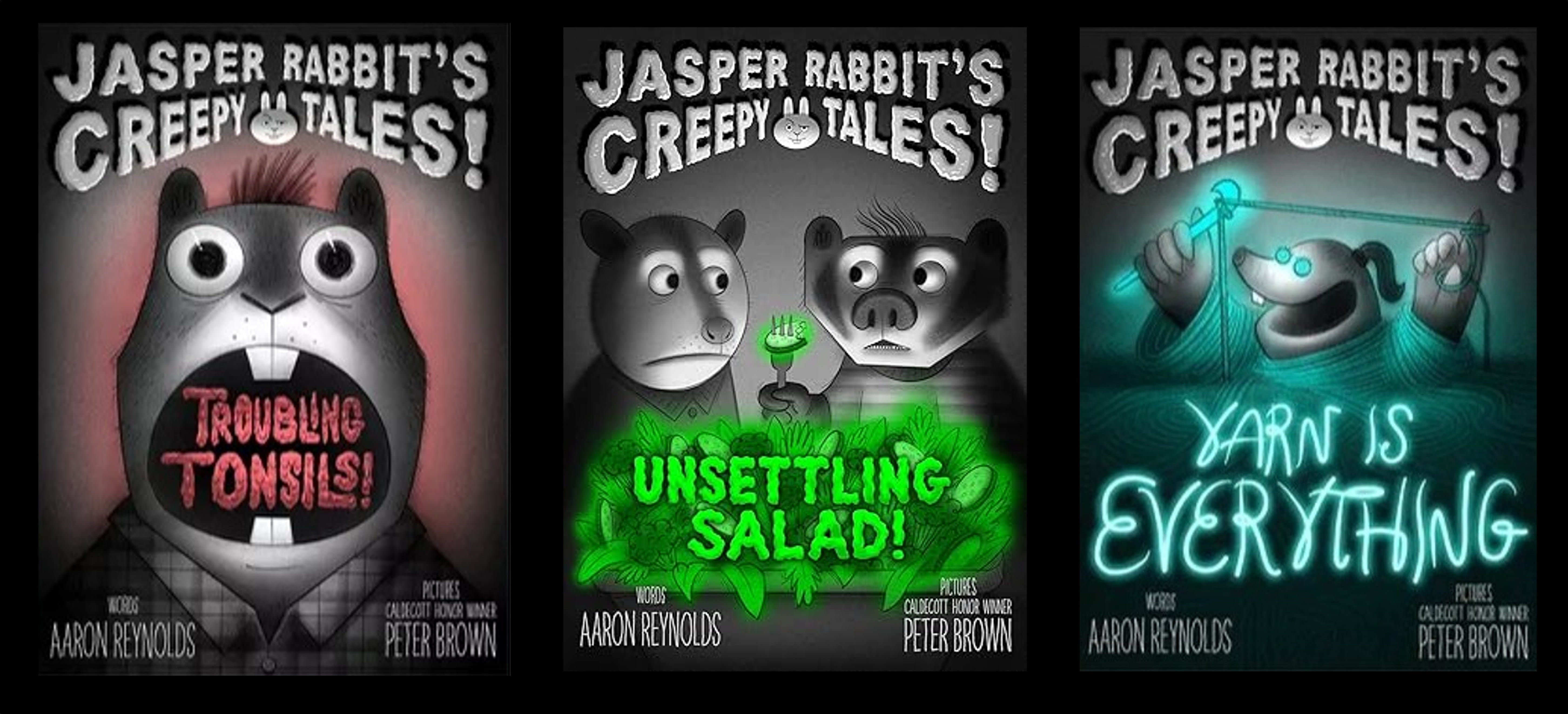
The first two books in the series, Troubling Tonsils! and Unsettling Salad!, were instant New York Times bestsellers. The next release, Yarn is Everything!, is due out this July and happens to be Reynolds’ favorite of the three. “I am very excited about Yarn is Everything!,” he says. “It’s about a mole who is extremely addicted to crochet. It’s the supernatural crocheting book you never even knew you needed. It’s probably the weirdest of the three and I think it’s the one I like the most.”
Reynolds chatted with me over Zoom about his writing process, the challenges of writing for kids, and his unusual career path.
This content contains affiliate links. I am an affiliate of Bookshop.org and I will earn a commission if you click through and make a purchase.
SANDRA EBEJER: I read on your website that your dad was in the Air Force, so you moved around a lot as a kid. Was writing something you were doing in those days, during all of those moves?
AARON REYNOLDS: No, furthest thing from it. I was not a kid who liked books. I was a rowdy kid, very active, very loud and obnoxious. We didn’t have a lot of books around the house growing up. My parents weren’t big readers. I knew reading for fun was a thing. I saw kids doing it. But to me, that just looked like such a quiet thing to do for fun when I could run around screaming. I don’t remember anybody ever reading a book out loud to me. I mean, maybe it happened, but I have no memory of it.
And then in fifth grade, I had an amazing teacher named Mr. Hunter. He read a chapter of a book out loud to us every day, and I had never really heard a book read out loud. I have very distinct memories of that being a light bulb moment, like, “What? This is what books are? Why didn’t somebody tell me?” I didn’t know that books were so full of possibilities and imagination. I remember him reading James and the Giant Peach and me just being like, “Those aunts just got murdered by a peach! What? You can find this in kids’ books??” You know, you don’t know your life’s being changed when it’s happening, but looking back, I can see that was a pretty life changing year, having him for a teacher.
How did you end up deciding to pursue writing as a career? And why children’s books?
I didn’t know being a writer was even a thing. I didn’t know you could grow up and become a writer. The first time it happened was in fifth grade. Mr. Hunter put on a play of Rumpelstiltskin, and he cast me in it. And again, it was another light bulb moment. I was like, “This is fun. I get to be rowdy, but in front of an audience!” From that point on, I was really into choir and drama and plays. And when it came time to be serious about what I might want to do for a living, all I knew is I wanted to do something using my imagination, and the only thing I could think of [was] you could go to college and major in theater. So, I went to theater school and graduated and moved to Chicago to do professional theater, and I was doing that for years and having some success. It was during that time that I got a chance to work with this production company, and they were creating some new theater to bring some inner-city kids in to see. And they were like, “We’re gonna write some original stuff.” They asked some of us that were part of the group to participate. I was like, “Yeah, I’ll try my hand at that.” I’d never written anything before and loved it. Again, another light bulb moment. I was just like, “This is really cool. I get to take all my sense of humor and all my imagination and all that rowdiness that I put on stage, but I get to put it into this whole story.” It was like being an actor and a director and a producer, all in one shot.
Creative Reverberations is a reader-supported publication. Each interview takes many hours of work. To read all posts and support ad-free, independent journalism, please become a paid subscriber.
So, I started to think maybe acting is not where I should be, maybe writing is where I should be—and writing for kids, especially, because you could do anything with kids. They’ll go with you. I mean, I could never get away with writing a story about a bunny who’s scared of his own underpants for adults. But kids will go with you on that story. I found writing for kids to be so much more exciting and full of possibility than writing for adults, so I started trying to see if I could get published.
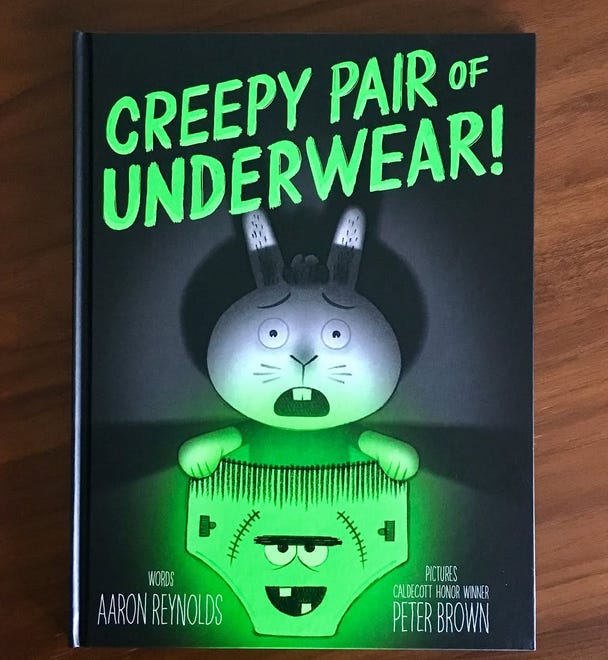
We were huge fans of the Creepy picture books when my son was little. We actually read Creepy Pair of Underwear! first and he thought it was hysterical. How did the idea for that book first come about?
So, Creepy Carrots! had come out. It had done, surprisingly, really well, because Creepy Carrots! was widely rejected by publishers when I first wrote it. They were like, “This is not a kids’ book. This is weird. Who hurt you?” They didn’t know what to make of it, until it finally landed with my publisher, who wound up publishing it, and it did really well out of the gate. It won the Caldecott Honor, hit the New York Times bestseller list. My publisher asked me for another one and I was very resistant. I didn’t conceive of this as, first of all, a series. Second, I feel sometimes when a picture book does well, then they’re like, “Let’s strike while the iron is hot, and do as many of these as we can.” And they sometimes go on far too long. I was really resistant. I didn’t want to make another book unless I had a good story to tell.
So I told my publisher, “I’m open to doing it, but I’ve got to have a good story, and right now I don’t.” Years passed, and I didn’t think I was going to do it. I was at a school, and we were talking about Creepy Carrots!, and this kid came up to me afterwards. I’ll never forget this kid. He said [using deep booming voice], “Aaron Reynolds, that Creepy Carrots! book? Hilarious.” He was so funny. He was the weirdest little kid. He said, “You need to write a book about scary underpants.” And I was like, “That’s good.” Immediately that was very funny to me. I went home and that idea kept bouncing around in my head, and I’m like, “Huh. Creepy underwear. Creepy underwear. Okay...” And the story came in this idea of glow-in-the-dark underwear. I don’t know where it came from, but it just popped into my head, and it took shape. And if I’ve got a story that I can be happy with, then yeah, I’m excited to do another book about it. But the idea came from a kid who said I should do a book about scary underwear.
What’s your writing process? Do you plot out your books in advance?
I don’t write anything out in advance. I don’t outline a plot. I might have a sense of where it’s going, I might have some bullet points of some ideas of things I want to see happen in the story, but I really weave it together. To me, the magic happens sitting at the keyboard. My best writing happens right in front of the characters, right in front of the keyboard where I paint them into a corner and then they have to figure it out. I find my worst stories happen when I’ve done all the thinking in advance. But when I’m having to think on my feet and put myself in the mind of my characters, they tend to come up with much better ideas than I could.
I think it was Picasso who was like, “Inspiration must find you at work.” You don’t sit around and wait for inspiration; you sit down and you start making your fingers move on the keyboard, and you do the best you can. And somewhere along the way, if you’re lucky, you get swept up. To me, that’s where the best stuff happens.
I’ve interviewed a lot of children’s book authors, and the one consistent thing they say is that it’s surprisingly difficult to write picture books. What are some of the challenges you’ve faced in writing your books?
I agree with that completely. A lot of aspiring children’s authors think, “I’ll write a picture book. Anybody can write a picture book.” And it’s incredibly difficult, from a craft standpoint, to write a picture book for the picture book audience, which is a very specific audience, and you only have a certain amount of words to work with. I try to challenge myself that every picture book manuscript I write is less than 300 words, which is nothing. You sneeze and you’re done. That means every word counts. Every word has to do double and triple duty. I rarely wind up using many adverbs. When it comes to description—I always tell kids this in my writing workshops—one great verb is worth 10 descriptive words around it. So I could say, “He went to the store, and he didn’t want to go to the store, but his mom was timing him, so he ran as fast as he could.” That’s a lot of words. Or I could say, “He zipped to the store.” That one verb does the work of 12 of the words in the other sentence, and that’s how you have to think as a picture book writer. You have to think that every word counts, and every word has to do double and triple duty and heavy lifting. And the best words for that are verbs. The verbs are where the power is.
I’m very particular when I go back and comb through in my editing. I’m ruthless on trimming. I hack with a machete. I make myself cut that thing down to 300 words or less. If I can’t do it in 300 words or less, then I’ve got no business trying to write the story. So, that means getting out that machete and hacking whole sentences or halves of sentences and going, “Find one word to say the same thing.” And verbs are the only ones that can do it. Fifty descriptive adverbs and all the adjectives in the world don’t add up to one amazing verb. So, yeah, it’s a hard thing. It’s a very uniquely weird, specific thing all unto itself. Where else can you tell a whole story with a beginning and middle and end to the harshest critics of all, five-year-olds, and do it with almost no words? It’s crazy.
And also try to teach some sort of lesson in there as well.
If you can. I try not to worry about that. People crack me up when they come up to me and go, “I love your lesson in that story.” And I’m like, “I didn’t write a lesson in that story.” I don’t worry about the lesson. To me, a good story will always have some kind of a theme built in, and it will be different to every person. People read Creepy Carrots! and they think it’s about don’t be greedy. And if that’s what you see then I’m glad you enjoyed that, because I didn’t write a story about don’t be greedy. I wrote a story about a bunny who’s being stalked by weird carrots. [Laughs]
One of the things I love so much about Creepy Pair of Underwear! is the illustrations and that weird, smiling face the underwear has. What is the relationship like with your illustrators? Do you contribute feedback in any way?
While there are certainly exceptions to the rule, by and large, the way it is done in the picture book industry is that the author writes the story, works with their editor at the publishing house to turn it into the best possible version of the story that they can, and then the publishing house, whether it’s the art director or the editor and the design team, will pick an illustrator. They will work with the illustrator to get the best possible illustrations. The artist will then go and work on the illustrations separately and completely in isolation from the author, and they will come up with the best version of what they think it should look like. And there’s a reason it works that way, and I really respect that reason: an author can be too close to their story. An author can fixate on the wrong things. The author can get back sketches and be like, “But I saw the dog as being black with brown spots.” Who cares what you saw in your head? That doesn’t matter. Nobody cares! That doesn’t mean that what you conceived of when you were writing the story is the most universal way to tell the story, the way that’s going to be the most interesting and exciting to tell a story, the way that’s going to open up the story to the maximum number of kids from the maximum number of different experiences and backgrounds. Not to mention, hopefully you’ve got this amazing artist—I’ve been very lucky—that has their own perspective and their own way of looking at the world, that will come up with things you never conceived of. You should be so lucky.
That, to me, is the secret sauce of picture books. The magical alchemy of picture books is an author writing their best story, an illustrator taking that story and interpreting it their way through their lens, and what you wind up getting is something that never would have been the same if the author had been given the leeway to go and boss the illustrator around and say, “Draw it like this. Here’s what it looks like.”
I’ll give you a story that’s a perfect example. If you read Creepy Pair of Underwear! and you don’t look at the pictures, you only read my words, you will see that I never describe the underpants in my story. I wrote the words, the manuscript, and I did not describe the underpants. The closest I get to it is that they “had a ghoulish greenish glow.” That’s all I say. Now, I think we forget that because we’re so used to seeing those classic underwear, but I never describe them with my words, and that’s very purposeful. When we were first looking at the manuscript before it got sent over to Peter, my editor was like, “This is amazing! Do you have any thoughts on what the creepy underwear should look like?” And I said, “I have no idea, but I’m sure Peter is going to come up with something brilliant.” And look what he came up with! Never in a million years would I have thought of that. Frankenstein underpants? Are you joking me right now? That is genius! What better way to make an anthropomorphic pair of underpants that have to have expressiveness?
You’ll see that in a lot of them—like in Creepy Crayon!, the crayons seemed happy to see him. Seemed happy. I didn’t say he smiled. I didn’t say he looked at him with his big, smiling face and his big, shining eyes. I keep it as vague as possible on purpose, because it gives Peter something to work with and lets him unleash the possibilities without it being locked down into something specific, because I know he’s going to come up with things that I could never imagine.
Who are your influences as a writer?
I like writers that break the rules. Roald Dahl was so ahead of his time. I really don’t think he would get published today. He let bad things happen to the grown-ups. He had bad grown-ups learn their lesson. He didn’t always have characters that modeled good behavior. It’s so fascinating to be the lens that adults look at children’s books through, because I got a lot of comments and reviews. If you look on Amazon, I’m sure you’ll find more than your share of, “This character is not modeling very good behavior.” Well, no, he isn’t. He’s not there to be a model citizen. He’s there to be an interesting, dynamic character that hopefully develops and grows and goes somewhere along the way. The model citizen rarely makes an interesting character, and that’s how Roald Dahl wrote. His characters were flawed, and bad things happen to them sometimes, and adult characters got what they deserved. I mean, look at Matilda. Trunchbull grabs kids by their ponytails and flings them around the air and then launches them across the sky. That’s just great stuff! That’s good storytelling, but it would break a lot of rules today, and I like that.
There’s a reason why kids, all these years later, still read Charlie and the Chocolate Factory. I mean, when those kids are in that factory, you’re never 100% sure if Willy Wonka’s gonna just let those five kids die. He lets the kid get shrunk and then sends him to the gum stretching machine. What? That’s insane! Augustus Gloop gets sucked up the tube and who knows what happened to him. That’s just good stuff. I like when stories break the rules and have a weird side to them. I would say definitely writers like Roald Dahl are huge influences on me, for sure.
Yarn is Everything! comes out in July. What else are you working on? What’s after that?
I am working on a fourth Creepy picture book, to be determined when it comes out. It’ll be ready when it’s ready. You probably could hear the excitement for the chapter book series when I was talking about it earlier. I’ve got so many ideas cooking for books four, five, and six in that series, so I’m kind of all Creepy all the time right now. After I get the picture book finished, whenever that is, then I’ll turn my attention to chapter book four, five, and six and jump on those and see what happens. I never imagined so much of my time would go towards the Creepy. But, it’s worked out that way. As long as I’m still enjoying it and as long as there’s still stories to be told, and kids want them, then I’ll pursue it.
To learn more about Aaron Reynolds, visit his website.
To purchase Yarn is Everything, click here.
This interview has been edited for clarity and length.
You might also enjoy…

