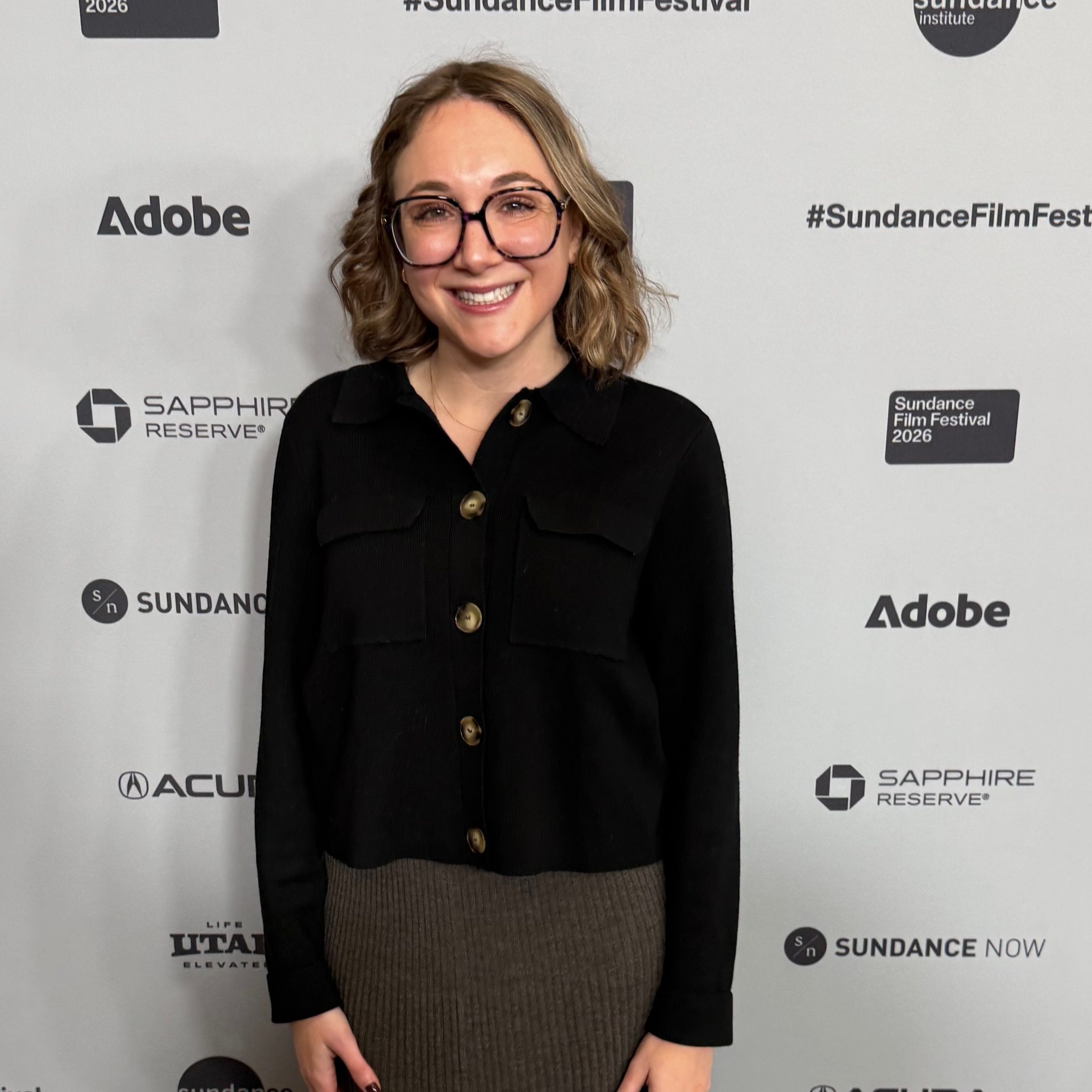
CR 086: Casting Director Jamie Ember on Social Media, Audition Tapes, and the Ever-Changing Media Landscape
The “Reminders of Him” casting director discusses her career path and latest projects.
As a kid growing up in the heart of the entertainment industry with a screenwriter-producer father, Jamie Ember knew she wanted to be an actress. Her parents weren’t supportive of her being a child star, but they encouraged her to take acting classes and try out for school plays, and said that once she turned 16, she could audition for television. But while in high school, she began to realize that perhaps acting wasn’t her calling after all.
“I went to this high school in Los Angeles called Harvard Westlake, where a lot of actors go and everyone is incredibly talented,” Ember says. “And I realized very quickly that I was not as good as people like Ben Platt and Beanie Feldstein.”
Rather than give up her dream entirely, she pivoted, stage managing school plays while assisting the actors with their lines. “I turned 16, went on two auditions—one for Criminal Minds and one for the short-lived 10 Things I Hate About You TV show. I didn’t get either of them, and I realized, ‘Oh, I wanted to show up and be told I was special. I didn’t actually want to do the work. I didn’t want to prep the lines and learn about the character and develop something.’ I realized I didn’t love acting enough that the judgment was worth it and the rejection was worth it.”
Ember’s father saw how much she enjoyed working with actors and suggested she try out casting instead. He introduced her to a colleague whose wife, Terri Taylor, was, at the time, the head of casting at Paramount. Ember reached out to her, and between her junior and senior year of high school began working as Taylor’s intern. The experience set her on a path that has continued to this day. Before setting out on her own, she worked for a number of notable casting directors, including Carmen Cuba and Wittney Horton (Magic Mike), Alyssa Weisberg (Ginny & Georgia), and Joseph Middleton (The Recruit).
Today, Ember is moving up the ranks as a highly sought-after casting director, with three movies opening this weekend alone: the Colleen Hoover drama Reminders of Him, the Lauren Noll comedy Same Same But Different, and the Russell Goldman thriller Sender, starring Jamie Lee Curtis and Rhea Seehorn.
Over Zoom, she spoke with me about social media for actors, the pros and cons of today’s self-tape audition process, and her advice to those aspiring to work in casting.
Creative Reverberations is a reader-supported publication. Each interview takes many hours of work. To receive new posts and support my work, please subscribe.
SANDRA EBEJER: When you take on a project, what are the first steps? Is it just a matter of going through the script to figure out what is needed? Do you have conversations with the director about their vision?
JAMIE EMBER: Someone reaches out to me or my agent and says, “We have this project. We saw that Jamie worked on something similar. We like what she does.” I always ask to read the script first, because I need to start to see people in these roles. Then I get on a call or meet with them in person, and I present ideas. “When I was reading it, here are the actors that I saw.” If that aligns with the kinds of people they’re looking for, then it’s probably the right match. If they say, “Actually, we wanted to go with this kind of person,” and that’s not what I saw, then it’s not [a match] because we all have to be on the same page and looking to make the same thing. You don’t want it to be a push and pull, where I’m insisting that people are right that I love and you don’t love them.
That’s mostly for indies. It doesn’t really matter as much for already financed, green-lit studio projects. I’ll take those no matter what because then I’m just a cog in a wheel. But on the independent projects that I do, I’m usually the first one in after a writer, director, producer. I can really help to shape what this project is going to become, so it’s important that we enjoy talking to each other and have the same vision for how to do it. So it’s a conversation, and then I make a deal and start to reach out to agents and managers and say, “I’m working on something. Here are the people I’ve started to think of that are at your agency. Who else do you have that’s similar?” We build a list, and I go through the list with my team, and we figure out if we want to offer it to somebody, or if we want to do auditions, or what the process will be.
Are there ever moments when a producer or director really want a specific actor in a role, but you don’t think it’s a right fit?
Always. I think that’s part of the reason why this is the first year that casting has an Oscar. Because at the end of the day, it’s not us making the decisions, it’s us helping someone else’s vision come to life. So, yes, that happens a lot. I remember Joseph Middleton telling me, “Jamie, sometimes you need to choose what fights are worth it, because you don’t want to fight so hard for everyone all the time. It loses meaning.” So yes, there’s often times where they want to go with someone I don’t want to go with. I always express what my reservations are, why I would choose somebody else, and at the end of the day, if they want to go with who they want, I work in a service job. It’s my job to help them make their vision come to life. So if that’s their vision, fine, but that’s why the first conversation is important, because hopefully the vision aligns enough that even if it’s not my first choice, they were in my top five.
I know an actress who struggled with the fact that she was being pushed to do more social media. She was told she couldn’t get the same level of roles if she didn’t have more followers, even though she’d been a regular on a TV series. Does that type of thing factor into your decision making?
I don’t enjoy that part of it. I’m pro actors and pro good performances. I don’t care how you came about this. If you’re good and you’re interesting to watch, I want you in my movie. So I try and steer away from that when I can or point out other things that are just as important. Like, they may not have the followers, but they were on this show, or they are a musician, or here’s a fan base they could bring in otherwise. But, unfortunately, it is important to a lot of people.
It’s a balance, right? Because if someone is really big on social media, they also come with baggage. You know who they are. I think it’s part of the reason why we don’t have as many movie stars anymore, because we know too much about people. I think Timothée Chalamet is an incredible actor, but every time I watch him, it’s Timothée Chalamet doing something. I don’t get lost in that performance because I know so much about him. And so I like people that nobody knows because you can put whatever you need onto them for the performance.
So for me, it’s not important. For producers, it’s important because you need to guarantee that people are going to come see your movie and you’re going to make your money back. The hardest part about what we do is we’re all artists working in a business. And it sucks, because you realize, at the end of the day, the point is to make money, not to make art. Hopefully you can do both.
The Musical, one of your recent credits as casting director, premiered at Sundance earlier this year. Was there anything about that particular project that stands out?
I just cast the kids. The adults were packaged and put together by the producers before I came on. I’ve worked on a few things with kids—I worked on the first two seasons of Stranger Things; I did Ginny & Georgia—so I feel like I know tweens and teenagers as well as one can. It was really cool because the director of that movie, Giselle Bonilla, was a child actor, and she didn’t want actors that people knew. She didn’t want Disney kids. She didn’t want someone that had been on a show that people would recognize. So what was really special about that is we cast kids for who they were, not for who they could play.
The audition process was interesting. I would go through the submissions and the breakdowns and pick people whose faces I liked, but I didn’t watch any demos or anything. Then we asked them to tape an audition where they talked to us for a couple of minutes about a piece of art they had made recently, what they liked about it, what they would have done differently, so we could get a sense of who they were and what they liked. And we also asked them to do a little dance, because we needed to make sure people could dance. Then we brought 30 kids for a day of callbacks where we just played games and ran the scenes a couple times with different pairings, mostly just to see which groups came together. Because that’s what people do is find little groups and we wanted it to feel like a real group of friends. So we saw who started to congregate together throughout the day, who ate lunch together, what their vibes were, and then we were able to come up with an ensemble.
Interesting. So you’re part spy, part casting.
I also have a psychology degree, and I use it a lot. [Laughs]
I can see that. Casting has changed substantially in recent years. The days of actors driving all over Hollywood from audition to audition are over. Now a lot of auditions are self-taped. How do you feel about how things are done now?
I think there are upsides and downsides to both. I feel incredibly lucky that I started when I did, and I did get traditional casting. I was in the office from 8 a.m. to 8 p.m. We would have days full of auditions. For that, it was really hard for actors to also have a day job if they needed it, because you had to be free to be driving across the city. Now you don’t. You don’t even have to be here if you don’t want to be here or if you can’t afford to be here. You can be at home if you need to live with your parents or if you need to live in a cheaper city. The upside for me is I get to see a lot more actors. In person, you can see 20 people a day. Now, I can watch as many tapes as I want to watch in a day.
But it’s also hard, because I don’t get to give immediate feedback. I don’t get to adjust people and see how they take notes. If you’re a new actor to me, I don’t know if it took you 700 takes to get there and this great tape was just a fluke. I generally don’t like to cast directly off of self-tapes unless it’s a very small role. I usually do self-tapes first to narrow it down, and then either just me or me and the director will do a callback session with five to 10 people, because then you can at least get a vibe. You can work with them a little bit. You can see what they can do. And then we cast off of that.
You have a long list of upcoming productions—the Colleen Hoover adaptation Reminders of Him, Sender with Jamie Lee Curtis, Guiding Stars with Andie MacDowell, a short film called Last Laugh. How do you balance all of the many projects, from feature length thrillers to comedies to short films?
I take a lot of notes, and then one or two projects will solidify into something that is becoming real very quickly, and those get my full attention until they’re finished. A lot of what I do is putting together indies for financing and that has no real schedule. It just happens as it happens, people read it when they can read it, that kind of thing. So I just have a lot of notes. I have a notebook always next to me where I write down where I am with all of my projects, which ones need my attention this week, which ones are going forward right now, and which ones can be put on the back burner for a second and then be revisited when I’m freer.
When casting a project, do you turn to other works of art for inspiration?
I usually go back through all of my old auditions and my old lists and my old projects when I’m starting a project. I like to think I get hired because of what I do, which is generally smaller interpersonal dramas and comedies with one or two leads, but it’s an ensemble. So I can look back at other projects I’ve done and pull from the same kinds of vibes. Usually, my inspiration is when I read something, I start to think of actors, and then I go back through old projects and say, “I really liked this person.” Or, for instance, to go back to what we talked about a few minutes ago, “This is who I wanted to hire for that project that we didn’t get to hire. Maybe they’re right for this.” That’s more what I do. Because otherwise, watching things is not relaxing for me, it’s work, and I need some way to turn my brain off at the end of the day.
Have you ever had a moment where you cast someone and then later realized it wasn’t the right choice?
I think everyone has. But what I tell myself when that happens is there was something that made it feel like the right choice at the time, so remember that. What was it that was right? And then just grow from that and think, “If that keeps happening, what is it that I’m bumping against that I can deal with when I first start reading a role, so that this doesn’t happen again?” I’m in a very lucky position where I don’t have to take every job that I get offered. I really only take things that I believe in, that I can see a path forward with, that I can see actors in, that I think actors would enjoy being in.
Are there any casting directors you look to as an example of the career you’d like to have?
Carmen Cuba’s who I want to be. I met her when I was 16. I interned with her. She shaped who I am from a very fundamental level. She is, for me, God. I love her approach—a balance between finding new actors in interesting ways and putting established actors into roles you wouldn’t have expected. The way she approaches gathering an ensemble is what I want to do. I would probably murder someone to work for Francine Maisler. I think she’s incredible. But I’ve been really lucky to actually work with a lot of the people who I admire. I started with Carmen and Terri [Taylor]. Taylor cast my favorite movie of all time, Catch Me If You Can, and she was first casting person I ever worked for. Joseph Middleton cast all of the teen movies I grew up watching. So I want to be all of my mentors. I’ve been lucky enough to work for people whose careers I want to follow.
As you know, the world of production is topsy-turvy at the moment. What advice would you have for people who want to enter into the industry and follow in your footsteps?
That’s so hard because you can’t go to school for casting. I got really lucky that when I started, you could still do unpaid internships. You didn’t need to get paid and you didn’t need college credit. Now you do. So if you’re out of college or if you didn’t go to college, what are you supposed to do? How are you supposed to get an internship? I get asked that a lot and actually don’t know how you would enter casting now, aside from just do it. There are so many short films, local theater productions, things that need to be cast. Just find those people and figure it out as you do it.
There is no clear path forward, which as a very anxious person, I don’t like. I like to know exactly what steps I need to take, and there isn’t that. When I was an assistant at Carmen’s office, I did a lot of USC and UCLA and AFI short films. That was 10 years ago. Now, we are all adults making real things and hopefully they remember that I did their short film for free 10 years ago, and they bring me along. So it’s really just finding the people that you want to collaborate with and then learning together.
To learn more about Jamie Ember, find her on IMDb.
This interview has been edited for clarity and length.
You might also enjoy…


Great interview! Questions were spot on. I learned so much about casting.