

CR 074: Brian Stepanek on Acting, Podcasting, and Why Today's Creatives Need to Do It All
The actor-director discusses his 25 years in film and television and the shifting media landscape.

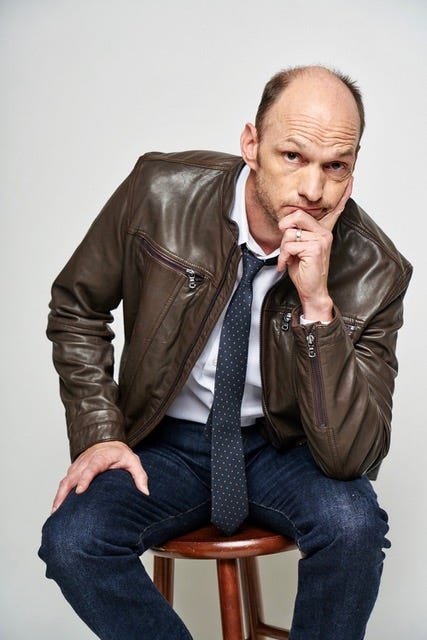
When Brian Stepanek was a young actor heading to his first interview with an agent, his father, a salesman in Ohio, offered him sage advice. “He said, ‘What do they do there?’” Stepanek recalls. “I said, ‘They send you on commercials and TV and they do voiceover.’ He goes, ‘What’s voiceover?’ I said, ‘Like radio commercials, TV commercials.’ He goes, ‘You have to tell them you want to do that. The only way you’re going to survive is if you do all of it.’ And so I sat in that interview and at the end of it, I went, ‘I want to do voiceover.’”
The advice paid off. For more than 25 years, Stepanek has consistently worked in film and television, with roles in the Academy Award-winning Green Book, the Michael Bay blockbuster Transformers, the CBS sitcom Young Sheldon, and Nickelodeon’s Nicky, Ricky, Dicky & Dawn, to name a few. He has contributed his talents to the animated series The Loud House and its live action spin-off The Really Loud House. And thanks to his work as Arwin in Disney’s The Suite Life of Zack & Cody, he’s a beloved icon to millions of young adults.
Earlier this year, Stepanek and his sister Sheila launched a podcast, Here From There, in which they talk to people from various fields to figure out how they got to where they are today. “I’m always curious when I interview people, when they tell stories about a decision they made that changed their life, what were you thinking in that moment?” he says. “What made you do that? What was the driving force? So that someone young can hear it and go, ‘Oh, I can do that. I get that.’ That’s the purpose of it.”
Over a recent Zoom call, Stepanek and I discussed his career, his advice to young actors, and his thoughts on the state of the entertainment industry.
Creative Reverberations is a reader-supported publication. Each interview takes many hours of work. To read all posts and support ad-free, independent journalism, please become a paid subscriber.
SANDRA EBEJER: You’ve played so many interesting roles. When you were first starting out as an actor, what career did you envision for yourself?
BRIAN STEPANEK: I went to Syracuse University. I started as a musical theater major, then I transferred into communications, but I audited all of the theater classes that I thought could help me in the real world. So I audited audition classes and voice classes and music theory classes, and then I auditioned for every show I could possibly audition for in the theater department as a non-major. I ended up doing like 11 shows. At that point in my life, I thought theater was going to be the way to go because I was such a huge fan of musical theater.
And then I went to Chicago to visit my sister and I went to Second City, and I saw Steve Colbert and Steve Carell in a show called Economy of Errors—might have been Take Me Out to the Balkans, I forget which one it was—but I saw that, and I was like, “Oh! That’s what I want to do.” Long term, maybe I was thinking TV/film, because that’s what really gave me the bug. But in my early 20s, I was very theater-centric, until those other opportunities, like commercials and voiceovers, started popping up.
When did you first develop the acting bug? Were you acting as a kid?
I was the youngest of six kids. My next sibling was five years older than me, and so I was like, “Look at me!” [Laughs] I spent a lot of time by myself as a kid because my brothers and sisters were all doing stuff. So I would sit and watch old Jerry Lewis and Abbott and Costello movies on Saturday afternoons while it snowed out in Ohio. And I loved to laugh at those guys. I couldn’t wait till Jerry Lewis came on screen. I mean, I was twiddling my thumbs until he was on. And then when Indiana Jones and Back to the Future and all these movies came out, going to a movie theater and smelling the popcorn and escaping into another world was just the greatest thing. So I think being interested in entertainment probably pretty early and then the idea, “oh, I want to do that“ was probably seventh and eighth grade.
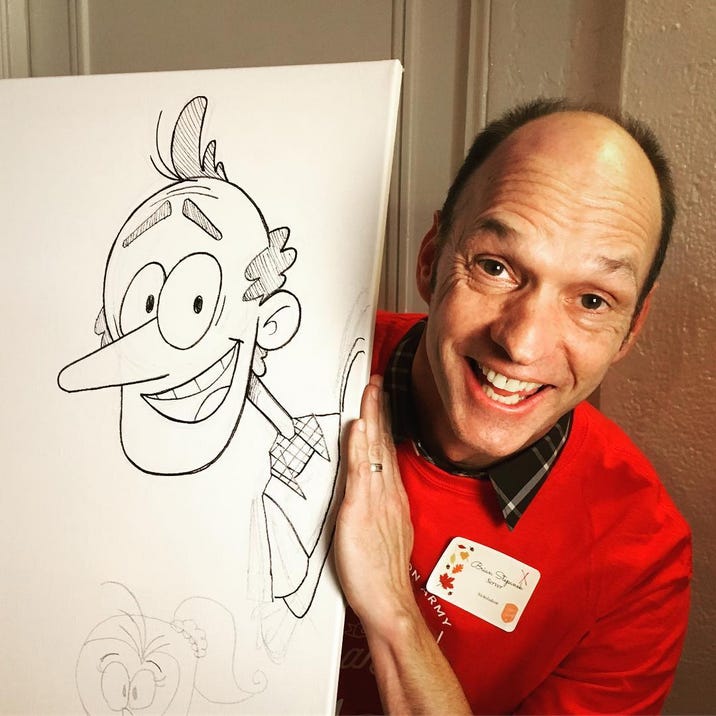
The Suite Life of Zack & Cody was the first series that brought you recognition, but your agent didn’t want you to do the role. What made you say yes to it?
It was fun. When I was in that callback and I was improvising, they got me. There is nothing better than that feeling—when you’re in the room and you’re doing your thing, and the people in the room get you. I immediately knew that we were on the same wavelength. And it was so fun to be around them. To this day, I love those guys. They’re just the best. So it was pure fun.
I’ve always said kids multi-cam is the same energy as musical theater. Your stakes are just as high, and the turns are just as quick. So it was very natural to do, and I loved the character. And I thought, “I’ve got nothing else to do next week. Why wouldn’t I do this?” I mean, it didn’t pay hardly anything. I didn’t really care. And when I got there, it was even more reinforced because I met the kids and the cast and the crew and we all got each other. I was like, “Oh, this is home. This feels great.” So, that’s why I did it.
Some of your biggest roles on shows like The Suite Life or Nicky, Ricky, Dicky & Dawn might get written off by critics as fluff, but there are countless young adults out there who have grown up with you and have fond memories of your work. What does it mean to you to have made an impact on so many young viewers?
I remember going to a Pizzeria Uno and a kid waited on us. Didn’t say a thing the whole time. And at the end, he wrote at the bottom of the check, “Thank you for my childhood.” And that’s just the greatest. It’s an awesome feeling. I can sum this up with one story: I was shooting a show in Albuquerque. We had a wrap party for season one at a bowling alley in a not-so-great part of town, and there were two dudes outside that were security. They looked tough. I go into the party, and the food truck is outside, so I have to go past them a few times, and one of them stops me and goes, “Were you Arwin on The Suite Life of Zack and Cody?” And I said, “Yeah.” And these two guys turned into kids. It was the greatest. That feeling where they can tap into their 12-year-old self sitting in a basement in Minnesota with a wall-to-wall carpet, waiting for The Suite Life to premiere on a Saturday night, and all those feelings that brings to them—that I can remind them of that is phenomenal. I love it.
I want to ask you about a few of the specific projects you’ve done because I think they show what a wide range you have as an actor. Young Sheldon was a great series. How did that role come about?
I auditioned for Two and a Half Men to play a creepy motel manager. It was the most fun I’ve ever had on a set. And the day I auditioned for it was the day that Charlie Sheen was carted out of his house on a stretcher. What happened was I auditioned, Chuck Lorre [the show’s creator] was there—it was one of the best audition experiences I’ve ever had—and I walked out like, “I don’t even care if I book it. That was so fun.” And I booked it. I called my agent and my agent said, “Turn on the TV.” I turn on the TV, and there’s Charlie. I was like, “Seriously?!” [Laughs] Like, this is the day?! It was for the first episode of the season. It was the number one comedy on television. It was a great role. I was like, “The network’s gonna see me! This is gonna be amazing.” And so, of course, they canceled it. They fired Charlie.
Then they hired Ashton [Kutcher], and two months later, I get a call to go work for Two and a Half Men. I was like, “But I didn’t audition.” I look at it, and it’s the same character in a different circumstance. I went in and it went great. And so now I was in. Chuck liked me and trusted me, and the writers liked and trusted me. So when they had auditions for Young Sheldon, I went in and had maybe three lines for Mr. Givens in the pilot. I love that casting director. I’d had a relationship with them. And so that’s what got me in that world. I mean, I knew Young Sheldon was going to go on because Chuck and his writing team are so brilliant and so professional. They’re so clear-headed in their character development and their story development. I didn’t realize it would turn into 23 episodes.
You’ve worked on a few projects with Michael Bay. When I think of Michael Bay, I think of big budget, over-the-top drama. How did you come to work with him?
It was a Jeep commercial, and I didn’t know it was Michael Bay because when I went in the room, it was very dark and I didn’t know who was back there. I wasn’t really paying attention. I was just trying to do the work. It was a really funny commercial. He cast me in it, and we ended up getting along very well. We butted heads the first night, but he ended up really liking my work. He enjoyed working with me and he just started putting me in stuff. I’d get a call, “Hey, Michael Bay wants you to do this movie called The Island.” And then he put me in Transformers. Something about me, he enjoys.
You have a great scene in Green Book, where you acted alongside Viggo Mortensen and Mahershala Ali. Do you approach the work differently when it’s a dramatic film as opposed to a TV sitcom?
Nope. I mean, it’s a different genre, so the technique is different. When I teach, I’m like, “Listen, like my dad said, you have to think of it like you’re a baker. You can make bagels, you can make cakes, but each of them is a different formula. Acting is the same thing. You have to be able to do single camera drama. You have to be able to do kids multi-cam, network multi-cam, Chuck Lorre multi-cam, which is a whole different genre than regular multi-cam. You have to understand the tone and the genre you’re auditioning for.” I approach it with the same amount of seriousness and the same method, but I have to adapt to the genre.
How was it filming Green Book?
It was awesome. It was a unique audition experience, too, because I sent in a tape, and I had a callback and I couldn’t go. I had the stomach flu. I was bummed because I loved the role, I loved the story, I loved the script. And they booked me anyway. So that was a huge deal for them to have me come in. I only shot one day. It was all in one location, and Mahershala and Viggo were amazing. It was a wonderful experience.
I got to sneak my parents’ names into the movie. When I chased them through the restaurant, I was like, “I have to be saying something. This is a lot of film being eaten with me running after them.” So it’s like, “You get back here!” And then I stopped at a table on the first take and I went, “Bill, Connie, everything’s gonna be just fine. Don’t worry about a thing.” I got to get my parents’ names into an Oscar-winning movie. It was kind of cool.
You said earlier that a Chuck Lorre multi-cam is different than other multi-cam shows. What makes it different?
The stakes are lower. It’s more like a single camera. In other words, everything seemingly means less to your character. When a director says, “Can you do it bigger?” what I tell myself is, “Oh, this means more to my character. The stakes are higher.” So instead of saying, “Listen, I don’t think this is the right thing to do,” you’re like [yells], “Listen! I don’t think this is the right thing to do!” The stakes are higher. In a Chuck Lorre multi-cam, it’s closer to a single cam. The performances are more subtle, more grounded, smaller character thoughts, that kind of thing.
You’ve worked with a lot of children, both as an actor and a director. I’m sure they’ve learned a lot from you, but is there anything you’ve learned from working with them that you’ve carried with you?
I’ve never been asked that. [Long pause] I don’t know if this is learning something, but what I love about it is it’s a constant reminder that we’re just playing. They’re just playing a role. They’re having fun. I would teach them how to turn a joke and it’s fun when they would figure it out. They’d light up. They go, “Oh my God! That’s hilarious that way!” I remember hearing a quote, “We teach best what we most need to learn.” And so when I would be able to teach them something, it would remind myself of it. It reminded me of the joy of doing, being an actor for the first time and being able to play pretend.
Who are your influences as an actor?
I loved Jerry Lewis. I loved Robin Williams. I loved John Ritter. I mean, Three’s Company—when I was a kid, I thought it was the funniest thing on the planet. I love Morgan Freeman. He’s phenomenal. And when I was a young adult, I was like a poor man’s Jim Carrey. I was doing that kind of energy in musical theater and in commercials. And when Jim Carrey got to be super popular, like when The Mask came out and Ace Ventura, casting for commercials, especially, were looking for Jim Carrey types. And I was the guy. So I worked all the time. I eventually did voice matches for him. He was working on Over the Hedge for a while, and I was his voice match and I got to work with him. So later in life, he was a big influence.
What made you decide to launch your podcast?
I started teaching several years ago and I realized that I’m the old guy now. I’m the guy with all the experience and the knowledge, and it happened so quick that I didn’t realize it. So I’m in class telling these Michael Bay stories or these Jim Carrey stories, all these things that I’ve done, and I’m seeing these young adults totally engaged. And I realized because of The Suite Life and Nikki, Ricky, I have this following of 20-somethings and they’re starting their lives and starting their careers, and they may be anxious about that or have self-doubts about that. I know I did at that age. I thought maybe a podcast is a way of interviewing people who have gotten into unique careers and pass on knowledge to young people that know me and follow me. I think it’s a hugely valuable thing. I even read about you in your bio, that you kind of started over. So you know exactly what that’s like, which is one of the reasons that I wanted to do this. I was like, “Oh, she’s been through it, and she’s reinvented herself.” And that’s freaking hard to do.
It’s so hard. In looking over your list of credits, it’s difficult to find anything you haven’t done, but are there specific projects or roles you haven’t done yet that you’d like to attempt?
I would love to work with Steven Spielberg. I always wanted to work with Clint Eastwood, and I don’t know that that’ll happen now, but those are guys that I grew up with. What would I want to do? To be honest, at this point, I want to work. And my IMDb page shows that. If I could have any ideal job, it would be a single camera comedy or a multi-cam that shoots in L.A. That’s probably where I would be.
The past few years have been rough for actors. There was the pandemic, then the back-to-back strikes, and now the industry is grappling with AI. Are you concerned about where things are headed? Or do you feel hopeful that work will begin to pick up?
I’m concerned in terms of, there is a whole generation of viewers, potential audiences, that are watching content on their phones, and everybody only has a limited amount of time per day for entertainment. And if the choice is being made to watch on the phone, our audience is shrinking for scripted entertainment on a television screen. That’s my biggest concern, that our potential viewers are shrinking and becoming comfortable with a whole new way of watching entertainment. The industry is changing so fast and AI is evolving so fast. I think in 10 years we won’t even recognize the world. I really think in five years, it’s going to start solving some big problems—health things, the economy. I think it’s going to start doing some positive things. But in terms of our business, I don’t know.
I tell my actors that I coach, “Whether you like it or not, you have to become influencers, because your followership is what’s going to help get you a job. Just relying on auditioning isn’t enough anymore. There’s not enough auditions, and it’s just too difficult.” There’s no real commercial world anymore. I mean, I used to get in my car and drive to four auditions in a day. I’d have three different outfits in the back of my car. [Now] I’m lucky if I get, for commercials, an audition every couple of months. It’s really different.
Ugh.
Yeah, ugh is right! But listen, young people are amazing. We have to give them credit. This is why I want to do the podcast. My almost 16-year-old daughter watches scripted content all the time. Young people are going to come up with the next thing. I don’t know what it’s going to be, but I hope they cast me in it.
What is your advice for aspiring actors?
You have to make your own content, and if that means that you’re an actor who just wants to act, then you got to find a friend who’s a writer and a friend who’s a director and a friend who’s a DP, and you need to get together and start a production company and start making your own stuff. So that’s the first thing. You have to become an influencer. And I don’t care if it’s as an actor-performer or as someone who loves flowers. If you find your interest and just start posting about it, and if you can end up with a bunch of followers for that, you can bring them on over when you book something. I’m terrible at it, I’m an old guy, but this is advice I try to keep giving myself. Find something you’re really interested in, so it’s easier to post, and you don’t have to be an expert in it.
Be in class all the time. That’s your product development arm of your business. You have your advertising and marketing department, you have your sales department, which is your agent, and you have your product development, and product development is staying in class and making sure you’re ready when that opportunity comes. That you’re not just an influencer and then you get your first big shot and you’re terrible in it because you don’t know what you’re doing. You want to be ready when that comes. You want people to go, “Whoa. They came in and slayed.” That’s the “I make donuts and I make cakes” thing. I can do social media, but I can also act my ass off.
To learn more about Brian Stepanek, find him on Instagram.
This interview has been edited for clarity and length.
You might also enjoy…

