


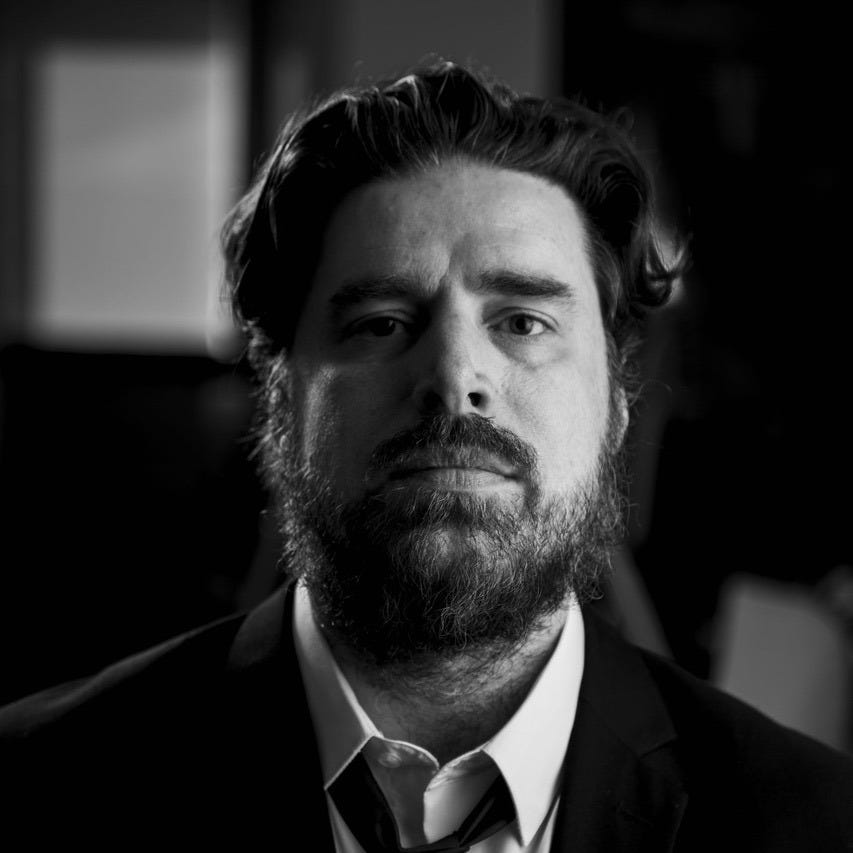
Over the past 25 years, Jeff Toyne has amassed an impressive list of credits in film, television, documentaries, and animation. As a composer, a few of his many projects include the police drama Rogue (starring Thandiwe Newton), the sitcom Hit the Road (starring Jason Alexander), and the coming-of-age film Dirty Girl (starring Juno Temple). He’s been the orchestrator on more than 100 Hollywood releases, including The Super Mario Bros. Movie and Guillermo del Toro’s Pinocchio, and did string arrangements for Fall Out Boy’s 2023 album So Much (for) Stardust.
And in 2024, he finally received long overdue recognition for his work, when he won an Emmy Award for Outstanding Main Title Theme Music for the Apple TV+ series Palm Royale. But the award was just a bonus on top of what he says has been an incredibly fulfilling career.
“It’s funny—I was asked to go back and talk to the students at USC,” Toyne says. “I’m an alumnus of the scoring for motion pictures and television program at USC, and [professor] Jon Burlingame asked me to go back. He said, ‘I want you to talk to the students, so they see that sometimes it takes a little while before you get on a project that is recognized this way, so they don’t pop out of school and get frustrated that they’re not working on big projects within the first couple of years.’ I was more than 20 years out of that program before Palm Royale. Now, I would occasionally get what felt like double-sided praise, where they said, ‘We’re so proud because you worked so long and you worked so hard and you worked so long and so hard.’ [My wife and I] thought we were doing fine the whole time. I wasn’t in a salt mine. We were making a living in Hollywood. It was fantastic to be able to support ourselves doing this.”
From his home in Culver City, Toyne chatted with me over Zoom about his Emmy win, his advice to young composers, and the process of working with a live orchestra for Palm Royale.
Creative Reverberations is a reader-supported publication. Each interview takes many hours of work. To read all posts and support ad-free, independent journalism, please become a paid subscriber.
SANDRA EBEJER: I read that you studied music in college. When did you first begin playing? Was film and TV scoring always the goal?
JEFF TOYNE: Well, no. I mean, when I was four or five years old, I wasn’t thinking about film and television. But my parents told me that as soon as I could reach the keys, I would start banging at them, and there was always a piano in the house. I had chosen an undergraduate degree in music and had a secret hope that there might be a way for me to be a concert pianist or a performing musician, and that fell away over the course of my undergrad. It just wasn’t realistic. But as that was falling away, I was taking courses and being introduced to music theory and music composition, and I found that I had an aptitude for writing music. So, as one option receded, the other took focus. I started a music education degree, hoping to switch over to a music performance degree, but instead switched over to a music composition degree. But even that was just studying classical composition, it wasn’t with an eye towards practical music.
I did get the opportunity to score my first film as an undergrad, only because I had been a college radio DJ. That sounds a lot cooler than what I actually did. I began a program that collected and performed on the college radio station the student music recitals that were being performed at the music faculty. This was a very popular show. Six in the morning on Sundays. [Laughs] But because I was doing this program, when David Clark, a fantastic filmmaker, went to the student council president of the music faculty and said, “I’m looking for a composer for my film,” even though she was the student council president, she could only name one composer at the entire faculty, and it happened to be me. But it wasn’t because she knew me as a composer. She’s like, “You know what? I think the guy that does the radio program is a composer...” So, I ended up being connected with David Clark, who had a feature-length film that he was finishing, and he was looking for a score. That was my first opportunity to do music for film. It was very zero to 100. No short films; straight into feature film. It was a big project, and he took a big chance to have me take it on. But it turned out pretty well. The music that I was writing as a composer was pretty well-suited for film and television.
I saw film and television in the modern day as being very similar to what Wagner thought of his operas. He called them “Gesamtkunstwerk,” which means “total artwork.” This is a place where artisans are coming together from all backgrounds and disciplines and creating something that’s greater than the sum of its parts. I saw contemporary film and television as a place where writers and actors and designers and musicians are all coming together to not only create something memorable, but also to reach a wide audience. And at a more practical level, this was going to be a place [where] I was going to get more opportunities to record with live musicians, especially orchestra, than even a concert composer might get. That was really attractive to me. So when I went to do my master’s degree, my education took me south and west and south and west and south. It started off in Northern Ontario and ended up in Los Angeles. And so yeah, I started to have a hint after my undergrad and doing a feature film that maybe I should start thinking about having my education serve a final goal of film and television.
It’s always interesting to talk to someone like yourself who works behind the scenes in TV and film because you have to make sure that the work you do is high-quality, but it can’t overshadow what happens on screen. You want to do it so well that the audience isn’t aware that it’s there. Was that a difficult adjustment when you were first starting out, especially coming from a performance background?
I recall being aware that if this is what you want to do, this is how you have to do it. If you want to do your own thing, go start a band or make a record. There’s plenty of opportunities for you to do your own thing. If you want to work on a film, we’re all going to work together to support a singular vision. And that does present challenges as a composer to work in a way that you never draw focus and are supportive, but you also want to do the most engaging music that you can. There’s a bunch of other musical forms that are doing similar things. Even something like an opera—the background music is supporting the singers—or incidental music for theater. So, I wasn’t surprised by this, but I definitely took that on, and I was absolutely okay with it.
What are your favorite types of projects to work on?
I’m really enjoying the work that we’re doing on Palm Royale. That’s a nice challenge. I like projects that give you a chance to use the orchestra. I will admit that I have a bit of a soft spot for the orchestra. I feel that the orchestra has a way of being a little bit more future proof. You know, you go back and watch a film—the score from the ‘90s or the ‘70s or the ‘50s can still feel natural today, if the score was using orchestra. And in terms of what projects I am interested in, I can get interested about the people that I’m going to get to work with, whether that’s the writers or the directors. In this case, for Palm Royale, the showrunner and creator, Abe Sylvia, is someone that I knew for a long time and I’m always happy to work with. I like to be involved with projects that are telling really affecting stories. It’s easier to write music that is saying something than music that is not saying anything. Any show that’s going to have a role for music to support an emotional arc is going to be fun for a composer to work on, whether that’s in space or in the old west, in King Arthur’s court or at the bottom of a cave. Any chance we get to support an emotional journey is good fun for a composer.
You worked on hundreds of projects before winning multiple awards, including an Emmy, for your work on Palm Royale. What was it like to receive so much attention for this series after having been in the industry for so long?
You’re right. It ended up being a very long thank you list, because it was a long journey and there were a lot of people to thank along the way. And when you prepare for the Emmy Awards, they say, “You have a 45-second thank you speech.” And then when we arrived, they said, “Oh, did we say 45? We meant 30 seconds.” And it’s really difficult to take a [speech] you had to work on for days and days to try and get down to 45 and then, oh, just cut that to two-thirds. Luckily, social media allows us to thank people and, of course, I get to talk to people and thank them personally.
But the recognition was great. And it was a fantastic show. It just happened to be an opportunity to do really great work with amazing actors. I was very daunted when I began the project. I really wanted to do a good job. So we worked really hard on it and got a little lucky as well.
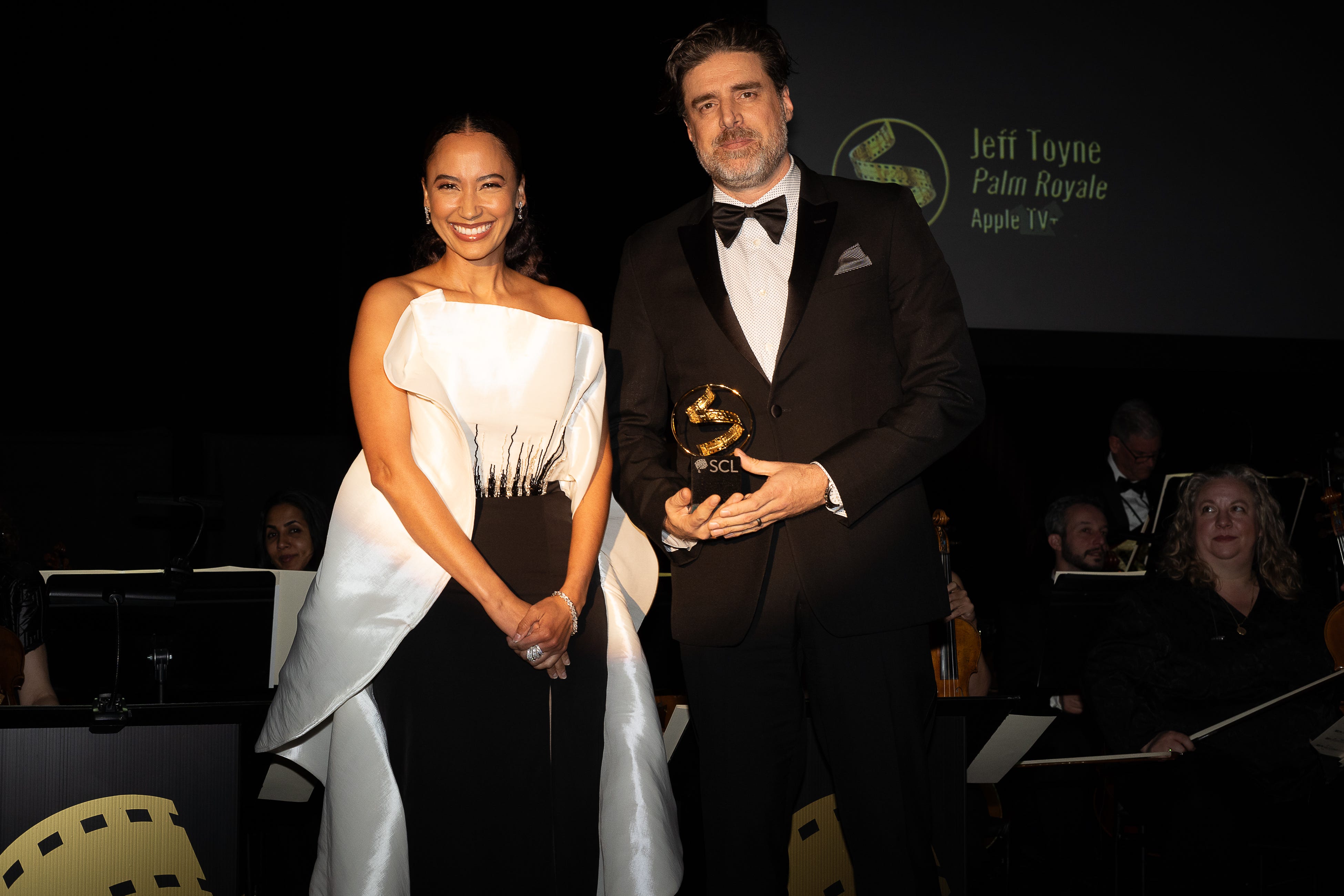
Palm Royale is a period piece set in 1960s Palm Beach, Florida. When working on something that is so tied to a specific time and place, how do you ensure the music supports the visuals on screen? Do you do a lot of research into the music of the time?
I like to do deep dives and gain a lot of source material. But you have a time limit. You know the expression “garbage in, garbage out”? Whatever the opposite of that is—we want to put the good material, the best references, and the best inspiration into the blender, but as soon as you start writing, you have to stop listening. It’s my responsibility when I’m not on a project to be putting in really good material all the time, because once you’re writing, it’s very difficult to be doing research, because the flow is reversed. Now it’s got to be coming out, not going in.
For this project, it was a treat to dive into period music from the ‘60s. And it had a specific bend. You know, these characters weren’t going to Jimi Hendrix concerts. I wanted the right kind of music that these characters would be listening to. But it isn’t a history project for me. Just because the show was set in the 1960s doesn’t mean the music has to do that. You can make absolutely valid choices to be anachronistic if you want. Your fundamental job with the music is to support the emotional arcs of the characters. That being said, it was a treat to dive into Henry Mancini, Bernard Herrmann, John Barry, Lalo Schifrin, Enoch Light, and all sorts of composers.
During the pandemic, I decided it’d be fun to explore the voodoo that is recording to tape. I found an old prosumer tape machine. It’s just a four-track and open reel. In the process of fixing this up and working with it, I came to be aware that in the ‘60s and ‘70s, there had been commercially available recordings for these tape machines. So, in addition to being able to buy something on vinyl, you could buy something on tape, as well. I started to collect old reel-to-reel tapes, like Henry Mancini, Frank Sinatra, some classical music. And after the pandemic, when I was approached for Palm Royale, it was an amazing coincidence that the source music that was appropriate to listen to were these same recordings that I’ve managed to collect. That was a nice coincidence, and it was probably an indication that this was going to be a fun project to work on. I was already fooling around in that musical space.
At what point were you brought on to the production?
In this case, the production was shot, they were well into the edit, and I was brought on. As far as times for composers to be brought on, I was brought on on the later side of things. It was zero to 100, all hands on deck, and only a couple of weeks from when I started to when we were going to start mixing the episodes.
No pressure.
Well, it’s a blessing and a curse. You’re going to finish something one way or the other. I like to say that I got into film and television for the deadlines because if I was just doing concert music, it’s easy for things to languish unfinished indefinitely. So the pressure can be good to get music finished and to encourage producing a lot of material as quickly as you can. You can be freed from the tyranny of self-doubt if you don’t have time to second guess your first instinct.
My son is a big Fall Out Boy fan, so I have to ask about the work you did on their album So Much (for) Stardust. How did you come to work on that project?
That was through film projects that [lead singer] Patrick Stump was doing. I met him [when I was] brought on to orchestrate for him. He’s frustrating, because in addition to being a giant rock star, he’s really good at film and television scoring. And in addition, he is just the nicest guy when you meet him in person. There’s no indication that you’re in the studio with a stadium-filling lead singer for a rock band. I enjoyed working with him. I did a couple of projects for him as an orchestrator, and that led to doing some orchestrations for one of their albums.
When you look back on your work, were there any moments that were particularly difficult? Anything that you are really proud to have pulled off?
Palm Royale was a big challenge in the time we had for that show to be almost entirely live orchestra and big band. When they are editing and they get to the place where we can start talking about how the music is going to be placed in an episode, we’ll have a meeting called a spotting session, and all of the interested parties will make clear their intentions. So we’ll say, “Okay, this temp music is here for these reasons, and we’d like to keep this.” Or “we definitely need to do something different there.” Once [there are] marching orders from the spotting session, the composer goes away and writes music for the episode. There’s a couple of rounds of approvals. And then I need to record and mix my music and then deliver my music to the final sound mix for the episode, where they mix the dialogue and the music and everything together. This can sometimes be a turnaround of a couple of weeks between having the spotting session and doing the delivery for the final mix.
If you’re doing music that has a live recording session in it, preparing for a live recording is bringing in a whole bunch of other people to do a whole bunch of other steps. We have to prepare parts and the files for the clicks and guides for the musicians to play along to, go into the studio, spend the time to do that recording, and then mix that in with all of the things we’ve already done when we made the demo. So there’s extra steps that are involved to do a live recording. There’s extra interpolation to make it sound correctly in the room with live players. And what I did as an orchestrator was knowing what was going to sound good for live players.
So, in addition to the financial challenges that this brings for a music budget, it’s a temporal and logistical challenge to be able to do all of these things with enough time for filmmakers to hear your ideas, react, give you notes, make adjustments, and then have something finalized in time for a television schedule where you’re delivering the final mix to episode one, but you’re also preparing to talk about the spotting session for episode three, and you’re writing the music for episode two. All of the episodes have these overlapping schedules. And there’s only a couple of shows that have live orchestra for television, so we’re really proud of being able to pull it off.
Who are your influences?
I really like the classical composers, [Sergei] Prokofiev and [Dmitri] Shostakovich. And film composers—I’m a big fan of Jerry Goldsmith, Henry Mancini, Bernard Herrmann. Those are my musical influences.
AI has become such a huge issue in nearly every field. Are you at all concerned about it when it comes to your line of work?
It’s gonna change things, for sure. I am still holding out hope that even if it’s possible to automate the creation of lower-end things, it’s not going to be quick to replace the bespoke higher-end things that we still work on. I’m not sure if it’s a terrific analogy, but you can think about it like a loaf of bread. You can get a cheap, machine-made loaf of bread, and it serves a lot of people just fine. But there’s still a place for people making bread by hand with higher-quality ingredients, and that takes time. You know, 200 years ago, that’s the way all the bread was made. There were more jobs for bakers to make bread. As much as that’s been automated, there are still bakers making bread today, but not as many. So I’m not feeling like doom and gloom, like this is entirely going away, but it’ll certainly get more competitive. It was already pretty competitive to begin with.
I’m just trying to focus on being able to make the best, high-quality, handmade things. I’m lucky that not much of my career has been predicated on me cranking out vast quantities of passable music. I’ve been lucky to be asked to make as high-quality music as possible. But I don’t think it’s the worst thing in the world if AI is going to be able to remove some barriers between having an artistic idea and the execution of that idea. I mean, we fight with computers all the time to make the demos that we need to make, or to create the recordings that we want to make. There are definitely opportunities to speed up or remove technical barriers between having an idea and realizing that idea, whether it’s in other artistic venues or for music.
What is one piece of advice that you give to young artists who are hoping to follow in your footsteps and enter this field?
There’s a way to be persistent that, for lack of a better word, doesn’t annoy people. I’ve, in my own career, had some pretty good results that came from being persistent. This is back in the day when people telephoned people, but just phoning them every couple of weeks, and every couple of weeks they’re too busy to come to the phone, but that’s fine. You just call them again a couple of weeks from there. Being persistent can yield pretty good results.
I think it was Picasso who said that inspiration should find you already working. When you’re on a show, you’re gifted this whether you want to do it or not. It’s due Monday, so crack in. But if you are between shows, it can be easy to become lazy. So, you want to be in the studio every day perfecting your art. And I think those two are related—consistency, persistency. Those things have been really helpful in my career. I hope they can be helpful to people starting now.
To learn more about Jeff Toyne, visit his website.
This interview has been edited for clarity and length.
You might also enjoy…

