

CR 103: Glen Phillips Reflects on 40 Years with Toad the Wet Sprocket
The frontman discusses the band’s longevity, its new acoustic album, and the song he wishes he’d never written.

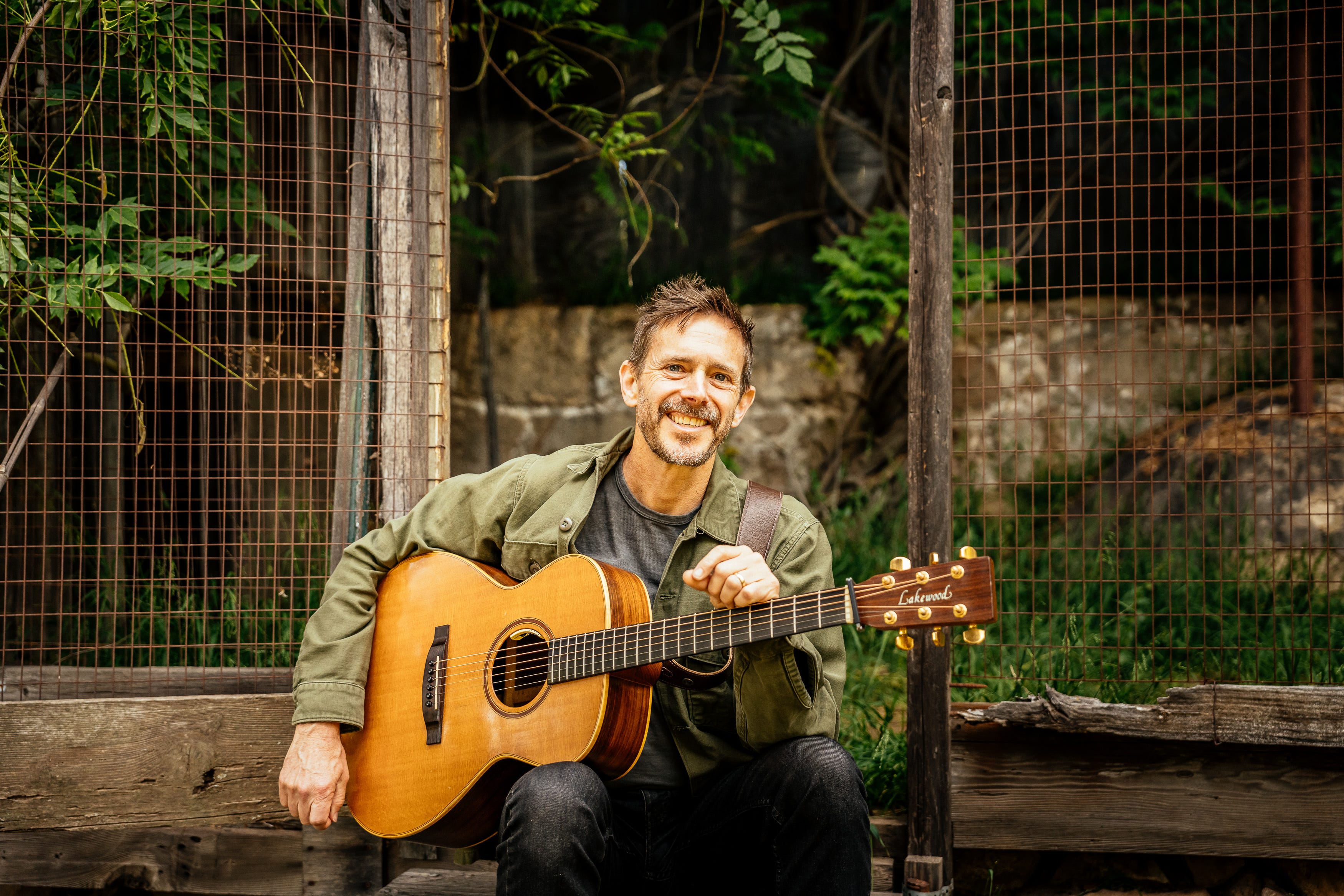
Glen Phillips never intended to be a rock star. In 1986, at age 15, he and high school friends Todd Nichols, Dean Dinning, and Randy Guss formed a band with the intention of having fun and playing a few shows. And while they wanted to make good music, Phillips says they had no musical career aspirations.
“Mostly I was excited that seniors wanted to hang out with me,” he recalls, laughing. “I was a freshman, a nerdy high school kid, and it was just fun to make songs and play shows. I’d been more of a theater kid. Actually, my theater teacher freshman year, it was his first year teaching, and he said, ‘You know why I am here? I love the theater more than anything else, and I saw all my friends going to New York or L.A., and I knew they were going to have that life of auditions and getting their feelings crushed and bad reviews, and I just wanted to love the theater, so I’m going to teach.’ And I was like, ‘Maybe I’ll be a high school teacher...’ I’m sensitive to criticism and rejection, and so I didn’t think I had that self-confidence that you need to do well in this business.”
Though he thought he would go on to study education at San Francisco State, Phillips and his friends continued to make music and perform. Calling their band Toad the Wet Sprocket (a nod to a Monty Python sketch), they released their debut album in 1989 to little fanfare. But in 1991, their third album, fear, debuted on the Billboard 200, while its singles, “All I Want” and “Walk on the Ocean,” played in heavy rotation on radio and MTV. Suddenly, they were rock stars. And though critics have never quite known what to make of the band (other than including them on regular “Worst Band Names of All Time” lists), they’ve amassed a dedicated following of fans who have stuck by them for decades.
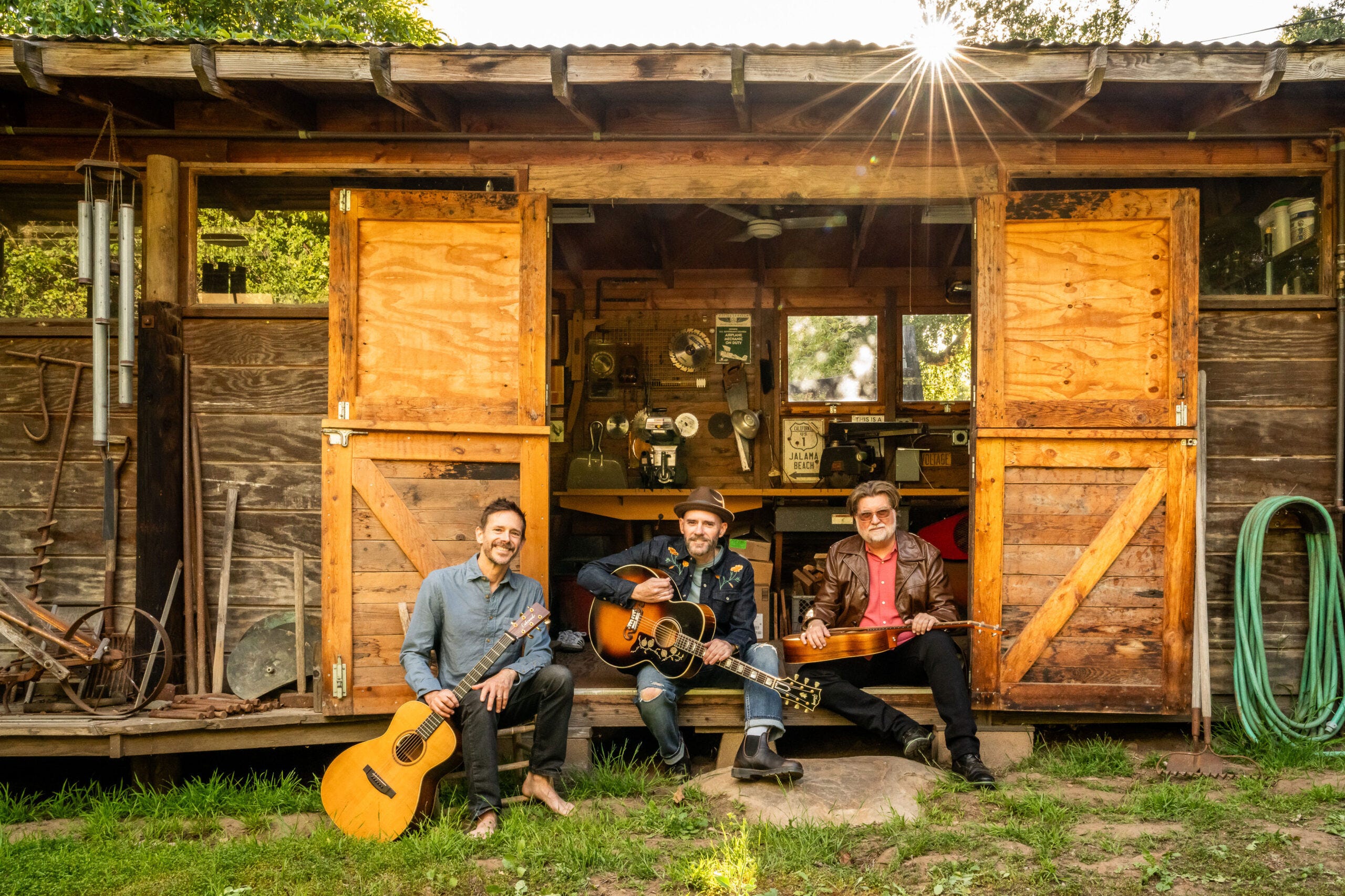
Now, 40 years and eight studio albums after its inception, Toad the Wet Sprocket is still having fun and playing shows—with three of its four original members, no less. (Drummer Randy Guss left in 2020 due to health complications.) They recently released Rings: The Acoustic Sessions, on which they revisit 14 older songs with new arrangements, and this summer they’ll be touring with Men at Work before going back out on the road in October for their first-ever acoustic tour.
I recently had a wide-ranging chat with Phillips over Zoom about his early influences, the new album, and the song he wishes he’d never written.
This content contains affiliate links. I am an affiliate of Bookshop.org and I will earn a commission if you click through and make a purchase.
SANDRA EBEJER: It’s hard to believe it’s been 40 years since Toad the Wet Sprocket first formed. Who were some of your influences back then? Were there any musicians you wanted to emulate?
I’d been kind of a metalhead when I met Todd. I was really into Ozzy and Iron Maiden. I loved Rush. He turned me on to Hüsker Dü, The Replacements, R.E.M. Randy was really into Elvis Costello and The Water Boys. So it was a bunch of new music for me. It was before they called it alternative—some people were saying post-punk. There wasn’t necessarily a name for it yet, but it was that indie college music that really got me.
This summer marks the 35th anniversary of the release of Toad’s album fear. You’d released a few albums and had been around for a few years, and then “All I Want” hit the airwaves. How was that period for you guys when you started appearing on MTV and getting press?
It was both cool and disorienting. I mean, we’d done a lot of touring already for two records, and we had an audience, and they would talk about the “All I Wanters,” the new crowd. I think having the “All I Want” video—we were very into our indie credibility, and it shattered that. And so that part was hard for us because we wanted the cool kids to like us, and the cool kids didn’t like us anymore. At the same time, we were getting to tour. It was really exciting and it was also kind of difficult. It’s an interesting mixed bag, I would say.
I have to ask you about my all-time favorite Toad song because I have you here and who knows when I’ll have another chance to ask about it. I’ve been in love with “Before You Were Born” since I first heard it 35 years ago. I don’t know that that’s a song that you play live much anymore. Is there anything you can share about that one and how it came about?
We don’t play it all that much. It was written for a friend of mine who didn’t grow up knowing her father, and whose entire family rejected her mother and her. [It was] about the fate of being born into a certain family and being discarded before you even get to become yourself, knowing that you’re outside and not wanted. That was the basis of it.
Like what you’re reading? Please subscribe to support my work.
The album also includes “Hold Her Down,” which is a really tough song to listen to in terms of its content. What was the reaction when that song was released?
“Hold Her Down” was, and still is, a very difficult song, and once again was based on an experience that someone close to me had of a violent attack. I think the intent was to have it be confusing and disorienting, and kind of painful to listen to, to have it be switching perspectives. Knowing more of what I know about trauma now, I know that song has been helpful to people, [and] I know it’s also been hurtful to people. I would never write about that subject in that way anymore, especially in the era of Andrew Tate. In this era of excessive toxic masculinity and aggression and misogyny, the confusing nature of that song I don’t think is appropriate anymore. And I’m not even sure if it was appropriate when it happened.
The song is confusing enough—and I would say, for me at this point, ineptly enough written, lyrically—that I have considered trying to scrub it from all the streaming services. And once again, I know there are people who’ve been through that, where it takes them into a cathartic place that moves them forward, but I feel like if there’s any ratio at all for that reaction towards anyone who’s actually been hurt by it or thinks it is in some way promoting or condoning sexual [assault], one person is too many. I wish that song didn’t exist, personally. I was 21 and writing about something that was beyond my capacity to really understand the impact of.
For what it’s worth, I’ve always found it cathartic. But I understand what you’re saying. It’s so subjective, in how each person hears things.
Yeah, and there is a compassionate gentleness needed in talking about things. You know, there’s this amazing book that won the Booker Prize by Keri Hulme called The Bone People. It’s about child abuse, and it’s about the love that can still exist with an abusive parent and their child. And I have recommended that to people who have said it’s the best book they ever read, and then people who were like, “How could you have me read this?” I didn’t know about their own history; I didn’t know about their own trauma. You get older and you understand how subtle things are, and dealing with that subject in such a, once again, cathartic and emotionally messy way—I wanted it to be hard to listen to, and I may have done a better job at that than I should have.
Well, and to your point about the book, we also don’t live in a culture now where you can have nuances. There’s no gray areas anymore; everything’s very black or white.
And humanity exists in gray areas. I mean, we have a toxic narcissist running the country right now—a malevolent, hateful individual—and that has been normalized. I can’t think of another time where that has ever been considered normal or acceptable. It’s a really weird time to be in. And so at the same time there is that trauma awareness, counter to that is the complete opposite—just literally caring about nobody and that being trumpeted as virtue and people talking about how empathy is overrated and represents a kind of weakness. I don’t know what to make of any of it anymore. It’s disheartening.
I completely agree. I saw you guys perform last fall in Albany, New York, and you did that stunning acoustic version of “Rings.” I was so excited to see that that was the tentpole for the acoustic album. What made you decide to visit these older tracks in this new way?
Well, we’d been playing this acoustic subset for a while and in the middle of the set, breaking things down. And throughout our whole career, back in the day when we were doing radio and press and in-stores all the time, that was always a part of who we are and what we did. But it was also looking [at the] 40th anniversary and [asking], can we do a retrospective project that’s new, that breathes new life into things? Instead of the jaggedness of all those years of recording, bring them up to now and see what we had to work with. We knew that we needed to have the singles and the more popular tracks and some fan favorites and some real deep cuts, and so it was a lot of fun to just go, “What are our favorite songs, and what do we think could work?” It was a really great project.
When you’re putting together an album like this, is it difficult to choose which songs are included? Are there any debates about which tracks get included and which don’t?
I don’t know if there were debates. There were some questions at the start of, “What album are we trying to make here? Are we trying to do something that’s a really honest, everybody in the room acoustic record?” And I think having Robert Stevenson mixing—he got his Grammy for Queens of the Stone Age. He managed to find power in the acoustic tracks and this treatment of them that made us realize, “Oh, this is a studio record.” It’s acoustic instruments, we gave ourselves a palette, but we didn’t have to have it be this thing we were capturing absolutely live and trying to have like a black and white photograph of an event. We could actually take it some places. That really shifted how we looked at it. I mean, at the end of the day, it’s just what works for the project, and what do we think we nailed. “Rings” we wanted to do, and we’d been trying to do it how we always did it, which is this fast-paced rock song, and it just wasn’t working. I went home and did a very primitive piano demo on it and sent that to Dean and he took that and really fleshed it out. So, it’s always trial and error. You want to find where the song wants to live.
Many of the songs on the album go back decades. Do the meanings of the songs or what they mean to you change as time goes on?
Yeah, in subtle ways. I like to write with an emotional specificity, but even the emotional specificity usually has this element of ambivalence. And ambivalent gets used a lot to mean doesn’t care about something. “Meh, I’m ambivalent,” you know? But ambivalent means I feel two ways, sometimes very strongly. As we said before, human beings, we’re complex. Like, take “All I Want,” which is about being in the moment. The chorus is about that joy, that happiness; the verses are about being locked in limitations and bad habits of communication. It’s those moments where you step out of that into going, “Is everything actually okay?” and how fragile those moments are. They don’t last. And I think because of that, those combinations, those feelings, they’ll always come up again. I mean, some songs are just silly. “Nanci” is just silly. But the stuff that really hits home—it might work for when you go away to college, it might work for when your mom has dementia, you know? [Laughs] Because we wrote more in that emotional space and less in a narrative, most of the stuff ages decently because it’s just about emotional authenticity.
The industry has changed so much over the last 40 years. Toad does a lot of VIP ticket experiences and meet and greets. In your solo work you do smaller living room concerts, and you have a subscription plan where you do livestream performances for fans. How do you feel about where things are now? On one hand you have more direct contact with fans, but then you’re also doing so much more without a big label to support you.
I mean, I miss album sales, I’m not gonna lie. I miss radio. I miss passive income. I miss privacy and that feeling that when I get home my only job was to write the next record. And now there’s a constant influx of things that need to be done that aren’t related to that, and so I write less, I feel less creative. In terms of the business, it’s been changing forever, right? Recorded music was a massive threat to live music early on. Like if you wanted a hit, you used to have to go to a revue that a publishing house would put on, and you’d walk home with the sheet music, and you’d play it for your family. That’s how it used to work. And streaming has really changed the landscape. I think the economics of that at some point have to change into something where artists are not considered quite so disposable. I don’t think there’s enough respect for creative work in general. And I see that in business, as well. People will make a product, and they don’t know how it works. It’s all the people who work for them that actually created this thing. It’s the age-old labor and capital questions.
With AI coming in, I would be terrified being a new artist right now. I’m very grateful that I have an audience that’s been with me for a long time, been with Toad for a long time, and they want to see us in our imperfection. Somebody recently was like, “Perfection is boring. There’s nothing there!” You get an AI song, and it’s right in all the ways that music should be, but it’s not wrong in any of the ways music should be. [Laughs] There isn’t the emotional catch in a voice or the emphasis that somebody’s gonna make when they’re feeling it, and it can’t be different tonight, it can’t forget its lyrics. People want the humanity, and I think there are a lot of people, especially a lot of young people, who as many of them are falling into being owned by their phones and social media, there are many who are choosing to opt out of the digital world and are seeking authenticity. I think the more this stuff gets out of hand, the more precious authenticity is, and I feel lucky that that’s our product. What we try to make in our art is something that’s authentic and something that makes you feel. So once again, if I were starting now, I definitely would have gone and become—well, maybe not a teacher anymore, either. [Laughs]
You know, people ask for advice. I generally tell them to study physics and make a time machine. But I also think it means the answer is doing what you do that no one else can do, which has always been the answer in art. Everything’s been said, but if I write a love song, it’s not going to be the same love song somebody else would write. For somebody who’s a young artist, don’t chase. Find your voice. Todd, our guitarist, turned me on to Mk.gee and Dijon, and they, to me, are so fresh and rule breaking. Even though they have major label backing, they really have a vision, and it carries top to bottom. And that faith in your own vision and your faith in the ability to execute it [is key], especially now that the tools are so democratized that anyone can record a record, anyone can make a video. If we’re going to do an album, it’s going to be because it’s great songs with things we need to say. But the industry itself... It’s a strange era, but a band like us can be independent and do pretty well. So I feel mostly grateful for our position in it.
Are you seeing a change reflected in the audience over time? Do you see a lot of younger people coming, or is it just us old folk?
Yeah, we’re getting a generational twist. I mean, I’m a grandpa now. My oldest is 30, and so, yeah, we’re seeing people who look more like my children at the shows, because they grew up listening to us. It’s been really wonderful to have that generational upswing.
That’s cool! I interviewed Renee Stahl a couple of years ago and we talked about the song the two of you did together, “You Were Meant to Be,” which makes me cry every time I hear it. Do you enjoy collaborating with other artists? Is co-writing something that appeals to you?
Most of my writing these days is co-writing. I am easily distractible, so it’s really good for me to have other people in the room. Now that I have less of that youthful fire, where you think all your ideas are good, I’m intensely and instantly critical. So, even if I’m writing the lion’s share of a song, just simply having somebody where it’s, “Does this work?” “Yeah.” “Okay, you sure?” really helps it move along. So, yeah, I love co-writing.
At this stage of your career, is there anything you wish you could do better when it comes to your music? Is there something you aspire to get better at?
I mean, all of it. I need a basis in theory again. I did two years at city college before we went on tour when I was 18, but you get in a rock band and you end up getting in habits. I messed up my left arm 20 years ago now. Sat on a glass table and cut my ulnar nerve, so I’m partially paralyzed in this hand. I was really starting to study guitar at that point, and then I just had to learn to play again and move things on a capo and figure out what shapes I could actually achieve. It’s stabilized over the last decade where I understand the range of it, and even the weight of the guitar I’m holding, how much that compresses the nerves, cold—all the things that will make my hand more paralyzed. I have things I can do when I have more mobility, and things I know how to work around when I don’t. I want to learn to play keys better. I want to get my theory back. I’m envious of my friends—Dan Layus from Augustana has been doing all these gorgeous string arrangements for his music—and I regret not having that childhood basis of theory, because I see how much it informs people’s capabilities.
When did you begin playing music? Were you a kid?
I played a little guitar in sixth grade and then tried to learn metal riffs from magazines like Guitar for the Practicing Musician when I was a teenager, and then I was in a band and so it was all about writing music. I’m a writer and singer first, and I’m a passable guitarist, but just having fluency really helps in every way, and for my friends who are musically literate, I see how much that feeds in their capabilities.
Well, since we’re discussing Toad’s 40th anniversary, if you could go back 40 years, knowing what you know now, what advice would you give yourself?
I mean, I would have bought some Apple stock... Mostly just to be really grateful and communicate better. That’s about it. Not be so scared of the future, but be more present and more grateful for when things are working well, because things always change and they change again.
To learn more about Toad the Wet Sprocket, visit the band’s website.
To learn more about Glen Phillips, visit his website.
To catch Toad on tour, find dates here.
This interview has been edited for clarity and length.
You might also enjoy…

