

CR 105: Jared Isaac on the Bittersweet Beauty of ‘An Autumn Summer’
The writer-director discusses the making of his debut feature film.

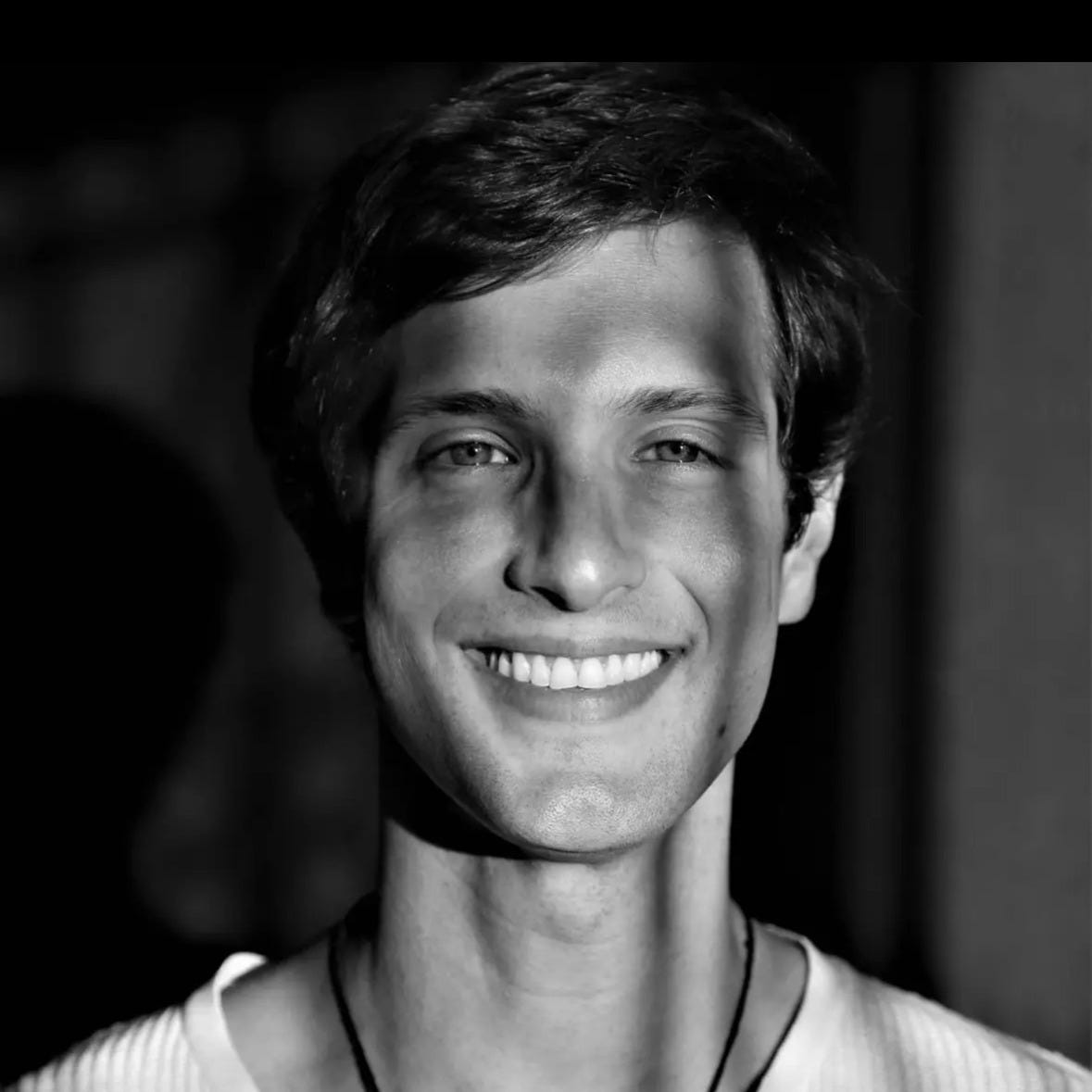
Jared Isaac is unlike most other young filmmakers working today. For his debut feature, An Autumn Summer, he avoided the jump scares and superheroes most widely found at the cineplex and opted instead to tell a slow-moving, tender story about a group of friends who are spending their final days together before heading off to college.
Taking place in 2010, the year Isaac was 18, the film stars Lukita Maxwell (Backrooms) and Mark McKenna (Sing Street) as a couple whose high school romance is coming to an end. The film is gorgeous to watch (thanks to the work of cinematographer Brandon Somerhalder) and, like summer itself, moves at a slower pace. And while today’s viewers may not be used to its cadence, Isaac hopes that those who watch the film find it a reprieve from the madness of the world.
“It isn’t for everybody,” he says. “There are some people that are like, ‘Where’s the plot?’ I think they need to watch it again, take a breath, and just take in a story, because it is there. It’s gratifying when people in juxtaposition to not getting it will write pages about the nuance of a handhold at dusk or jumping into the water at sunrise. Just truly understanding that the big moments are only there to really punctuate small ones. There’s a story underneath the story, and there’s a lot of intentional choices that are more easily picked up on a second viewing, because a lot of people are not expecting a film that’s just kind of a gentle breeze. Oftentimes, it’s like, ‘Is something bad going to happen?’ No, that’s not the case.”
The film, which has won several awards on the festival circuit, is now available to buy or rent on Apple TV, YouTube, Google Play, and Fandango. And upon its release, Isaac was thrilled to see it was compared to one of his favorite films.
“One of my favorite movies of all time is Dazed and Confused,” he says. “I was just looking on Apple TV and on the related films, Dazed and Confused is right there. So I peaked! I don’t need anything else. It’s the highest praise I could possibly get.”
Over Zoom, Isaac discussed the film’s cast, the state of independent cinema, and how he came to be directed by Spike Lee.
Creative Reverberations is a reader-supported publication. Each interview takes many hours of work. To read all posts and support ad-free, independent journalism, please become a paid subscriber.
SANDRA EBEJER: I noticed on your IMDb page that you have quite a few acting credits. When did you first develop a love for the arts? Were you raised in an arts-loving household?
JARED ISAAC: My parents were divorced, but they both appreciated the arts and loved film. My mom gave me an education of old Errol Flynn movies combined with French cinema that was definitely beyond my understanding, but kind of stuck back in there somewhere. And my dad showed me the classic action films from the ‘80s and ‘90s. So I had both of those schools of film education from my parents. It wasn’t until after graduating with a degree in the business mathematical side of things that I decided to listen to the little creative voice. I had made films with friends growing up, but actually making a commitment to dedicate my life to it is a very different decision.
The first set that I was on was Spike Lee’s Chi-Raq, where I was an extra. But then I snuck onto a rehearsal for a song and dance number, and it became my first SAG job, being directed by Spike Lee, where he was like, “Hey, Ben Affleck, get the steps right!” I somehow found myself in the front row of this number, and I was probably the only non-dancer. Also, I’m only like 5’10” with shoes, but I guess every white guy who’s above 5’9” looks like Ben Affleck to Spike Lee. So that was a fun first experience and a reminder that there are no rules. There are some—don’t be unkind, treat people with respect. But in terms of showing up on set and trying to make something happen, sneak into a number and maybe it works out. There is a lesson in taking that fear and trying to use it. I don’t like that feeling of not trying.
Well, Steven Spielberg started out by sneaking onto Universal and wandering the backlot.
Exactly! There’s something to be said about sneaking into the spaces that you hope to one day be properly a part of.
An Autumn Summer tells the story of a group of friends who are on the cusp of going their separate ways as they enter into college and adulthood, and it takes place at a cabin over the course of a month. You grew up spending summers at a cabin that your friend’s family rented—is that right?
Yes. My friend Kevin’s parents started this 30-plus years’ tradition, just born out of their love for one another. They brought their family, and their older daughter started bringing her friends and then Kevin started bringing his friends. It’s a really fortunate thing to be brought up in that environment, because I love my parents, but it’s certainly not my experience. I look at that family, and it is a really special thing to see that actually, it is possible to have it all, which in my mind is a family that loves each other unconditionally. They love each other so much that this beautiful decades-long tradition that so many people have gotten to share in happens just because two people love each other.
How much of the film was autobiographical?
I’ll give it a 90% true, 10% fictionalized breakdown. The house that we use for the film we have never stayed at, but it’s only three properties down from the cabins that we actually stay at. We rent these cabins, but in the film it’s a family home. We were recreating this story of this sacred little tradition and having a parallel life where our actors were playing these relationships and forming bonds at the same time. There was definitely a crossover of, what is real here? What is the film? Combining those two together and capturing that was a really beautiful experience that I know everybody took their own memories and moments from, and I’m really grateful for that. And Mark McKenna and Lukita Maxwell are two stars leading the way. They formed a real bond. And Mark and Jun Yu, who plays me, are literal best friends now. So, the bonds we formed were very real. It was pretty special to help forge some, hopefully, lifelong friendships.
The film is set in 2010, and I understand that’s partly because you were the age of these characters at that time. But it’s nice because it’s also a time when social media hadn’t yet taken over our lives. You don’t see the kids in this film staring at their phones the entire time.
That has been a major takeaway for a lot of people. Yeah, 2010 was the summer that we graduated high school, so that’s when it took place. Stylistically, we wanted to make something that felt timeless. I visually wanted something that felt like opening up the pages of an old book and stepping into that story, where the edges are a little faded and it’s got a bit of sun on it from 20 years in the light. And similarly to the trip itself, when we go up, it’s a conscious choice to put the phone down. Personally, I’m just not interested in seeing phones on screen. It doesn’t do anything for me. So, it’s lovely to hear that you and others are having a visceral response to the absence of that.
I always like to ask people about their influences or what they turn to for inspiration. Are there any films or filmmakers that have had an impact on your work?
I love Richard Linklater movies, like the Before Sunrise trilogy of two people in love having conversations. I personally don’t need anything more than that when it’s done beautifully. Yasujirō Ozu was a Japanese filmmaker whose movies are the exploration of the quiet spirituality of the Japanese people post-WWII. He comes from a school of transcendentalism, which I’m really drawn to. I’m drawn to searching on the fringes of a space or letting a frame hold and getting to take in a space, letting the camera roll and doing things in one take. So it was a combination of wanting to have the kind of visceral excitement of a propeller underneath things with a Dazed and Confused in tandem with the kind of quiet transcendental nature of a Yasujirō Ozu film. Hopefully we landed in the middle where it’s fun and vibrant and also has moments where we’re allowed to sit with the film a little bit and look at the edges of a frame.
If I could pick one other filmmaker, I loved Celine Song’s Past Lives. That was another one that really touched me. The films that are about human connection in that way, where it’s ephemeral and fleeting, always strike a chord with me.
Your film is visually stunning. The sunsets and the way the light reflects off the lake—those moments are just breathtaking. Those kinds of things could have been done in post, but I assume you didn’t have a huge budget. Did you have to wait around for the right light? How did you capture those moments?
Truly the credit goes to my friend and our cinematographer, Brandon Somerhalder, who is incredible. He is very prolific in the documentary space. He’s been nominated for two Academy Awards, and he won for a film called The Queen of Basketball, which is a short documentary. We were just up in Northern Michigan in these beautiful landscapes, and Brandon and I had spent some time there prior, so he understood the light we were working with. And then, yeah, we did get really lucky. The weather was amazing. If there are movie gods, they were saying, “You guys have earned three weeks of nice weather, so we’re going to give that to you.”
And our colorist, Steven Derluguian of Breakwater Studios, where Brandon does a lot of his documentary work, is also insanely talented. We had a very small budget, and everybody was willing to go to the edges to make something special. I didn’t pay myself anything; Brandon didn’t take a dime. Mark and Lukita, it was the scrappiest production they’ve been a part of. But we did that so we never had to sacrifice any quality. This is at least a $5 million film, but we didn’t have a tenth of that, not by a stretch. But we wanted to do it in a way that we had these incredible actors, because we could have beautiful lighting and beautiful everything, but at the end of the day, if we don’t have these artists that are able to bring the rich inner lives of these characters to the forefront that we can actually capture, then it’s all for naught. And Mark and Lukita truly are such stunning artists that every moment we put a camera on them was as beautiful, mysterious, and magical as the dunes at sunrise. Truly, they are really beautiful people.
We just had all of us working really hard for not any money, and that’s how we were able to do it. It did take sacrifice, and people willing to go there because of a belief that maybe we could make something special. We worked hard, and we got lucky. And watching Brandon work every single day—we all felt like we were watching the next Roger Deakins. He is a legend in the making. It was magic getting to watch everybody work every day. And what I loved about directing this film was getting to work with all the department heads and getting a glimpse into their creative ideas. It was so much fun. Everybody crushed it.
This is a pretty small cast. Did you do anything in advance of filming to ensure that camaraderie was there?
We didn’t have the time or resources to get everybody together in a real way. Mark came on the project a year prior to filming. It was like July of 2021, I’m with one of our producers, and we’re about to hear from Mark’s agent [as to] if he wants to do it. Sure enough, they’re like, “Mark’s in. He loves the script, wants to meet, wants to chat. Quick thing, though, he doesn’t know how to swim. Is that going to be an issue?” Of course, this is just classic actor Hollywood stuff. This Irish guy that grew up on an island doesn’t know how to swim. Okay, how can we figure that out?
We ended up pushing [filming], and Mark and I spent time over that year getting to know each other. I got him swimming lessons; he and I bonded. Then Lukita came on board, and she and I spent some time together. We had one table read and then Mark and Lukita met up in Northern Michigan. I picked them up, took them to the top of the Sleeping Bear Dunes, where the characters later jump off of, and I said, “Okay, you’re going to run down these dunes, you’re going to walk along Lake Michigan for about two miles, and then you’ll see a little inland lake. Go to the edge of it, and there’s a parking lot. One of the [production assistants] will get you there.”
I just wanted them to immerse in each other, honestly. To realize that this film is about the two of them having a connection and us capturing that. I don’t know what they talked about; I don’t want to know what they talked about. It’s a secret for them, and I think set the tone in knowing that it was about capturing a connection between the two of them. And then the ensemble, everybody just really clicked. I mean, Jun Yu and Mark McKenna are best friends now and they hadn’t known each other before then, and I absolutely love that. I’m really proud to have brought them together.
Was there anything that came up during the course of making this that you were really proud to have pulled off?
The hardest challenges came before and after filming, honestly. While we were there, things went about as good as they could have gone. It went really smoothly, because everyone was so talented and on top of it. We had a clear vision and talented people that were able to execute that. And we had incredible weather while we were up there. Sunday and Monday were our weekend days and Tuesday through Saturday were our filming days. Tuesday through Saturday, we would have perfect weather; Sunday, Monday, rain. Then it would repeat for about three weeks. And on Sunday, Monday, me and Brandon would just go shoot some rain B-roll footage.
The true challenges, the struggle, the tears, the insane questioning, the daily rolling the boulder up the hill feeling like Sisyphus was definitely before and after. Getting financing is a crazy thing. While we were [on set], I felt like I was exactly where I was supposed to be. We were all together, making this piece of art, living in this place, sharing this experience, and it went perfect. And I know it’s a rarity. I’ve been a part of a lot of indie films that have fallen apart, and we made it through in a really effective way. I think the challenges are much more external with the machine itself and less so with the actual creating of the thing. That’s where it’s fun and immensely satisfying. It’s the external stuff that’s been harder, for sure, before and after.
I feel as though it’s been hard for indie films like yours to get into a theater; everything is horror movies and Marvel flicks. How do you feel about the industry today? Is it possible to find an audience for these smaller films?
There’s always original films that break through, right? I find it interesting to reverse engineer how and why this one broke through. I saw Backrooms, and every trailer was another kind of Marvel or explosion, and I feel like we’re at a breaking point with those. I genuinely think those are winding down. They’re also not doing as well at the box office now. For a film like An Autumn Summer, it’s trickier to figure out how to market. I think it’s grassroots and communicating with the audience directly, which is harder, but also really satisfying. At the same time, if you had told me two years ago that An Autumn Summer would have played in theaters all around the country, that’s a huge win. So, we did do it to an extent.
I don’t think a small project like this can be left to momentum or inertia. There has to be active effort every single day. Otherwise that boulder is gonna come down the hill. We have to keep pushing it up. It’s tricky, but I feel very inspired by that. I want to take the effort to get people to see it, because I think it’s worthwhile. I think the film does speak for itself as a beautiful, timeless piece of art, a little healing piece of art that I think is a nice antidote to the volatility of today. And we’ve got great actors that have fans, and they’ll tell their fans and they’ll see it. I believe in word of mouth. I believe in what the film can do over time. I’m excited to put it in the hands of audiences and let them take ownership and see what happens. And not everybody’s gonna like it, but I’ll still probably read all the Letterboxd reviews. [Laughs]
What do you hope audiences will take away from seeing this film?
[Long pause] There’s a lot of things. I almost hate saying it because it’s hard to live in that space for me today, but the simple beauty and poetry of life. It’s a struggle for me right now, as life is hard, but I think this is a reminder that there are moments. First loves might not work out, but if you’re lucky enough to have a first love, it has value on who we are as we grow up. There are people that come into our lives—doesn’t always last, but hopefully they can have an impact, especially for a first love. It’s a little reminder that there are people that have crystallized themselves in our minds and hearts, and those memories are worthwhile, even if they can be sad and bittersweet sometimes. They have value on who we are.
To learn more about Jared Isaac, visit his IMDb page.
To learn more about An Autumn Summer, click here.
This interview has been edited for clarity and length.
You might also enjoy…

