

CR 101: Nora Kirkpatrick on the Joys and Challenges of Directing ‘Couples Weekend’
The multi-hyphenate talent discusses writing and directing her first feature film.

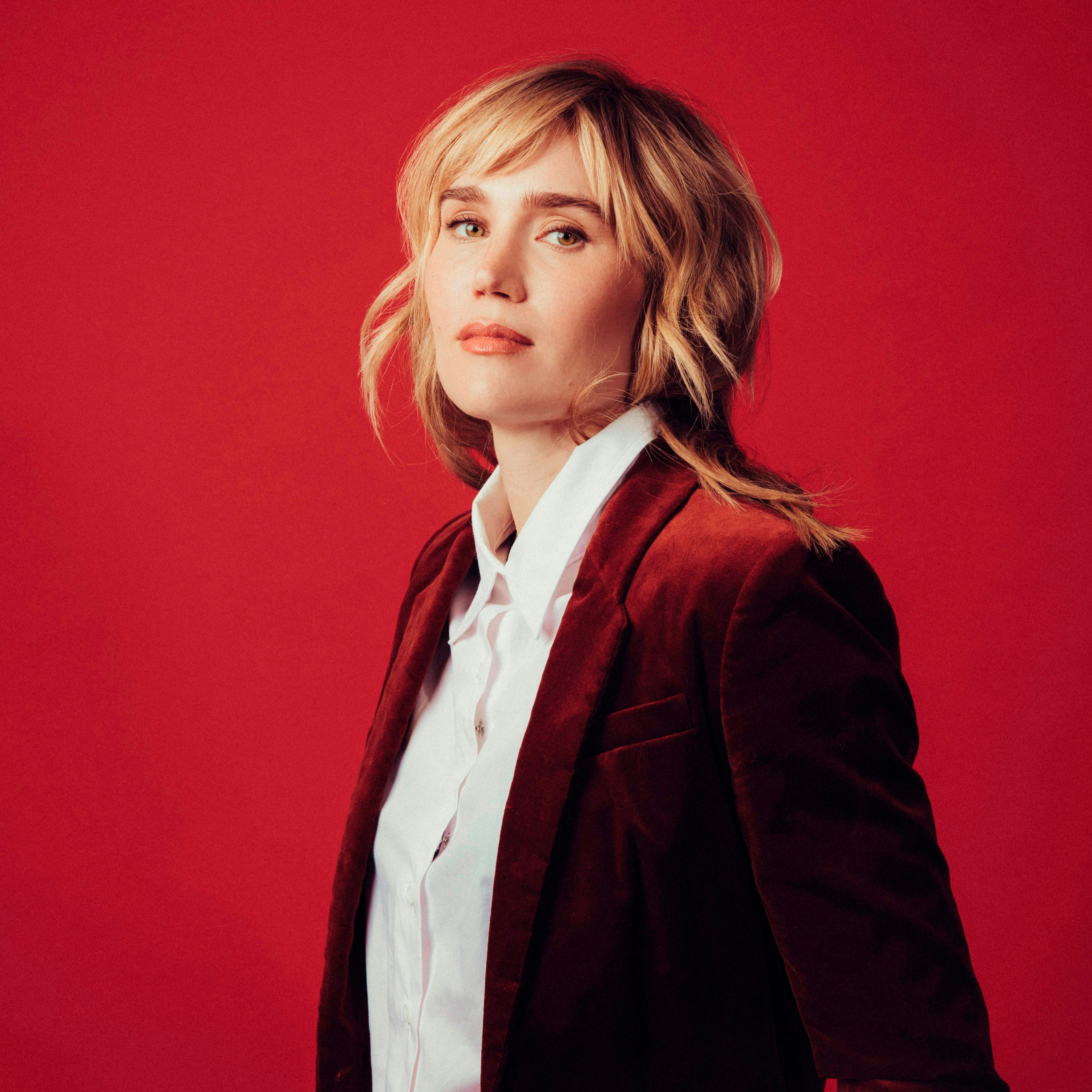
It seems as though there’s almost nothing that Nora Kirkpatrick can’t do. She’s a television actor (The Office, Shrinking), WGA Award-nominated writer (Amazon’s Daisy Jones & the Six), and director (ABC’s The Goldbergs). She’s created, written, and directed a number of unique projects, including a 15-episode interactive TV show, The Coop, starring Tony Hale, and Hulu’s live-action VR comedy series, Door No. 1, starring Snoop Dogg. As if that’s not impressive enough, she’s also a rock star—as a founding member of Edward Sharpe and the Magnetic Zeroes, she spent seven years touring the world, earning a Grammy Award and a gold record along the way. Not bad for a girl who grew up in rural Iowa.
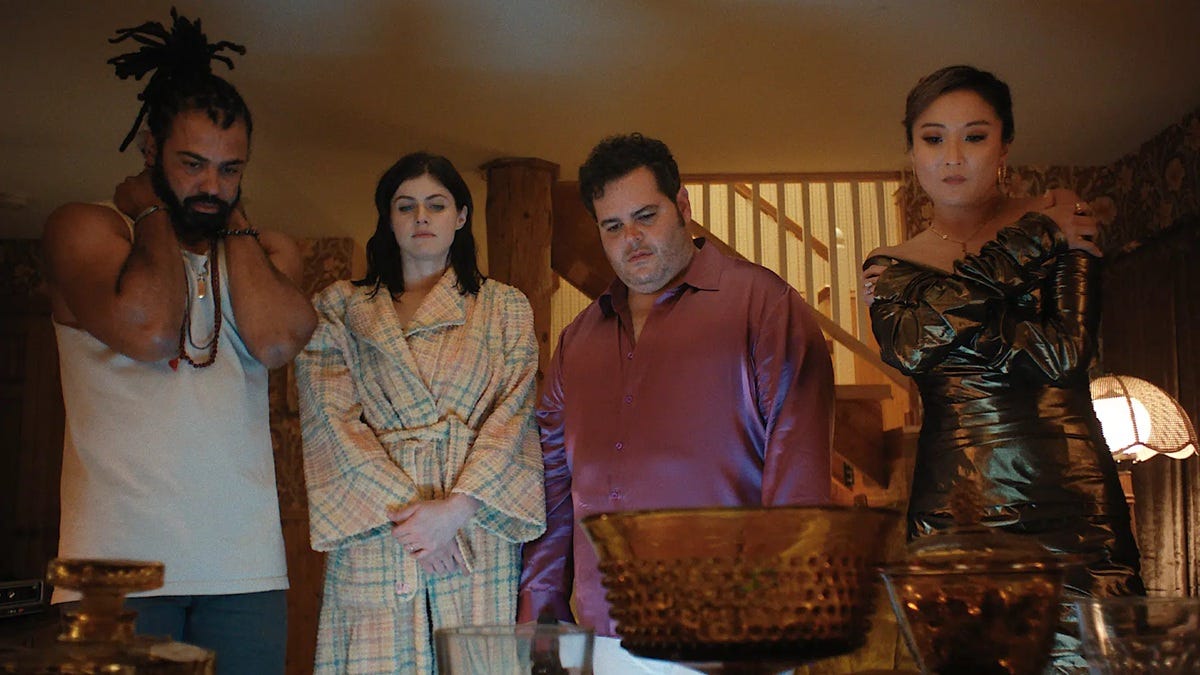
Though she has a lot of projects on her plate for the coming year—including a rom-com feature, Whodunnit, and an Amazon series, Escorted—she’s currently promoting Couples Weekend, her debut feature film. Written and directed by Kirkpatrick, the dark comedy (available to rent on Amazon Video, Fandango at Home, and Apple TV) stars Josh Gad, Alexandra Daddario, Daveed Diggs, and Ashley Park as two married couples who spend a weekend together in a remote cabin. When Gad’s Mitch and Daddario’s Debs discover their spouses are having an affair, they have very different ideas on how to navigate the situation. Kirkpatrick says the film stemmed in part from her love of theater and her desire to bring actors together to delve into complicated situations.
“I had been working a lot in television,” Kirkpatrick says. “And I was missing the theater workflow. I was missing actors being able to stand and deliver, to do real scene work, to do things that weren’t quick snippets and quick setups. I knew when I made my first movie that I really wanted it to feel like the actors could dig in, so that was the tonal concept in my mind. And then thematically, I had been thinking a lot about the intricacies of intimacy, and how well our partners know us, and how much truth is in true love. These were the themes that were floating through my mind, and then this dilemma arose—could there be a situation where you have two alliances, to your partner and to your best friend of 20 years, and could that make something that normally would be very cut and dry pretty complicated if somebody else’s marriage was also on the line?”
Over Zoom, Kirkpatrick chatted with me about the challenges of making the film, her love for production design, and her conflicting feelings about AI.
Creative Reverberations is a reader-supported publication. Each interview takes many hours of work. To read all posts and support ad-free, independent journalism, please become a paid subscriber.
SANDRA EBEJER: I’m always interested in hearing how people came into the entertainment industry. You grew up in Iowa, which isn’t widely known for movie stars and famous musicians. When and how did you first develop an interest in the arts? Did you grow up wanting to work in the industry?
NORA KIRKPATRICK: Man, I would have loved to grow up wanting to work in the industry. I didn’t even consider that a real possibility, because I didn’t know anyone who worked in the industry. I grew up doing theater in Iowa. My mother is a journalist and a writer, so I was very involved in the creative community, but in terms of, “Why don’t you grow up and be a writer-director in Hollywood?” I was just like, “That sounds great. How do you do that?” I would say it was a windy road to me getting to a place where I could verbally say, “This is what I want, and I’m going to take the steps to get there, even though I might not know exactly what those steps are.” I went to UCLA for college, which was very helpful to be in this community. I was in theater school, and that began the visualization process of what 10,000 possible steps can you take to make this your job.
You’ve worked in the industry for a long time, and you directed a VR feature for Hulu, but Couples Weekend is your first time directing a straightforward feature film. How was it for you to take on that role? Was it intimidating?
Sure, absolutely. But I had a great team around me, and all of my department heads I had worked with before. My DP [director of photography], my costumer, my AD [assistant director] were people I had worked with, some of them three to four times before, so I felt like we were really solid and had a great communication style. I had wonderful producers there with me, so I felt very supported. I knew it would be incredibly difficult. We had 20 days and not very many resources, so I knew it was going to be hard, but I think sometimes in those moments I can write down, “All these things are going to be hard. Those are facts.” Then I can accept them as facts, so I’m not surprised about them in the moment. Like, “The tree won’t fall down, and we ran out of money for this thing, and we have to finish this whole scene in 20 minutes.” I’m like, “Okie dokie! I knew this would be hard. Let’s see what we can do.” So those challenges I felt very invigorated by because I had prepared myself for the possibility.
Were there any moments during the making of this film where you faced a challenge that seemed insurmountable? Anything you were really proud to have pulled off?
I mean, the whole thing. The tree falling was harrowing. [Laughs] It’s hard to fall a tree and have it be big enough and intimidating enough to make it play. I was told at the beginning of the movie that we had no overtime. Not that you really ever need it, but some days you could go 20 minutes over, you’ll finish 20 minutes earlier the next day. There can be kind of an ebb and flow, depending on whatever. But I was told we had zero overtime, which is such an interesting thing. So when the day is done, the day is done. And I’m efficient with my team in terms of that, but it was interesting to go into it with no wiggle room. There are no extra days.
We got rained out several days, there was lightning, we couldn’t shoot for hours, there’s no extra time. How do you make that up? How do you move it around? Usually on a movie, there’s a lot of movable pieces. We had none of that. So it was quite a challenge, but I will say we had so much fun doing it. Even when it was hard and I would go home and collapse on my bed at the end of the day, I was like, “This is so fun!” The people were so great, and the cast was so wonderful. I’m grateful for all of it. I will say that anytime something like that happens and you have a shoot where you’re limited, it really just makes you better.
The movie has such a fantastic cast, and they do genuinely seem like two couples who all know each other really well. Given that they had to work in such close quarters for an extended period of time, did you do anything prior to filming to ensure that they would feel comfortable with one another?
You know, we didn’t have a lot of time. We had a table read, and we had a few days of rehearsal, but I will say this, I don’t know that I’ve ever seen four people take to each other faster. I think because many of them come from the theater—three of the four have been on Broadway—they have a shared language, and as soon as they met, I felt like they’re almost going to have too much fun. I got very lucky in that everybody got along great.. And boy did they show up prepared every day, which is not an easy task when some days we were shooting 10 pages of dialogue, which is tough. I really lucked out.
You’ve said in past interviews that you’re obsessed with production design. Why is that such an important aspect of the filmmaking process, and how did it factor into this film?
I just love thinking about design so much. I love what it can say about a character, about a place, about a world. It just feels like this X factor, beyond when you’ve written the script and cast it, where you can put all these other ideas. It’s just such an exciting place. And our production designer, Liam [Moore], did such an incredible job. He completely transformed this house. He had ordered curtains and wallpaper from the ‘70s, so the house really smelled like the ‘70s, which was a stage direction in the script, and he just took it and ran with it.
I just have an interest in it in general. For me, it feels like such a fun part of the process. I grew up watching these movies, basically all made in the ‘90s, and they all had such an attention to production design. Toys, Strictly Ballroom, Defending Your Life—all of these movies have a slight heightening in terms of concept and design. I think somewhere in the early 2000s we got into a zone where comedies didn’t have a real focus on production design. They were maybe so realistic that we lost the aesthetic value, and I got a little bummed by that. Funny can be fancy. I feel like there’s a way to keep the humor and keep the lightness, but also have it look real pretty.
A lot of times when I talk to an artist about a specific project, they say there were other works of art they looked to as inspiration. For example, an author writing about a midlife crisis read only books on difficult marriages and middle-aged challenges as she was writing. Were there specific films or works of art that inspired or influenced you during the making of Couples Weekend?
Who’s Afraid of Virginia Woolf? is one that I always go back to. Things that are a pressure cooker where people cannot leave and you have to deal with it in real time. I loved The Worst Person in the World so much. It’s spectacular. Those ones where all of the turns, all of the stunts in the movie, are emotional. It’s not car chases; it’s not things blowing up. It’s emotional turns. I’m really interested in that. So, those two movies were things I was watching.
Years ago, while working as an actor, you were also a professional musician. Your Instagram has a lot of great photos from your touring days. Do you miss that era? Do you think you’ll ever get back into playing music and touring?
I do miss it. It was so fun. I work with one of the guys from the band, Mitchell Yoshida. He scores a lot of things that I do. He scored this movie, so I still get to interact with it in that way. It’s really hard to do this and to be on tour. We were on tour maybe seven months out of the year. So I miss the music part, but as long as I can incorporate that into what I’m doing, I feel fulfilled.
You’ve written and directed VR comedies for Hulu. In the few years between then and now, technology has advanced so much. How are you feeling about where things are heading? Are you excited by new technologies? Are you concerned?
It certainly is going to change. There’s no way to say that it’s not going to change jobs. It is. It already has. What they can do now with animation and creating a show in a day based off a prompt—I mean, that’s real. That exists. So much of it’s going to be shifting. I am excited about using AI as a tool in the VFX toolbox. There are some things that previously would have been so expensive, you can’t do them. Now with AI, you can. You still need a VFX team to orchestrate that and work through it, but it’s a tool in that toolbox that makes a lot of new things possible. I probably share everybody else’s worries about how far is that going to go and how many jobs will be replaced, and that is very sad. I think it’s a double-edged sword.
Are there any artists you look to as an example of the career you’d like to have?
That’s a toughie. I’m excited about oscillating back and forth between bigger movies and smaller movies like this one. This one was very personal to me, very meaningful, made on a smaller scale. I made a movie after this one that is a big rom-com. So, my ideal career is a balance of those two elements, where I continue to keep writing and working on the things that are very personal to me, balancing them with these really fun, joyous, bigger projects, where I get to work on a scale that’s also completely exciting to me. That’s my ideal dream.
It’s a difficult time in the entertainment industry. Anytime I talk to someone who has been in it for a long time, they say production has never been slower. What advice would you have for someone who looks to the work that you’re doing and thinks, “I would love to do what she’s doing”?
Yeah. I’ve been there. There were so many years where I was saying, “I want to do that. How do you get there?” It can feel like this Grand Canyon of “I do not know how to get to the other side.” I’ve completely been in that position and still find myself in that position in many ways.
The thing that brought me a lot of freedom in those moments is making my own work. I think the only control position you can put yourself in, especially when you’re starting out, is writing things, making them with friends. I made a lot of short films before I ever got to make a [feature] film. I made a lot of presentations and spec commercials before I ever got to make a real commercial or real TV show. And not that those were platforms in any way, but they were great education for me, and they also helped me build a community of people that I would then be working with when it became a real job. I think if you want to be doing it, you should be doing it on whatever scale you can, and hopefully over time that scale begins to grow. That can be a very difficult thing to do, but if you build a community of people who are in the same boat, you can help each other out. You can work for free on each other’s projects. [Friends and I] were helping each other out on our projects, we work together now on paid jobs, and it has been a beautiful evolution.
To learn more about Nora Kirkpatrick, visit her website.
This interview has been edited for clarity and length.
You might also enjoy…

