

CR 107: Luscious Jackson's Jill Cunniff on Music, Memories, and Making Art
The musician and artist discusses her memories of the band, the 30th anniversary of “Fever In Fever Out,” and her lyric-infused paintings.

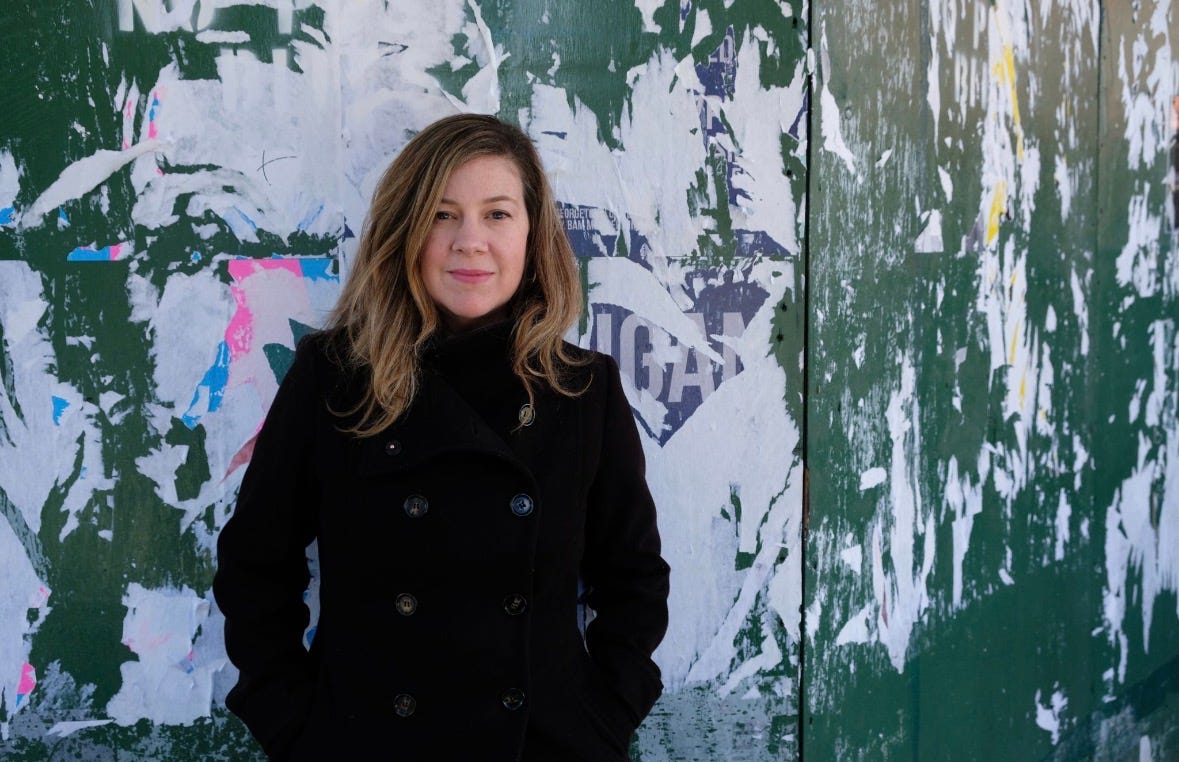
In 1991, friends Jill Cunniff and Gabby Glaser made a demo tape of original music, combining their mutual love of hip-hop, punk, reggae, and jazz to create a sound all their own. Calling themselves Luscious Jackson, they gave the demo to their friends in the Beastie Boys, added two additional members to the band (Kate Schellenbach on drums and Vivian Trimble on keyboard), and recorded an EP, In Search of Manny, which became the first release on the Beastie’s Grand Royal Records imprint. It was followed two years later by Natural Ingredients, Luscious Jackson’s debut full-length album, which led to MTV videos, late night talk show performances, a spot on 1994’s Lollapalooza, and a relentless touring schedule. When it came time to record their next album, they knew that in order to top the first one they’d have to expand into new sonic territory.
“By the time we finished Natural Ingredients,” Cunniff says, “it was like, ‘Okay, that was the very hip-hoppy record. What can we do next?’ The president of Capitol Records suggested [producer] Daniel Lanois, who was totally from a different style of music. He worked with Brian Eno and U2 and all kinds of big artists from different rock genres, and he took us on. He liked In Search of Manny, our first EP. So that was an interesting collaboration.”
Released in October 1996, Fever In Fever Out became Luscious Jackson’s highest chart-topper and biggest seller, with the video for its first single, “Naked Eye,” playing in heavy rotation on MTV. And though the band called it quits in 2000, Cunniff, Glaser, and Schellenbach remain good friends. (Trimble passed away in 2023.) They run a Substack in which they share behind-the-scenes stories and they’re working on an updated version of Fever In Fever Out for its 30th anniversary.
“We are re-releasing Fever In Fever Out in the fall as a vinyl with extra tracks,” Cunniff says. “Hand-numbered, all that. I’m deep in the archiving right now, finding weird tracks and obscure stuff.”
When she’s not working on pulling together items for Luscious Jackson’s archives, Cunniff focuses on her visual art. A trained artist—she graduated from New York City’s LaGuardia High School of Music & Art and continued her art studies in college—she painted both during and after Luscious Jackson’s run. Over Zoom, she chatted with me about her memories of the band, her creative process, and what advice she’d give to her younger self.
Creative Reverberations is a reader-supported publication. Each interview takes many hours of work. To read all posts and support ad-free, independent journalism, please become a paid subscriber.
SANDRA EBEJER: It’s crazy that Fever In Fever Out turns 30 this year. That album was Luscious Jackson’s biggest chart topper. When you think back on those days of the album and the “Naked Eye” single and the music videos, what comes to mind?
JILL CUNNIFF: Great busyness, every schedule packed front to back. That’s what they would do—they being the machine—and they still do it. I mean, I can’t say there’s not a spare moment because I wrote a lot of songs on tour, but it’s that kind of schedule where you get to the gig, you do interviews, you eat, you do a pre-show VIP thing to meet people from the industry, then soundcheck is in there somewhere. It’s just nonstop.
I remember trying to get to Lollapalooza in Rhode Island in 1994 in time to see you guys play, but we hit so much traffic we didn’t make it in time. I thankfully made it to a show in ’99, so I did get to see you play eventually. Do you miss those days?
No! At this time in my life touring has zero interest. But, you know, I think back to being that age and enjoying it to some degree. It was really fun. I’m glad we did it. It’s just a specific time in life, and [you] have that energy to go, go, go. It was great. I look back at it as a flash of excitement, for sure.
You were doing visual art before you began a career in music. Was your goal initially to be a painter? Did you pursue both simultaneously?
Yes, my goal was to be a painter. I was always that person who did both. I was in High School of Music & Art in Manhattan, which was a music and fine arts school. I did fine arts, but the rock band thing was so powerful at the time—the punk rock, do-it-yourself band—so I had many bands going and I was painting, also. So just getting out of college, figuring it out, and music took off. More opportunities arose.
Were you raised in an arts-loving household? Was that always encouraged?
Yeah, definitely. My parents were obsessed with art and music. My father, especially. I still have his jazz collection, so I have all his LPs. We were listening to music all the time, and my parents took me out to the venues, like CBGB, when I was really young. I went on my 13th birthday with my mom. That was the change, I think. When I went out to that, I was like, “Okay, life gets better than middle school.” That was the beginning of me loving music, making it the center, going out all the time. That was really important.
When Luscious Jackson first came on the scene, the band sounded so different from anything else that was out there. You seemed to have a wide variety of influences. Who were some of the bands that you were listening to at the time that inspired you?
Well, it was the hip-hop era, the golden age. We came up with hip-hop from very early, hearing it in New York City and then learning to rap. And then we saw The Clash at Bonds and they had rap groups opening. So it was just this overwhelming joy to discover rap. First it was punk rock, then it was hip-hop, really within a four-year period, because it was the early ’80s that the hip-hop thing kicked off in New York. And as time went on, hip-hop developed in all these directions, and by the time 1990 came, it was that era of happy hip-hop—A Tribe Called Quest and De La Soul and all that stuff. That was a big influence with our punk rock stuff. We were just like, “Let’s just mush the stuff together that we love.” And we loved The Slits, we loved British music, a lot of reggae. It was an incredible mishmash of stuff that we loved and tried to mix together.
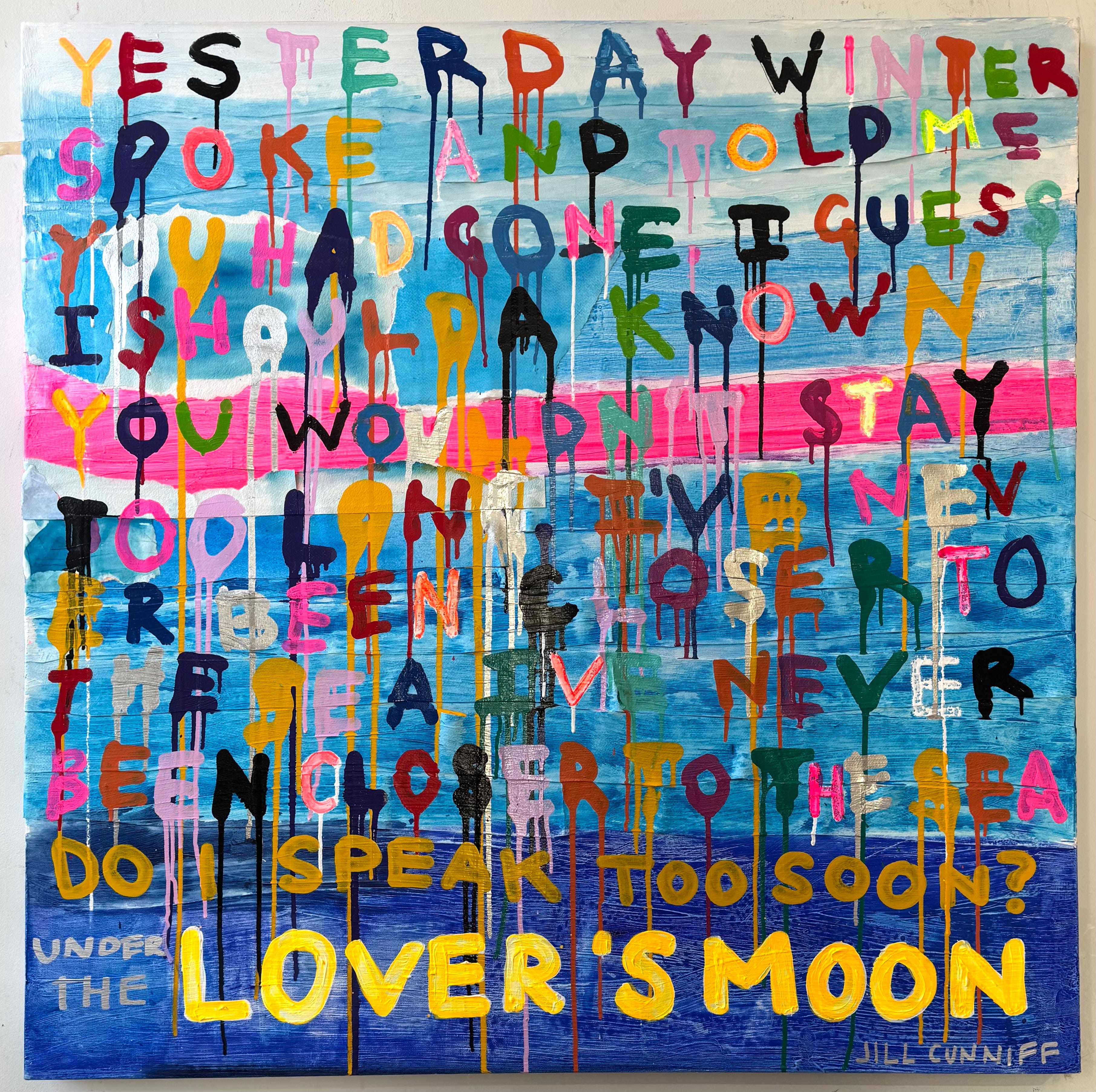
I wasn’t familiar with your visual art until recently. It’s beautiful. It seems to be a combination of these two worlds—your paintings and your song lyrics. What is your creative process like? Are the colors informed by the lyrics? Do you decide on the lyrics once the painting is done? Do you have an idea going in what you want to paint, or is it all instinctual?
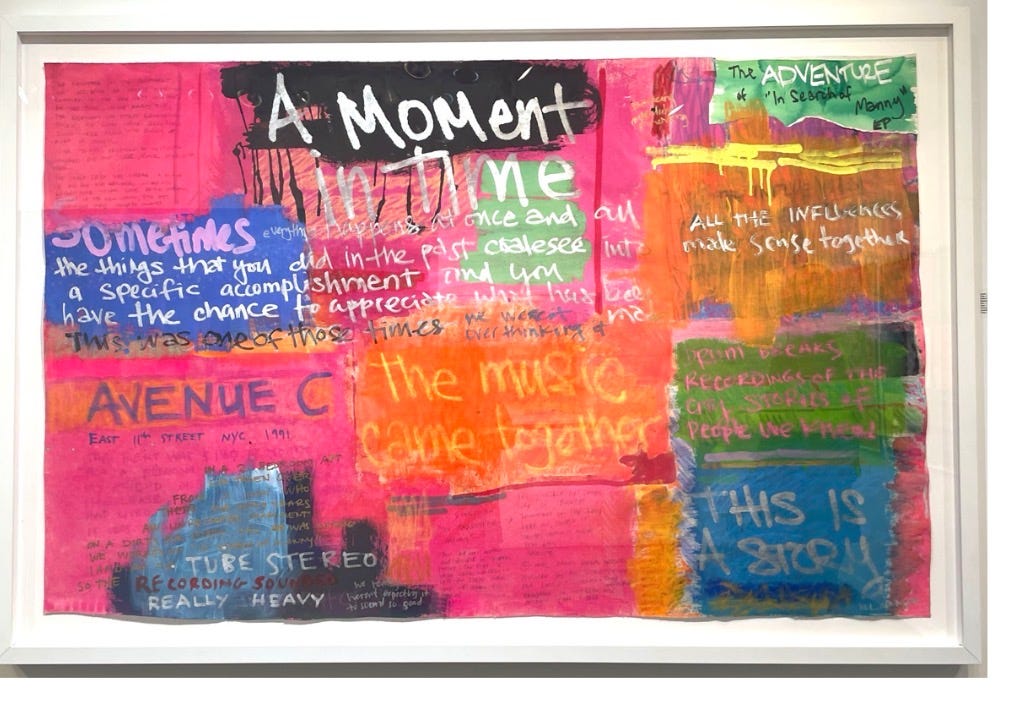
There’s a certain amount of premeditation going on. I think about the colors I’m going to use, and then it is sort of a flow thing. Like, “What does this feel like? Which song does this feel like?” One of the ones I sent you is called “A Moment in Time,” and it’s stories. I’m moving into that more. I would like to have them tell stories that are not necessarily lyrics. Lyrics will continue, but I’m really interested in the idea of writing stories and getting them onto the canvas. We have a Luscious Jackson Substack where we’re telling stories of our lives and childhoods and band memories and everything. I would like to see all of that come together.
Sounds like you’re deep in the nostalgia period at the moment.
I am, in the sense that I’m going through boxes and we’re working on our archive to place in a university. So there’s archival work, which is very tiring, actually. I mean, I can only do like an hour. I set my alarm. [Laughs]
Yeah, you shared something on Instagram recently about a Luscious Jackson exhibit you’re working on.
Yeah, that’s what started it, and then it grew into this thing where we’re placing our archive [into a university]. I had saved boxes and boxes of stuff—journals, lyrics, photos, all the papers. I still have a lot of stuff from that time. And cassettes! So many cassettes. That’s one of the things I’ve been doing is listening to these cassettes of songs that disappeared. They’re not in the Capitol archive; I just found them on cassette. So I’m sending those cassettes over to be digitized. It’s a deep process.
Do you paint every day?
Pretty much. I have it in my living room area, so I set it up for myself to make it easy. I’m a person who prefers to be working at home. I’ve had a studio, but I’m more productive at home.
Do you ever face creative blocks or periods where you just don’t feel like you’re able to make art?
Yes. I was trying this thing with the half-hour where you set your timer. I like it. You could have a little bit of resistance, like, “Okay, try to do this for half an hour if it’s a bad day.” It works for me if it’s just putting a few things down, moving some things around. There are other times where it’s just hours and hours of hard work producing a lot of stuff. So it goes up and down.
You mentioned your musical influences when you were starting out. Who were some of your influences as a visual artist?
First of all, Jean-Michel Basquiat, who we all knew. He was a person around the club scene in the early ’80s and I was very young. He was like 10 years older, maybe. My friend dated him. A lot of people dated him. [Laughs] But I got to hang out at his studio with his art when I was 16 and I just took it in. I was like, “This is our Picasso. This is our person now.” As a New Yorker I related to his scrawls and words and racial consciousness, his politics. It’s just incredible. And, you know, I grew up here, so I went to galleries and anything mid-century I love—Rothko, Rauschenberg, Helen Frankenthaler, all of that stuff.
What a cool experience to grow up in the city at that time!
Yeah. I can’t imagine it happening again. I’m sure versions of it are happening all the time, but that onslaught of the graffiti and the break dancing and all of that was incredible.
And the pre-social media of it all...
God, yeah! [Laughs] To be in a place where no one’s recording anything. We just let it all out. We were free in that way. You could dance freely and nobody was videotaping anything.
And the creativity that stems from being able to just do something.
Yeah, it’s probably good to put the phones in the bag in the clubs or something. I don’t know how you’re going to do it big time but I think it improves the situation. Unless you’re like, “I want everyone to record my rock concerts.” I guess that’s why they don’t do it. Artists are like, “I get all this free publicity,” but then you’re playing and [people are] staring at phones. It’s a tradeoff.
Right. You guys haven’t put out any new music in a while. I have the most recent album that came out in 2013. Any chance of new music in the future?
At the moment, no, but it’s possible. Never say never. We’re all good friends, we all talk. Everybody’s busy. Kate works full-time as a TV producer. So it’s something that if inspiration hits, for sure it could happen. I just saw Mike D play from Beastie Boys. He has new music coming out and he just did performances. That was amazing.
I also saw something about these open studios you host with fellow artists and musicians. They sound really fun! Are you still doing those?
I do it when someone comes into my path. I used to be a teacher for musicians and kids, so I enjoy teaching. I enjoy doing workshops, and I’ve done it with a lot of people.
When you’re teaching, what advice do you give aspiring artists?
Are you doing this because you’re enjoying this? I try to encourage that. It’s not about how popular [you’re] going to be. It’s, how can you find the enjoyment in this? Are you into this enough that you would do this without making it big? The answer is yes, a lot of the time. I think for young people trying to figure it out, it’s very confusing because they want to be part of the world and release their music and be noticed.
Well, they’re told that that’s what they should aspire to now.
Yeah, and then it’s this big morass of stuff out there, so it can be quite discouraging. If you live in a small town and you have open spaces in your community, figure out how to do shows. If you’re a teenager trying to do music, figure out how to make a community like we had. Do it yourself. That’s actually really rewarding, and you can release your own music, and you can get it out there. There’s a playbook that pre-existed the digital era, so I think it’s incorporating what was there before and what people are longing for, which is a return [to earlier decades]. A lot of young people really want to return to that or wish they had been there in the ’90s. I try not to say, “It was so great in the ’90s.” I don’t want to make it sound like it was better back then. I just try to say, “What can you do to make yourself a better musician, and communicate with others besides online? Can you make a community?” It’s not something people are used to these days as much.
Do you think it’s still possible for people to have a career in the arts?
It’s a very interesting question. I think it is possible. My daughter is a musician and artist, so we talk about this all the time. She’s 21. They have these multi-hyphenate lives. That seems to be the deal. Like, “I have music groups, and I’m also a” something. Not usually a finance person, but like, “I’m also a barista” or hair stylist or makeup artist or editor. There are a lot of people like that. I like it. They find a nice place to live, they have friends, they have community, they do their art. They’re in that lower rung of popularity or whatever, and they’re not blowing up, so to speak. I like that.
It was the 30th anniversary of Natural Ingredients a few years ago, and now we’re talking about the 30th anniversary of Fever In Fever Out. If you could go back to those early days and give yourself any advice, what would you say?
Ah, get an accounting degree. [Laughs] It’s insane. I never understood the business part as well as I could. None of us did. You really can’t, especially music publishing. I don’t know if that’s good advice or not because I’d waste a lot of time getting an accounting degree. But how many musicians have been swindled by their business managers? Because you’re making music. You don’t have time to worry about that stuff and then somebody else is just taking your money. It’s a crazy situation. When you use a basic service like TuneCore or Bandcamp to put your music out, it’s much more straightforward. You can see exactly what’s going on. Whereas when it’s on a major label, you will get so much information. In the old days, it was like this thick [holds up fingers] of where your song played for 0.1% in this country. We couldn’t ever make sense out of it. You never can because it’s international accounting. I don’t think anybody has a handle on it, not even the people paying you. Business acumen is really helpful if you’re entering the music business.
Is there anything you haven’t done professionally or creatively that you still want to attempt?
I would like to make my open studios a group activity. That would be something I think would be really fun. And that’s very simple, but something in my mind. Like, if I found an ongoing group, we choose a visual art exercise. It’s almost like an art class, but maybe some conversation, stuff like that. It sounds like fun long-term to have a rotating group of people that come once a month or something and make art and do different things. Not really a business or anything; it’s just for fun.
You and I coordinated this interview directly, you’re very active on social media, and as you mentioned, you, Gabby, and Kate run a Substack. It’s very different from the days when you were on a label and had a team to help you with things, and there wasn’t even social media back then. How do you feel about how things are now? Do you like having a more hands-on approach? Or would you rather not have to do it all?
It makes it easier when there’s people doing it, but sometimes people get their ego involved. We had amazing teams, but they would put stuff on the schedule that was a total waste of time. So, now we’ve had to learn to do it ourselves and figure out what people want.
I found this Polaroid in my boxes, and I posted a little story about it [to social media]. It was a studio shot on 14th Street, and we’re hanging out. It was such a realist picture, hanging out in our space, and it’s been the most popular post, possibly ever. People are interested in the behind the scenes, how it all happened, all of that.
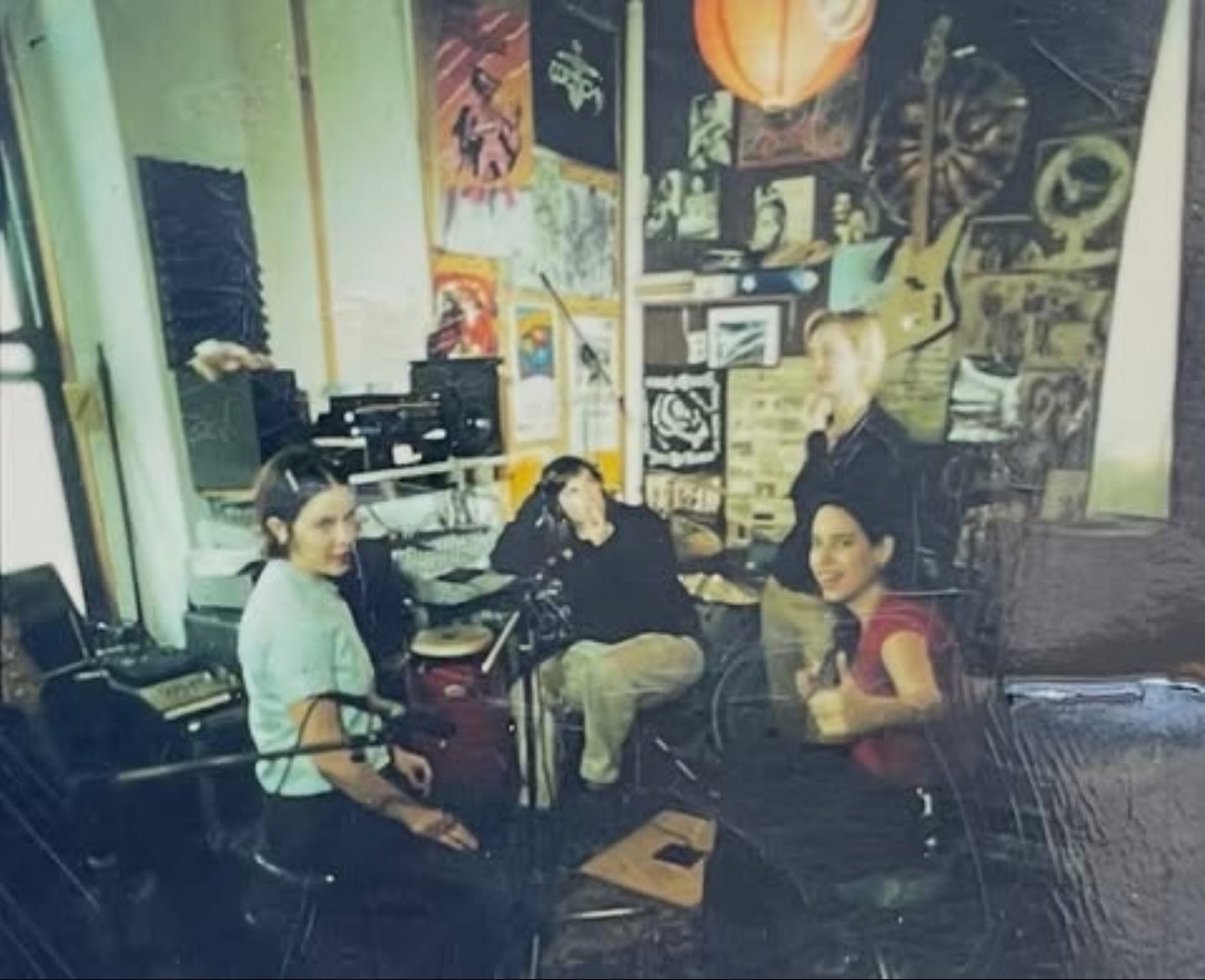
You can’t force these things. You can’t force something to get popular on there unless you’re spending a lot of money, which we don’t do. Adding money to Instagram to spread your post... [Laughs] I’m not really into that. I’m like, “If this thing is going to fly, it’s going to fly.” We’re not really selling [merch]. We’re selling some sweatshirts occasionally. We have things we sell, but it’s not a format for us. It’s more just getting it out there and hoping younger people discover it. And they do, and they really enjoy it.
To learn more about Jill Cunniff, visit her website.
To learn more about Luscious Jackson, find the band on Instagram.
This interview has been edited for clarity and length.
You might also enjoy…

