

CR 079: Michael P. Shawver on ‘Sinners,’ ‘Black Panther,’ and the Director-Editor Relationship
The Oscar-nominated editor of “Sinners” discusses his work with director Ryan Coogler.

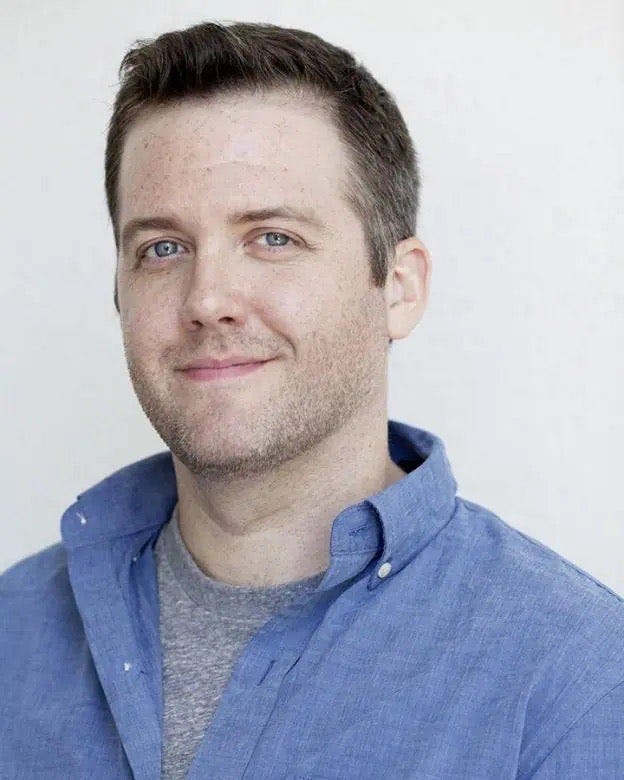
When Michael P. Shawver was a student at USC, he met a fellow student whose films were unlike anything being made at the college level. “Most student films are about death or breakups, because that’s the only conflict that people know at that point in their lives,” Shawver says. “But Ryan was making stuff about society, class, family—situations that were very unique and very specific. I recognized that this person is better than me at what I want to do. I wanted to help him, so I went up to him and said, ‘I don’t know how, but I’d love to work with you.’ Everything in my gut just said, ‘Work with this guy. It’s going to be a great situation.’”
The Ryan he’s speaking of is Ryan Coogler, who hired Shawver to work on his student film Fig. “It was actually a production design job that I did,” Shawver says. “I saw him at 10 o’clock one night after class, and he said, ‘You know how to production design, right?’ And I was like, ‘Yeah. Totally.’ [Laughs] ‘When are you shooting?’ And he said, ‘Six a.m. tomorrow.’ And I was like, ‘Okay...’ [Laughs] I panicked, but then I figured it out. And on set, I did everything I could to help. I helped shoot it, I helped light it, I helped get lunch. A couple days later, he picked me as one of his editors for the short. He saw that I was going to put in the work and focus and time to help get his vision. I think that’s where that trust started that we have now.”
Since those early days at USC, Shawver has gone on to edit many of Coogler’s films, including Fruitvale Station, Creed, Black Panther, Black Panther: Wakanda Forever, and Sinners, which just yesterday broke the record for the most Oscar nominations for a single film. (Shawver was nominated for Best Achievement in Film Editing.)
Over a recent Zoom call, Shawver chatted with me about his decades-long relationship with Coogler, the filmmakers who have inspired his work, and his most challenging edit.
Creative Reverberations is a reader-supported publication. Each interview takes many hours of work. To read all posts and support ad-free, independent journalism, please become a paid subscriber.
SANDRA EBEJER: There are certain directors who have their go-to editors. One of the longest relationships is probably Martin Scorsese and Thelma Schoonmaker. Your first IMDb credit is a Ryan Coogler-directed short called Fig and you’ve since worked with him on 5 feature films. In your experience, what makes a good director-editor relationship?
MICHAEL P. SHAWVER: That’s a great question. I’ve never been asked that before. I mean, trust is a big thing. There are a lot of people that don’t want to upset a director, but a director needs to be protected, sometimes from themselves, so having that level of trust where we can have honest conversations [is important]. A big part of being an editor is essentially being a therapist and creating an emotional safe place where they can rant and rave or bounce ideas or just get away from the outside world. Because they have this meeting and that meeting, and everybody wants to talk to them. So for me, as soon as a director steps into that editing room, I need to create and hold this place where we can have candid, personal conversations with what’s going on in our lives to what’s going on in the world. That opens the creative space for the movie. If the editing room becomes just like another meeting place, where it’s just more work or discussions that are akin to the pressures from the outside, it’s not best for the movie.
And with keeping that creative space, a lot of it is managing anxieties of other people and making sure that Ryan is not affected by that, so we have the clearest path and the purest space to come up with ideas. A lot of our ideas that have stuck, that maybe have been a little outside the box, usually come from those places where we can be present in the moment, and just have a relationship with the movie. On Fruitvale, there was much more, “Let’s sit and watch through every frame of every take and talk about what each thing means for the movie and the story.” And now, I may not see Ryan more than a night or two every couple of weeks, when he comes in if he’s worried about something. An editor’s job is really to get into the director’s head and represent their vision. So now, knowing what he looks for, I can watch stuff that he shoots and without even speaking to him know where he wants to be, when in the scene, what he wants the scene to feel like overall, so he can go and worry about [other things]. I’m not a person that he would have to come and make sure he’s directing while he’s got thousands of other questions to answer and people to talk to and decisions to make.
Ryan’s films are never just about one thing. His films are layered and have so much going on that it sometimes takes multiple views to fully appreciate the film’s message. How is it for you as the editor to balance the entertainment with the underlying themes of the film?
You’re absolutely right. The thing about Ryan is that he enjoys movies. He is the most unpretentious filmmaker there is. I remember while we were on Sinners, he was doing this presentation. Warner Brothers did this thing with some of their directors, where they would pick their favorite movie and go speak about it. One director picked Chariots of Fire, another picked an old movie, and Ryan was like, “Should I do something classic? I really want to do The Fugitive.” I’m like, “Do The Fugitive!” Ryan’s appreciation is, these movies can move you but still be fun. It’s still an escape for people to go to the movies. I think now more than ever it’s really, really important. So, our love for movies like that or The Thing or Jurassic Park—if you look deeper, they do have important themes and a lot of discussion points, but [they put] that in a wrapper. It’s like the Mary Poppins thing: a spoonful of sugar makes the medicine go down.
So, with Sinners, there’s a history lesson in there. You know, I consider myself a relatively educated person, but there’s so much I didn’t know about this time and place and the experience of those people. And every detail that can be uncovered or used or studied or researched, Ryan will do. And that gives it a more grounded time and place. Ultimately, his movies are really about relationships, even Sinners. Audiences tend to relate more to the relationships in a movie than someone’s name. And in filmmaking, the more specific you make something, the more universal it becomes. How can you and I relate to Sammie, a young sharecropper blues musician from the 1930s south? Well, he’s got a dad who wants him to do something that he doesn’t want to do. He wants to go follow his own dream, and his dad’s telling him something [else]. So these universal themes we want to deliver to an audience. And I think intertwining all of that creates a full experience.
You were a co-editor on the Black Panther films. What is that process like, when you’re brought on as part of a team?
It’s a different dynamic, because you want everyone who’s putting their time, energy, creativity, soul into the movie to have ownership of it. It’s like a relationship or marriage. It can’t be lopsided. You’ve got to support each other. You’ve got to accept each other’s strengths and weaknesses and keep egos out of the door.
A lot of my movies with Ryan were with co-editors. Ryan loves multiple perspectives. Usually myself and the other editor come from different walks of life. It’s always been a female co-editor to get that perspective. And we protect each other. We do our best not to take things personally if someone doesn’t like something. Like most things in life, you can look at it two ways. One is, what are these obstacles in front of me? I want to do this, and they don’t agree with me, and I think this is better for the movie. When it’s the right team, you can put that stuff aside. You can look at it like an obstacle, or you can realize that friction makes fire. You know, you have this idea, I have this idea, and Ryan has this other idea. Well, once we can get all that to work in a cohesive and emotionally impactful way, then it’s going to be better than any of us could have thought.
Now, when it comes to working with other editors, there’s different dynamics. There are editors out there that want to divide up scenes. Like, “This is my baby. I’m going to see this thing through and don’t want any other editor touching it.” For us, we want to work in the most organic way possible. We want to have as much creative input from all of these different experiences. Everybody’s going to touch everything. If you feel like you have an idea for a scene, you need to go for it. With us, there’s no gatekeeping. Best idea wins. A united front is better than people trying to do their own thing in separate directions.
Black Panther is, of course, a Marvel film, which is going to have a significantly larger budget than other films you’ve worked on, like Fruitvale Station. I would imagine it also has a lot more red tape. Does it affect your work at all when the film is an indie versus a major studio film?
Very good question. On several indie films, I was my own assistant editor, and that’s the thing I don’t ever want to do. I don’t want to do both jobs. It’s too much. If I’m worrying about the administrative work, I’m not doing the creative work. So, with these bigger [movies], you do get bigger teams. When the budgets are bigger, you get more assistance. On one hand, it creates easier delegation of tasks so that I and Ryan can focus on the movie as much as possible. The thing that it brings up is, now we’re managing people, and that’s a whole different skill set.
Specifically with Marvel, there was an entire skill set I had to learn of working with VFX, working with previs. I would come on and there’s already a team of people who’ve been working for months making 3D animations of the action sequences. Then they give it to me, and I edit it. Editors are usually given a mound of clay, and we try to make the best sculpture we can with it. With Marvel, they encourage the editors to think up scenes and make up moments. So, if T’Challa’s running this way and hits these guys and flips over this thing and I have a better idea, I pitch that, and they make it and we test it. So we’re editing and we’re trying things out a lot. That was a big thing for me, using my imagination from a generating standpoint, as opposed to a Rumpelstiltskin standpoint of “take the stuff and make it gold.”
And then, Black Panther was a Marvel movie, but the subject matter was way more grounded, with things and groups of people that were never addressed before. You’ve got to keep in mind that these are adult movies, but kids are gonna be watching, teenagers are gonna be watching. You have to know what movie you’re making and know who the audience is. When the trailers started for Black Panther and there were videos of kids dancing on their desk at school—you don’t get that with an indie, you know? With an indie, you’re on your own.
Thinking back over your career so far, have there been any moments when an edit was particularly challenging? Anything that you felt really proud to pull off?
These are such great questions. [Long pause] In general, I probably felt that way about the entire movie for the first five to eight years of my career. [Laughs] When Ryan was doing Fruitvale, my co-editor and I had never done a feature before. The most we did was a 20-minute short. And so they didn’t want to hire us. The powers that be were like, “No, Ryan. We can’t give you money if you’re going to hire [these editors].” And he just said, “Cool. I’m still hiring my people.” And from then, my whole thing was, I need to get better and better and better and I need to match Ryan’s level.
Interestingly, sometimes it’s not the physical editing or figuring out the intercut of something. It’s “can I make this idea that I have good enough and figure out how to work it in?” For example, with Fruitvale, one of my first thoughts was, “We need to start this movie with the YouTube footage of Oscar getting shot.” My reasoning was, where I’m from in Rhode Island, I did not know that stuff was a common occurrence, and I was pissed off that I didn’t know about it. For me, it was like, “I want to slap people in the face with this. I want to come out swinging. This shit is real. We’re going to show you an event, and you’re going to fall in love with this guy.” But, at the time, and I totally understand it, Ryan didn’t want to use it because he wanted to be respectful of the family. So it started a working process that Ryan and I have, which is, if I pitch him an idea, he says, “Try it.” But if I don’t achieve it in the cut and he doesn’t like it, I’ll let it go. We trust each other so much that I’ll let it go. But if it comes back and is gnawing at me, then I’ll bring it up again. And he’s more than welcome to say no again. So not pushing it, having patience. Eventually we couldn’t figure out the best opening. We hadn’t nailed it and finally, Ryan’s like, “You want to try that idea?” And it worked out.
For Sinners, there’s a scene we loved that was on the cutting room floor. It’s a scene where Smoke is telling Sammie, “Don’t be a blues musician.” He’s talking about a place called Mound Bayou. He pulls the gun on him, all that stuff. That was originally scripted with the big “Pale, Pale Moon” musical sequence where Mary comes back in after she’s been attacked by the vampires, and it just didn’t fit. It’s an intimate moment that we loved but didn’t push the story and didn’t fit where it was scripted. So it was just out. Ryan kept bringing it up and I kept thinking about it. We wanted the scene in the movie because we loved it. We had a different scene where Stack and Mary are talking in the rafters before she walks out and talks to the vampires. And I said, “There’s a physical relationship between where they are in this juke above the party below. There is actually some sort of spiritual match with some of what they’re saying.” So that was a challenge but figuring out a way to get that scene in the rafters into the movie—the thing that unlocked it was this other conversation, and I do think that once we figured out that intercut, that scene became better than both of the separate scenes would have been on their own. Again, it was about finding a place for it. But, the cut itself had to work, and the intercutting had to work for it to earn its place.
Who are some of the artists who inspire or influence your work?
You mentioned Thelma Schoonmaker. She cuts for emotion. There’s relationships between characters onscreen, but there’s also relationships between the audience and the screen. And I always try to cut for emotion. It’s not just the emotion on the screen; it’s the emotion that you want to elicit. So her “I don’t give a fuck about traditional cutting and continuity” mentality is very inspiring to me, because I’m terrible at continuity. Like, I never would have noticed the Starbucks cup in Game of Thrones. But the other thing about Scorsese’s movies, whether you like them or not, you’ve gone through something. And I think her guiding us along in that way is incredible.
Bong Joon Ho is hugely inspirational for me. Memories of Murder is incredible. It’s a true story about South Korea’s first serial killer. There’s something about it that I still can’t fully grasp of the tone and the place and the setting and how tangible that movie feels. That movie opened my eyes to this level of storytelling and editing that I can’t explain.
Sidney Lumet is probably one of the most underrated directors out there. The run he had with Dog Day Afternoon, Serpico, and Network back to back to back was a big inspiration for me. And then Kendrick Lamar has released an album almost every time we’re making a movie, from Fruitvale on, and it just happens to be the soundtrack of what we’re working on. Even the latest one has a lot of blues influence, and we were working on a blues movie. So there’s some strange soul connection thing there. I definitely get inspiration from that.
The industry is changing so much. There were the two strikes, and prior to that there was Covid. Now we’re dealing with AI. I’m curious what your advice would be to anyone who wants to follow in your footsteps during this crazy time we’re living in.
I have this kind of easy come, easy go mentality. I’m from a place that you don’t make movies, so [I have] this mentality of diving in, going for it, but also seeing obstacles as an opportunity. And if everybody’s running towards this thing and there’s a wall, you’ve got to find a way around or over it while everybody’s waiting for a door to open.
I think in any functioning society, storytelling will be a very important part of it. It’s how we pass along traditions. It’s how we pass along historical facts. There’s always a need for storytelling. Now, what form it takes, that’s dictated by a lot of other things—technology, attention spans. I like reminding myself that there have been freak outs [before]—film to digital, home entertainment, the internet. So, for me, I’m excited about AI. I don’t think what we do can be done by something that hasn’t lived and felt emotions. So, even though AI can make certain tasks easier and quicker, I think there’s always going to have to be a human touch to things. As good as AI is, it is missing the spark of the human soul and experience.
In terms of obstacles, a lot of it is a mindset. It’s the people that see opportunity [who succeed]. For example, YouTube didn’t come out till I was in college. Kids now can go shoot on a cell phone, make a movie, edit it in a day, put it on YouTube, and if people respond, they respond. If they respond bad, that’s still information. That’s how you learn and grow. There’s so many opportunities now, with accessibility to cameras and to actors. And if you’re an editor, guaranteed there’s thousands of directors out there that have no idea about editing and are afraid of it and don’t want to learn. Put yourself out there. Go meet those people. Go talk to a writer, director, actor. Go shoot something. Put it out. See what happens. Learn from it. Grow. See if you like to work with these people. If so, make something else. Come up together with them.
There’s this thing I heard years ago. Ira Glass from NPR talks about this thing called the gap. Anytime one of us makes something, we watch it or look at it or read it, and it’s like, why is this bad? Most people quit at that point. You’ve just got to keep doing it and keep making because it’s a gap between your skill set and where your taste is. Keep working towards your taste, and once you can achieve something that matches your taste, then other people will truly relate.
To learn more about Michael P. Shawver, find him on Instagram.
This interview has been edited for clarity and length.
You might also enjoy…

