

CR 100: Music Icon Miki Berenyi on Lush, MB3, and Why She Won’t Be Touring the U.S. Anytime Soon
The singer discusses the 30th anniversary of Lush’s “Lovelife” and new music with the Miki Berenyi Trio.

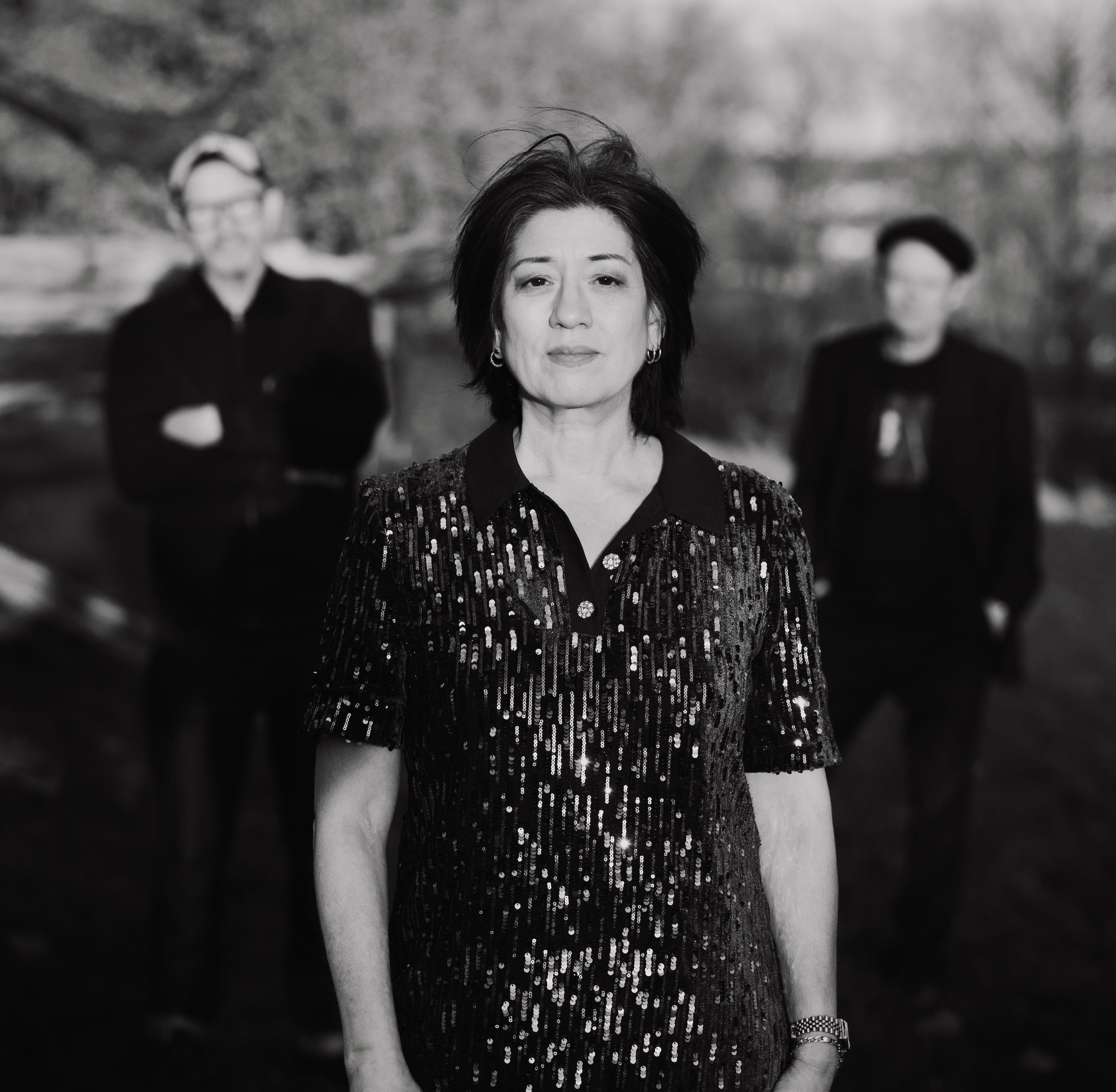
In March 1996, British band Lush released their third LP, Lovelife, a collection of hook-driven, Britpop earworms—among them, the singles “Ladykillers” and “500 (Shake Baby Shake)”—that brought the band commercial acclaim. Though it became Lush’s biggest seller, frontwoman Miki Berenyi looks back on the album and its release with mixed emotions.
“I suppose it’s difficult to not think about what came immediately after,” she says. “The disintegration that happened when we toured that record, and then, obviously, Chris’s mental health declined. But when we were recording Lovelife, everyone was on quite an up because we’d gotten a new manager, 4AD [record label] was a fresh wind, and we were doing it with our live sound guy, so the recording was really good fun. Afterwards, things fell apart.”
In October 1996, Lush’s drummer, Chris Acland, died by suicide, leading to the band’s breakup. For nearly 20 years after, Berenyi stayed out of the limelight, raising children and working as a magazine editor before a 2015 Lush reunion tour brought her back to the stage.
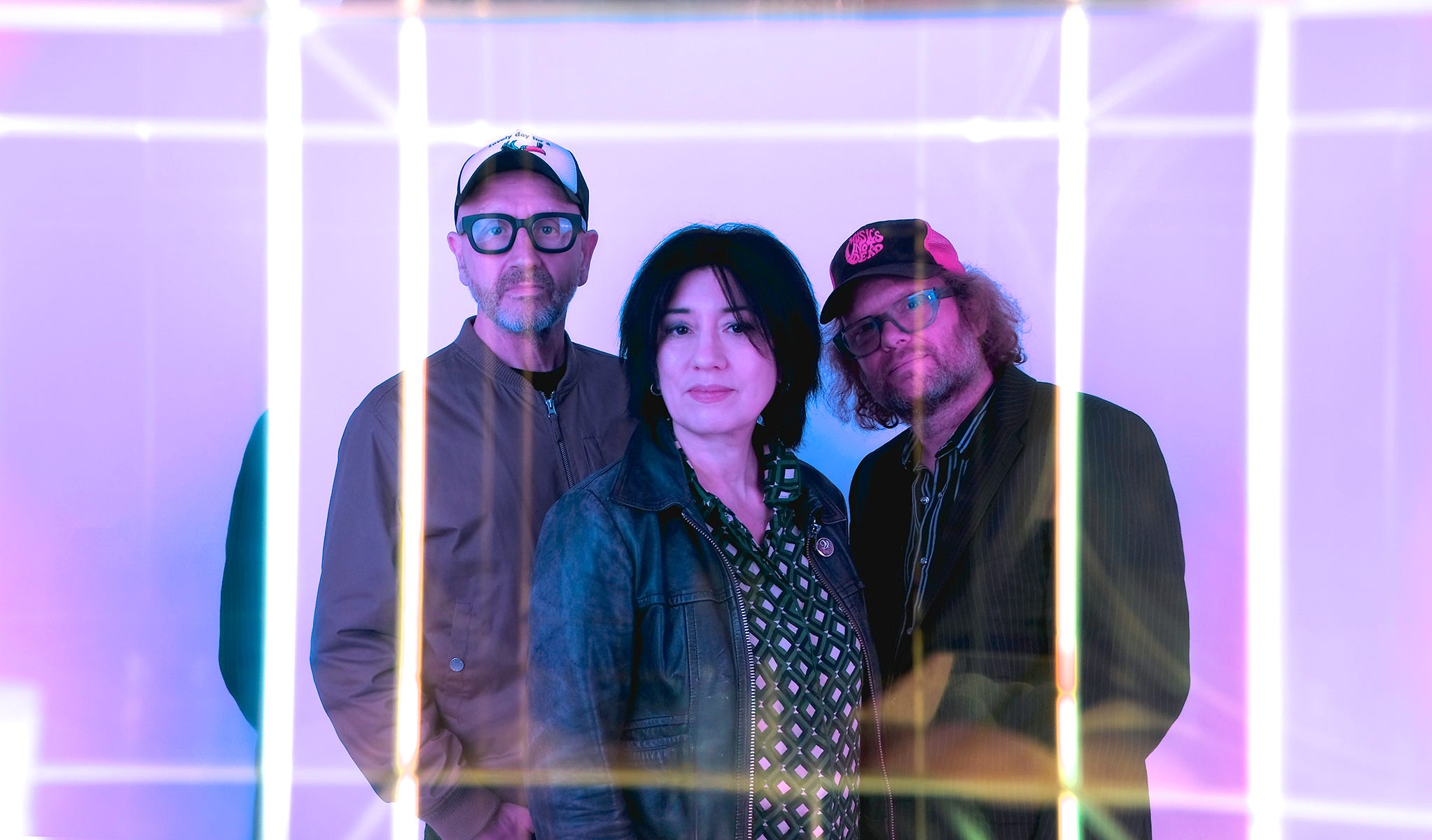
In recent years, she’s fronted the Miki Berenyi Trio (MB3), a band she formed with her partner, K.J. “Moose” McKillop, and guitarist Oliver Cherer, after the publication of her 2022 memoir, Fingers Crossed. The band’s album, Tripla, was released in 2025 to great acclaim (Under the Radar called it “a melodically intricate and richly layered mix of guitars and electronica”), and earlier this year, they released a standalone single, the catchy “Island of One.”
Over Zoom from her home in the U.K., Berenyi talked about her memories of Lush, her approach to songwriting, and why MB3 won’t be returning to the U.S. in the near future.
Creative Reverberations is a reader-supported publication. Each interview takes many hours of work. To read all posts and support ad-free, independent journalism, please become a paid subscriber.
SANDRA EBEJER: You’ve been doing some tour dates around the U.K. Do you still enjoy touring? Are you having as much fun with it as you did back in the day?
MIKI BERENYI: I am. I mean, it’s a very different experience, but it made me realize that playing live was one of the things I always enjoyed about being in a band. It’s the admin around it that’s a real pain now. It’s a lot of organization, and when you don’t have the money that people used to have—the record companies had the money—you are doing all this stuff yourself, like booking hotels and paying for visas. But the actual playing is great. In some ways, when it’s smaller scale, it’s easier to manage. It doesn’t have to be some epic touring. You can just play weekend gigs. So, in that respect, it’s actually more manageable. I’m just glad it’s still a part of my life. I don’t know how much longer I can keep doing it, because hip replacements and things like that start happening at some point. [Laughs]
I was looking through your Instagram and saw you’d posted some upcoming tour dates, and you apologized for the design that you’d done on the image. I assumed you had a whole team helping you with marketing and admin, but it sounds like that’s not the case.
Yeah. People at Bella Union [record label] will help, and we’ve got Chris Bigg, who’s always done our artwork. He was involved in all the Lush artwork, so he’s done every record I’ve ever made. But [with] that day-to-day stuff, you can’t keep pestering people. Everybody’s now freelance and doing their own thing. The other thing people forget is it’s not Lush. I went to see Chapterhouse last week and I know Swervedriver are touring, but they are the actual band. That affords a different level and a different status. The minute you peel off and form a separate thing, you’re starting from scratch. I might as well be some DIY kid trying to put my own shit together.
My introduction to Lush’s music was 1994’s Split, and the first two tracks on that album, “Light from a Dead Star” and “Kiss Chase,” were my favorite songs. For some reason, I couldn’t separate them. If I made a mix tape or CD, I had to include both of them in that order. Are there any songs from that era that you’ve continued to love over the years?
It’s always difficult with your own songs. I’ve always felt once a song is written, I’m like, [claps hands] done! Now it belongs to whoever listens to it. I’ve done my bit. “Light From a Dead Star” meant quite a lot to me. A lot of the songs on Split, me and Emma [Anderson, Lush guitarist] exposed a lot more, which is why it was a double blow when it got slagged off in the press. It was like, “Lush just write about fluffy clouds” or whatever. I thought, “Really??” [Laughs] It was written about her dad dying! I’d written about my childhood! It felt quite exposing for us. I do like “Light from a Dead Star” because I put quite a lot, lyrically, into it, hinting at things that had been difficult in the past without trying to give too much away. It’s also a nice concise song. I still play it live occasionally, but I had to lower the key. It’s way too high! [Laughs]
We don’t have a drummer now and it’s a different kind of band, so we’ve reworked some of the songs, so it feels more like a this-era song. The fact that it’s slightly reinvented makes them fun to play again. I don’t particularly love or hate any of my songs. In a funny way, I’m not that attached to them. They’re something I did. It’s like looking at old photos. You’re delighted that they’re there and they bring back memories.
It’s crazy to think how much the music industry changed between Lush’s initial breakup in 1998 and the band’s reunion in 2015, not to mention that all of you were older and had gone through many life changes. How was it for you to get back into making music professionally at that point in your life?
It was terrifying as a prospect, because as soon as we were coming back, it was going to be at the Roundhouse [U.K. venue]. I’d never played anywhere that big as our own show, even back in the day. And I hadn’t done a gig in 20 years and was completely out of practice, so it was daunting. But I did approach it in a very professional way. I was just practicing and practicing. I had to look at old footage to see what the hell I was playing and relearn a lot of the songs, and we did a lot of rehearsing. I wanted it to be super, super good. And it was kind of remarkable how it comes back to you. Yes, the world had changed, and the funny thing was, part of the reason we came back is that in that intervening 20 years, shoegaze had become a thing. Like, who fucking knew?
The realities of touring... Yes, we were older. Obviously, people having children made it more stressful. And we were having to raise the money ourselves and fund it. But on the whole, it felt really exciting and positive. And I do think, despite all the personal falling apart afterwards, it’s partly why I continued with music, because I did think the actual playing was fucking great.
A few years back you published a memoir and began playing shows on the book tour, which led to the forming of the Miki Berenyi Trio. Is it safe to say that without that tour there would be no MB3?
I’m not sure, actually, because we did [the band] Piroshka. What I realized with Piroshka was we had a great time, but having a band of six people was incredibly cumbersome. We were encouraged to tour America, and I thought, “I cannot take that kind of financial risk. That’s insane.” And so, yes, you’re right. I wrote the book and then I was asked to do book talks, and often they want you to play music. I don’t do solo play. I tried it once and it was a fucking disaster, so I’m not doing that again. But we did three or four Lush songs—it was me and Moose and Ollie—and we were really enjoying that, and then the trio came out of that. But I don’t know. I wonder if we maybe would have done something anyway, because I had already realized with Piroshka that the way to do this going forward musically is to make this a lot more nimble and manageable, so that we can rehearse in my garden, we can fit into a car. It’s so much easier to set up and maneuver. We can just do gigs at weekends. People can get on with their day jobs. That was already a thread that was going.
I love MB3’s latest single, “Island of One.” What can you share about that tune?
It was a Nilüfer Yanya song that sparked it. I mean, I think of the live set, and I think, “Here’s a song that is never going to be played live because it’s too slow or too complex, so it’s just going to be meh live.” And I wanted an upbeat song [to] fit in the set. If we’re going to get these Lush songs out of the way, eventually I want something danceable. That kind of writing-to-order does feature quite a lot. I will write a more doomy song if I think that the live set could benefit from it, or if you’ve got an album full of certain songs, then [I’ll] write something that will balance that. And that’s quite good for me. I need a framework sometimes.
The [Nilüfer Yanya song] was called “Just a Western.” It’s got a laid-back, mellow vibe. I started there, and then sped it up massively. I don’t like ripping off other people’s music, so it will always get changed. I’m not going to lift something from someone and pretend that I came up with it. I have to change the notes and the tempo and the beat, and even strip it back to the point where there might just be a phrase or a thought that remains. And so, yeah, it’s quite a lively track. I mean, lyrically, I’ll be honest here, I’ve been visiting my mother. She’s 82 and I love her, but fuck me, people are hard work as you get older. I’ve just about fucking got through the kids, and now it’s coming at me from the other end. So it was a lot to do with that.
I read something once about the Lush song “Ladykillers” that I thought of when you talked about needing a framework. Is it true that you wrote that song intentionally wanting to write a hit single?
Yeah, it is. Emma wrote “Single Girl” with the same thing in mind, if memory serves. I think Split was seen as very introverted, very much out of the zeitgeist when it came out. This was the rise of Britpop, and the album was seen as that same murky, fucking introverted shoegaze shit, and when we did Lovelife, people accused us of jumping on the Britpop bandwagon. I understand why, but I also think it was a bit sink or swim at that point, right? If we’d have come out with another Split, well, it may not have even come out. With Lovelife, we did think, “Okay, we are going to have to play this game a bit.”
Now, there are album tracks that are absolutely classic Lush. It’s not like it’s a whole album full of outgoing, boppy songs. But I’ll tell you what got to me. It got to me that people were like, “Lush showed so much promise. They look like pop stars, but they play this fucking moody music,” blah blah blah. I remember playing a semi-secret gig at the Dublin Castle. We used to do a cover of Blondie—the French version of “Sunday Girl”—as a bit of a laugh. We played it at this gig. This fucking gig was full of all these Britpop types, and the number of people who were like, “Oh, you should do that more often. You should not play the guitar; you should sing and be quirky and do pop songs.” I remember thinking, “You know, I can do this, right? I’m not not doing it because I can’t. I’m not doing it because I fucking don’t want to. I know I can be some coquettish little lead singer and do sexy moves and not have to have a guitar. I just don’t fucking want to.” [Laughs] “Ladykillers” was, in a way, a bit similar. It was like, “I can do this. I do know how to write a song like that. It’s just not massively interesting to me.” I mean, on previous records, I’d written “Hypocrite.” I’d written bouncy pop songs. I do like doing them. I just don’t want to do them all the fucking time, okay? [Laughs]
Are there any artists or works of art that have influenced your work, or that are really inspiring you right now?
There’s a film called The Mastermind I went to see and just fucking loved. Because I’m of that age now where 80% of the films that I go and see that people are like, “You’ve got to see that. It’s amazing,” I come out going, “I fucking hated it. I feel like I’ve been assaulted because it just feels like it’s going bang bang bang bang bang in my face.” So anyway, I went back and started watching all these Kelly Reichardt films, and oh my God, the space! I can breathe! It’s got this pace where I can think and feel in the beats in between, and it’s so moving. It feels so profound. And musically, that’s always been part of what I like doing. There’s a breathing space. The lyrics have got a point, but they’re not fucking in your face. You have to mull on them a bit. I don’t even particularly like explaining lyrics, because I really like it when people have their own interpretation, where they go, “That to me meant that.” Great! That’s exactly what it should be doing. And I just felt that film just really resonated. I thought, “Someone’s still doing this. Brilliant! Someone still thinks this way!”
I saw that MB3 won’t tour the U.S. again. That’s such a bummer.
A lot of people said, “Is it because of Trump or the political situation?” No! God, no. We had fucking 18 years of Thatcher. This country was in a fucking hellhole. It’s not my fucking fault. I didn’t vote for her. And I feel the same way about going to America. I’m assuming most people at the gig don’t want any of this to be happening, so it’s not their bloody fault, right? So, I don’t have a problem with that. What is very strange is the wealth divide that is just rapidly increasing all over the bloody world at the moment—the cost to anyone but the richest fucking people is just unsustainable, you know? I had an absolutely brilliant time when we toured in October, but I must have spent six months working on that tour. It was insane. I mean, I literally got a check the other day for the withholding tax on a tour that we did in 2024. It’s taken me this long with accountants and lawyers and the IRS and the God knows what. I just can’t do it. It’s too much. If that eased off, I’d be back in a flash, because it’s fucking great touring America. Unfortunately, it just becomes too much of a burden.
I heard a clip where Shirley Manson of Garbage said they can’t tour anywhere in the U.S. other than the coasts because it’s too expensive. And if a band like that can’t afford it, what does it say for the smaller musicians who are just getting started?
No shit. I was out with the band Blushing last night and they were saying the same thing. They might record another album, but they said, “We’re not sure if we can keep touring because we lose so much.” And they’re American! They don’t even have to get the bloody visas! But it’s a big country to tour around, and it’s expensive to get from one place to the other. You need the funding for that, and you need help with it. It’s very difficult to do on your own.
Is there a way for musicians to make a living outside of touring? I know we live in a world where you can release a single and it can be online instantly. You don’t have to do a huge music video, you don’t have to get radio play. But is that enough? Can artists still make a living? Or is touring still non-negotiable?
The difficulty is that every revenue source has been squeezed to the point where what you get back from it versus the amount of work you have to put in just does not balance in any meaningful way. I would argue that most people in music have to have another job to be able to do that. I think writing is now the same. People can spend fucking ages writing a book; they’re never going to see a penny. And I get it. We live in a culture now [where] people can access whatever they want for free, and if they have to pay for it, they think, “Meh. Maybe I won’t bother.” And the reach is the difficult part. My hope is that people get bored of being spoon fed stuff by algorithms that want to make creativity as cheap as possible, and at some point that well really does run dry. It’s not very satisfying.
My argument always is, we can sit here and have AI art and AI photography and AI films and listen to AI music—I can fucking tell you now that those who can afford it will be having their private gigs with live musicians. They will be buying art by actual people who put paint to canvas. They will still want that real stuff. It’s the rest of us that are just hoovering up this shit. At some point I hope people recognize that it is shit, and that what they want is the absolute humanity that is always encapsulated within any piece of art created by people, and that they then veer back to that. You don’t have to pay a fortune, but you do have to go to gigs. It can’t just be the handful of committed people. It has to become a thing that people start going out to again. You have to not tolerate slop, and go, “I don’t want that.” And if that’s all the algorithm is feeding you, then you go looking elsewhere.
So I always have an optimism for it, but I think people’s expectations at the moment are that they want the same level of record releases, touring, the same kind of show as they came to expect from bands who had been massively supported by major label money, and they want that from people who are doing two fucking jobs and trying to fit that creativity into other shit. It’s not going to happen. It’s literally not going to happen.
Yeah, as somebody who runs a Substack, the whole idea of putting the work in that doesn’t pay out is spot on.
Totally. There’s people that I follow on Substack, and every time, I think, “All right, fine. I’ll take out a fucking subscription.” But here’s an idea: why don’t we have, I don’t know, a thing that you could pick up and read that has all of these people in one place that I could just pay for the whole thing?
We could call it a magazine!
Yeah! Like a kind of collation of people’s writing! Fuck. We’re gonna have to reinvent the wheel.
I have a 13-year-old son and I think at some point his generation will bring that back. I do firmly believe it will come back around. Whether or not you and I will still be here to experience it, I don’t know.
I think the same. Because even a lot of the music reviews I read, I think, “I know what happened at that gig. I know what you heard.” I’m reading this Simon Reynolds book, because I’m going to do a book talk with him, and the writing is so fucking great. To read something that is considered and references art and travel and politics, just the whole miasma of things, I feel like it’s food. It’s amazing! I have high hopes for it coming back, because I think people need that kind of sustenance.
To learn more about Miki Berenyi, visit her website.
This interview has been edited for clarity and length.
You might also enjoy…


I listened to the songs you referenced as I read this, and was such a treat hearing something new (to me). As a former music journalist, someone writing a novel about the music industry, and fan of Nilüfer Yanya - I loved this <3