

CR 095: Rae Haas on Mx Lonely’s Melodic Hardcore Debut Album
The lead vocalist of the acclaimed indie band discusses their songwriting process and their first full-length release, “All Monsters.”

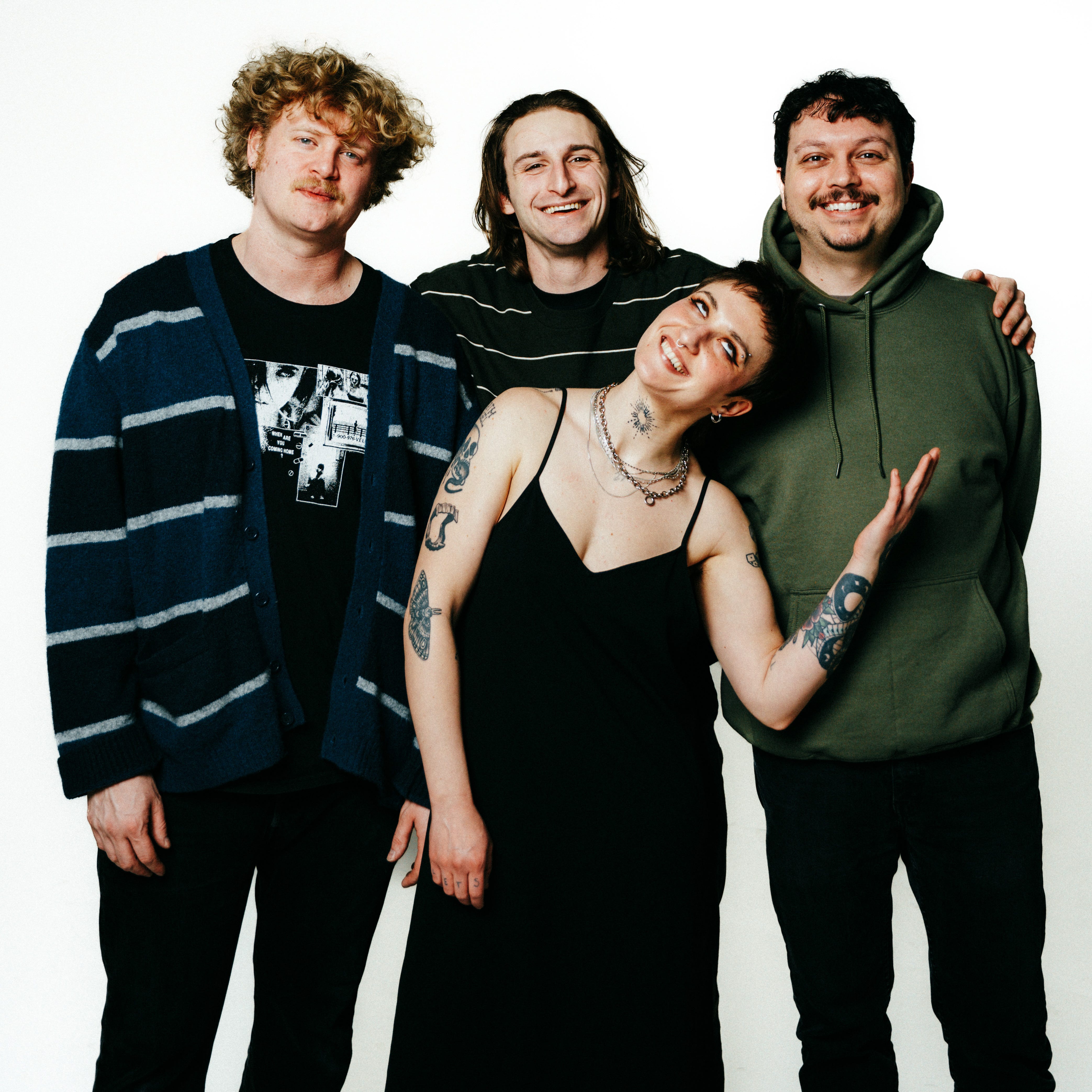
Though Brooklyn-based Mx Lonely is still a relatively young band (their first show was in 2022), their unique sound—heavy and noisy yet melodic, with a tinge of ’90s-era grunge and shoegaze—has earned them significant acclaim. The band’s EP Spit was one of FLOOD Magazine’s “15 Albums From 2024 You Should Know” and their recently released debut full-length album, All Monsters, was Stereogum’s Album of the Week. Describing their sound as “loud as f*ck,” the band has toured extensively, with their live performances frequently described as “intense” and “powerful.” It’s all incredibly impressive, particularly given that the band’s members—synthesist/vocalist Rae Haas, guitarist Jake Harms, bassist Gabriel Garman, and drummer Andy Rapp—didn’t initially intend to tour at all.
“When we all started playing together, which was in 2020, we had no intention of necessarily being a big touring band in the way we are now,” Haas says. “It was like, ‘Let’s get together just for fun, kind of bounce some ideas off each other.’ And [the debut EP] Cadonia was written that way. It was written in this way that was more us learning things. A lot of those songs were structures that Jake brought in, and then ‘Something About You...’ and ‘Mr. Lonely’ were both written in the room. When we wrote those two songs it was like a turning point of realizing this was more of a band.”
I recently chatted with Haas about the band’s somewhat surprising influences, the use of AI in music, and why aspiring musicians shouldn’t quit their day jobs.
Creative Reverberations is a reader-supported publication. Each interview takes many hours of work. To read all posts and support ad-free, independent journalism, please become a paid subscriber.
SANDRA EBEJER: What is your musical background? Did you begin playing music at a young age?
RAE HAAS: I had a couple of guitar lessons and piano lessons when I was a kid but also had raging ADHD. So I’ve always been interested in music, always wanted to play music, but never quite was able to wrap my head around composing music until I was 18, 19. I did a lot of theater and dance and more physical performance, and when I started to go see DIY music, it was all of the things I had been trying to combine. I started singing karaoke at this bar, met a bunch of musicians, and got out of my own head about needing to be a ripper to make music. I think that took a while for me to fully accept. I have a lot of imposter syndrome and those sorts of things. But, yeah, I didn’t start making music properly until I met Jake in 2019.
Mx Lonely has been getting a lot of comparisons to ’90s grunge and shoegaze. Who are your influences?
There’s something about Pixies, the relationship between Kim Deal and Black Francis—those early records, Doolittle and Surfer Rosa especially, were two things that really inspired me and Jake writing music. Cranberries, also, vocally and melodically. I’m a big Nirvana and Hole fan. It’s just things that I grew up listening to, that I felt really seen and accepted by. There’s a lot of more, embarrassingly so, ’90s alternative radio hits that were big for me as a kid. Like, I liked Matchbox Twenty, I liked Creed, I liked a lot of nu metal. There’s a lot of different things from the ’90s that definitely inform us. I don’t think we intentionally tried to rip the ‘90s. It’s just what we like.
Matchbox Twenty was not what I was expecting you to say!
Totally. Elliott Smith is also [an influence]. That’s not necessarily ’90s grunge or things that we get compared to a lot, but Jake’s guitar tuning is all in Elliott Smith tunings, so it inspires a lot of those chord structures. And also poetically and spiritually, they’re one of my favorite musicians.
All Monsters is your debut album. Did you learn anything about recording music or the music industry as a result of making it?
If it was up to me, [when it comes to] putting out music, I might just drop albums. It’s how I like to process and hear music. And I say with the most gratitude that people come to shows having heard just the album and are like, “I was really moved by the whole piece.” I feel like I have that relationship with artists and albums where I like listening all the way through. Also, just being on a timeline for the record—a lot of those videos that we shot were really in the moment, filmed a couple months before, which was an interesting process. A lot of times, people prep for a bigger release, and you’re putting out videos and online content that’s not necessarily in the moment, which feels a little unnatural to me, honestly. I’m trying to find where my truth and balance is in that, where I can present things that I’m really proud of and feel like they’re connected, while still maintaining a timeline structure of releasing things. Again, I have ADHD, so a lot of times structures and timelines don’t come naturally to me.
I love the way that you and Jake trade vocals. Was that something that was intentional when you began working together, or did it happen organically?
It’s how Jake and I write. Actually, I think almost all of the songs on this record, all the vocal structures are built around just playing acoustically in our living room. So we just trade off vocals.
Do you ever disagree on how a song should sound?
Sometimes, but I feel like once we get to the recording part, you’re just capturing what’s happening. I think that’s what’s made the band work so well. We have arguments about other things sometimes, but generally, when it comes to the music, the sound is captured in the room. I think we leave enough space for one another to have our input.
You’re building an audience at a time when tech companies want to push AI on us. How do you feel about the use of AI and technology in music?
I personally get existentially creeped out by the whole concept of AI. I am curious, though, about what kind of ways it can benefit music. I feel like it’s something that unfortunately is an inevitability. I’d love to be like, “Fight the power! Fuck it!” Which I was maybe a year or two ago. But at this point, I think it’s an inevitable part of our lives. And I think we have to figure out what is the best way to utilize it in a way that benefits us as artists and benefits our artistic integrity. I think it can be really useful as a tool for artists. And I think music that’s completely made by AI is never gonna compare to the soul of a person. There’s a very spiritual nature to music, where you’re letting a force larger than yourself speak through you. I think those are my biggest issues with AI and music is the surface level understanding of the underlying spirituality of music, the humanness of it. I prefer it didn’t exist. But I hope to God that we figure out a way to use it that doesn’t destroy us.
If somebody is reading this and they’re not familiar with your work, what song would you say is the best to start with? Do you have any favorites?
It’s an interesting listen chronologically. Jake and I have a project called V0id B0ys. I would say it’s the genesis of what is Mx Lonely now. I think listening to Dog by V0id B0ys-slash-Mx Lonely first and going through chronologically is a very cool journey. It’s an album I’m incredibly proud and excited by. Sometimes people ask, “Do you feel like this is your best piece of work?” And I’m always seeking and striving to be better and do better as a person. What’s cool about music is it’s such a depiction of who you are and where you were in time. It’s like a photograph. How can I not like that? How could I quantitatively look at it differently than where I’m at now?
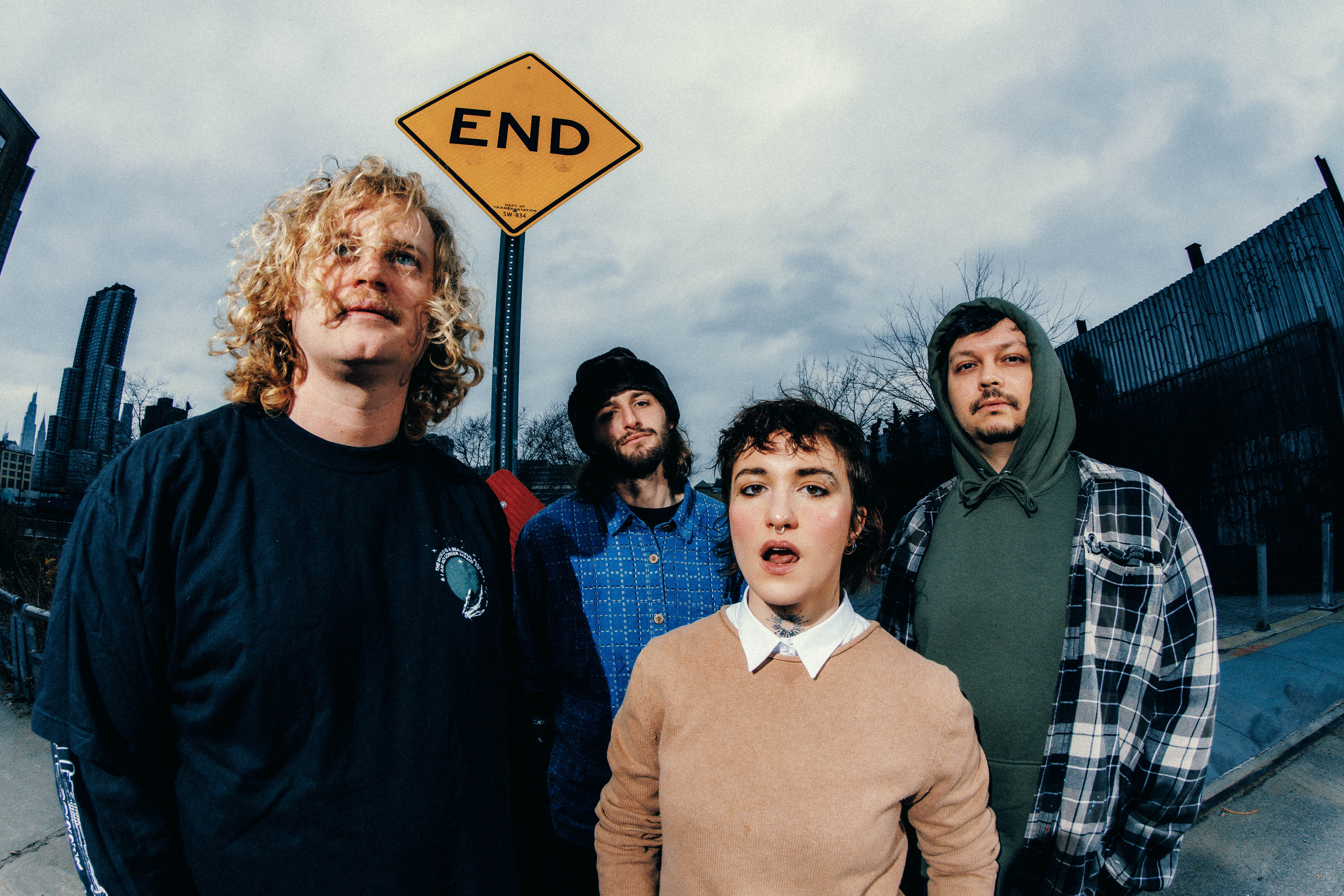
I want to ask about a couple of songs on All Monsters that are favorites of mine. The first is “Shape of an Angel.” Can you share a bit about how that one came about?
It’s funny, that one had different lyrics when I first started writing it. We wrote that in a day with our friend Colton Walker, who’s in a band called Ringing. He had this riff, which is the [sings riff] opening, the riff that goes throughout the song, and he’s like, “I’ve had this since college, but I haven’t known what to do with it.” I heard it and it was one of those songs where words flowed out. I don’t have that often. Usually, I’m singing phrases and writing them in later, but that I had so many different versions of choruses and verses. Maybe that’s why it’s one of my favorites, lyrical wise, because I think it was a little bit more crafted. There was something larger I was trying to communicate in the lyrics than maybe other processes that I’ve come to writing lyrically. I love that you love that song. That’s one of my favorite songs. And I think it’s a sleeper on the record. It’s interesting to me which songs different people like, because I think it’s sort of like a horoscope or a sorting house or something. It tells me a lot about a person.
And you guys did a video for it. I grew up at a time when MTV was the way that artists got their music out to people. Do you find that videos are still helpful in that way?
It’s just something that I love. I was on the tail end of it, but before school, I would watch VH-1 and MTV. It was the tail end of when music videos were on, and it’s how you’d find new music. And I love a visual. I love deeply looking at music videos and thinking a lot about them. I think it’s cool to see the band performing, too. I know Jake has definitely gone back and watched Elliott Smith videos. There’s ways that he plays chords that are very specific, and you can kind of only learn it by [watching his videos]. You wouldn’t know by just listening.
The other song I want to ask about is “Whispers in the Fog,” which is an epic, 7-minute-long track. What can you share about that song?
It was definitely a conversation of being cut for its length. But we all just loved that song and felt like it belonged. It was a song that Jake demoed out and didn’t necessarily expect to turn into an Mx Lonely song, but when we added synth and heard it outside of an acoustic setting, it had this huge epicness. It’s one of the songs I think calls back to Cadonia, and some of those really big epic structures. We all really fought for that to be on despite knowing that putting out a seven-minute song is [something] people wouldn’t advise. There was something a little punky and divergent of us to want it on there.
It’s a challenging time, as I’m sure you know, to enter any creative field. What advice would you have for aspiring musicians?
Have really clear boundaries with yourself about monetization of your art and your artistic practice. I don’t think I can separate art from spirituality. A lot of people can and do and that’s their experience, but I think that’s where people get burnt out. They don’t give themselves space to explore and have silence, too. Having time where you can let inspiration come to you [is important]. And don’t think of your worth in the way of your product. The larger venues you get, the further away from DIY you get, the further away from DIY ethos you get.
But yeah, having separation, having boundaries, and maybe also not quitting your day job. That’s kind of a controversial thing. But I work in film and TV, and so does Jake and Gabe, and Andy has a day job. We do carpentry and painting for sets. I can use myself as an artist, my body, my labor, and I’m okay with monetizing it. It’s never gonna be something that I’m super hung up on. Have other ways to monetize so that you don’t have to solely focus on monetization of music in this era, because bands that you would assume are paying their rent touring are not. You have to be selling out stadiums to be at a level where you’re making enough to live.
Also, just know what you want in life. Like, I’ve never had a lot of money. I’m okay with maintaining where I’m at. I’m aware of that, and that’s where touring and being in a band and committing so much of my time and energy to it is okay, because it’s valuable to me in that way. But if you’re somebody that knows you’re gonna want to have certain things to be comfortable in life, be real about that. I don’t think there’s any shade in not touring all the time and putting out music however you want to do it. The grass is not always greener. I prefer smaller shows; I prefer smaller rooms. And it’s not how success is always gauged. But it feels better to be a part of a smaller music community, always. Just know that in your heart before you try to make it in the industry.
To learn more about Mx Lonely, visit their website.
This interview has been edited for clarity and length.
You might also enjoy…

