

CR 097: Artists Brian Andreas and Fia Skye Want You to Live a Joyfully Full Life
The husband-and-wife team behind Flying Edna discuss their approach to making art.

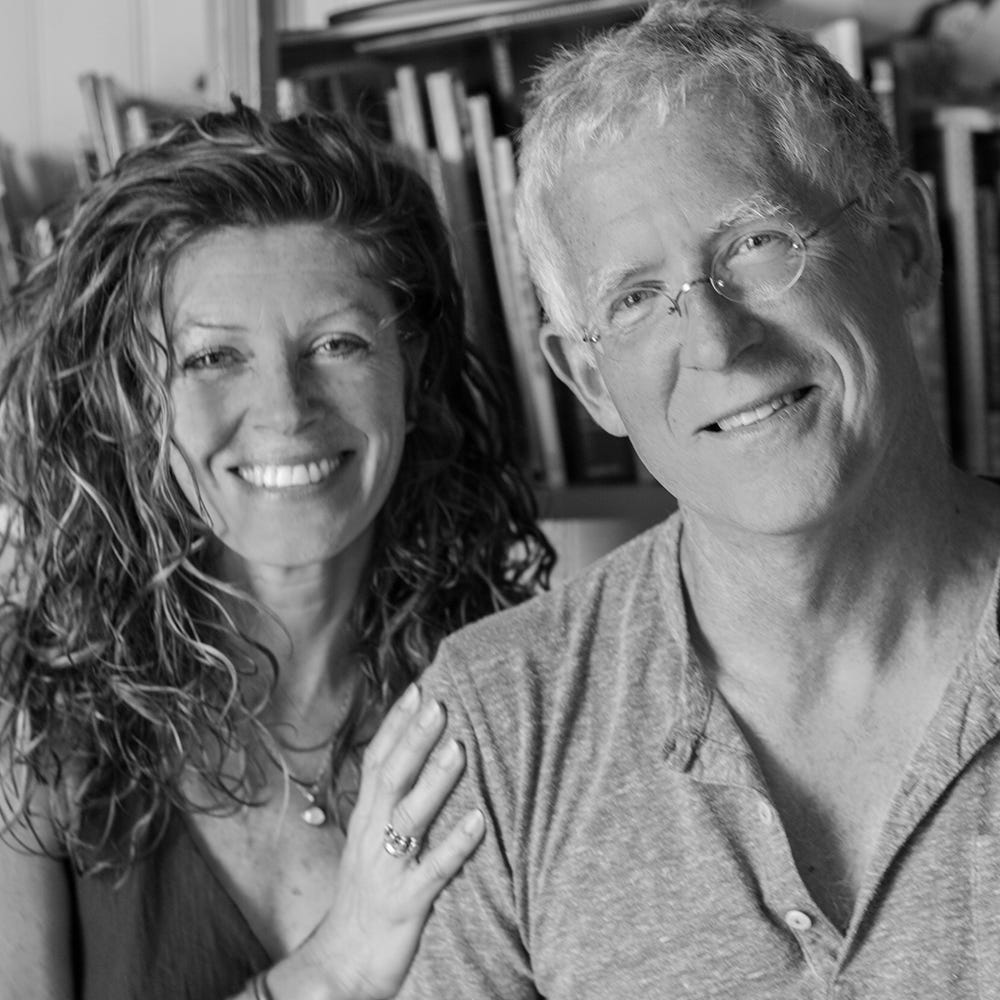
For decades, writer/illustrator Brian Andreas (also known as Kai Skye) has created artwork and published short-form stories that celebrate life’s wonderful little moments. For many years his work was sold through StoryPeople, a company he founded in 1994. But today, he and his wife, Fia, run Flying Edna, a small, Cape Cod-based, eco-conscious studio where they produce their joyful, whimsical works of art.
Flying Edna’s collection of art prints, greeting cards, storyblocks, and books, as well as their “story of the day” newsletter, collectively conjure feelings of wellness, joy, and mindfulness. Still, the couple admits that it took some time for them to foster a productive working relationship.
“I will tell you,” Fia says, “it’s taken us years to be able to work together, because it was very clear that he’s like a one-man band.”
“I’m not sure our evolution is complete,” Brian adds. “But there is a greater sense of where we dovetail and where we need to step aside, and that’s a necessary part of our…It’s hard to call it a collaboration. It’s more like this environment and ecology that we live within. I tend to call it that other than a collaboration, because a collaboration brings all sorts of preconditions with it in this culture that I don’t think are even applicable for us.”
Over Zoom, I had a lively conversation with Brian and Fia about their backgrounds, their influences, and how they handle creative blocks.
Creative Reverberations is a reader-supported publication. Each interview takes many hours of work. To receive new posts and support my work, please subscribe.
SANDRA EBEJER: Brian, you got a BA in Theater and English and an MFA in Fiber. When you were starting out in your career, what were your goals?
BRIAN ANDREAS: I started in pre-med, so I also have a minor in chemistry. In my college, you were required to take a liberal art out of your major. I took theater interpretation and went, “Wow! This is way more fun than the people in pre-med,” so I immediately switched over. English was always a background thing because I like to read. I didn’t even think in terms of writing until I started doing theater, and I went, “Wait, I should be writing my own monologues, because the monologues I see are not that interesting.” I like to talk about different things, so that’s the trajectory of it.
When did that morph into visual art as a profession?
BRIAN: You know, I haven’t really thought about this, but it just strikes me that what happened is that I was in theater, and the thing I liked most about theater was it was both time-based and physical. So there was movement in space, and then there were words that I could attach to that to explain it. I’ve always liked to explain things—not from a science standpoint but explaining it in the mythic way. Like in the ancient world there were these explanations for why there’s an eclipse, and they tended more towards the characters of gods and goddesses. I was always intrigued by explaining things in the way we experience things, explanations that get into the heart and soul of us.
So I came out of theater with that time and dimensionality, and the first thing I went into visually was stone sculpture, marble and limestone, because of the dimensionality of them, the weight, the presence. Why I come back to wood after I’ve given up on it and I never want to see it again is that there’s a quality of material that calls to me. I can wax conceptually really quickly, but it doesn’t have the same weight and grounding of a physical material, and I can’t wrangle a material in the same way I can talk myself into all sorts of stuff conceptually. I can say, “You are the essence of spring,” and the wood says, “Yeah, I’m a big chunk of pier. Work with me.”
And Fia, you have a background in theater and academia. How does that lend itself to the work you’re doing now with Flying Edna?
FIA SKYE: There are all sorts of reasons I [made] a career change, but ultimately, I was interested in a mindful life. You’ve got the week and then you’ve got weekends, and there was the academic calendar—you’ve got summer vacation, you’ve got all of these bits and pieces, and you’ve got the mind and the body. We’ve just broken everything apart. And I thought, “What would it be like if I lived every day like it was every day?” I was more interested in what that was, and there aren’t a lot of pathways in the United States that allow for that. The work I was doing at university was coinciding with what I wanted personally, but then what I was really interested in personally I couldn’t do at the university. It was very clear it was starting to do this [bumps fists], and I thought, “I can stay and isolate myself and do that tenured thing where you exist here on an island, or I could step into life in a different way.”
How does it influence [my work]? In the way my body wraps a package, or the language I use when I am responding to somebody in an email. I would say in every possible way, and in all sorts of invisible ways.
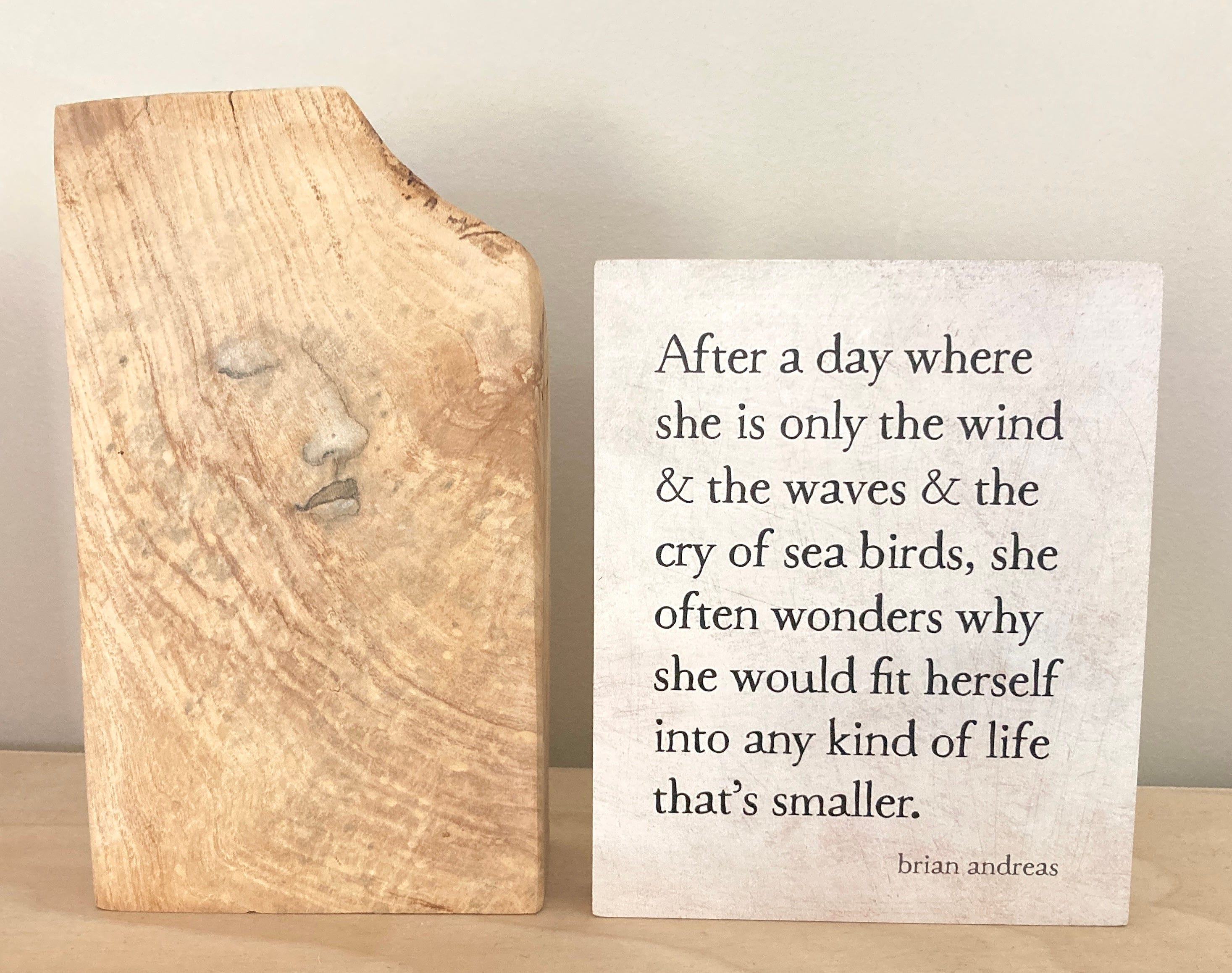
Where did the name Flying Edna come from?
FIA: My last trip to South Africa, I was directing a multilingual production for the Grahamstown Arts Festival. I was there with a colleague of mine, and we met this woman and she lived in a glass house. Everything in her house was intentional. It was as if there was a wholeness, like her entire life had become her art. There was something about that that struck me at that particular time. So I came back, and I said, “What if my life is my art?” Around the same time, a student had given me this book, Intrepid Women, and it was all of these historical women, most of whom we’ve never heard of because they weren’t written about by men. They didn’t make the history books, but they made history.
BRIAN: They were intrepid, and it bugged men that they were intrepid.
FIA: Yes, exactly. And there was something about this that became consolidated and said, “What is that voice inside? That wild inner voice, whether you call it instinct or intuition, that you check in with, that is the only one with you your whole life and always has your best interests. Even when it runs counter to every logical thing in the room, it’s still tapping you on the shoulder and saying, ‘But what about this? But what if this?’” And I thought if that was a [woman], her name would be Edna. [Laughs] So Brian and I started talking about Edna, and then, of course, he waxed poetic about her background, which is as an aviator, and so all of a sudden we came to Flying Edna. [To Brian] For you she was a barnstormer.
BRIAN: Yeah. Not long after we met, we were living in a small Iowa town, and we would walk our dog at the time, and we would see people and make up stories about them. So when she talked about Edna, I said, “Oh, Edna. Yeah, she was the first female barnstormer in the U.S. And now she’s retired, she drives around the Upper Midwest on a Harley. And with her gray hair blowing back, she looks just like she’s flying, even though no longer being a barnstormer.” So Flying Edna for me is that image of this unrestrained wild woman, the wind running through her hair as she’s driving down the highway at 95 miles an hour.
I love that. How does the work balance between the two of you? Is one of you the visual artist and one more the storyteller?
BRIAN: I am the visual artist and the hands for the ideas of visual art that other people in this team can’t express.
FIA: And he’s the IT team and the social media guy, and he’s a fantastic cook.
BRIAN: It’s not split where this person handles such-and-such, and this person handles the other such-and-such. I have a long history of story making, both for performance and for written and visual art. That said, Fia has very clear vision of grounding in the word she uses, and she is a writer as well.
FIA: Yeah, we don’t have this split where he’s in front of the scenes and I’m behind the scenes, but I would say, to be very clear, I draw nothing at all whatsoever. You know, he wants to paint the wood, and I’m always more interested in the back side of the wood, where all the grain is, and I want to make sure that it is sanded in a particular way, and it feels a particular way.
BRIAN: I think there’s a tactility that you bring to materials, like a sensuousness around the material that I am often missing because I’m thinking in terms of structure, composition, and how it lands in dimensional space. So the work tends to expand its edges because of both of us participating, rather than, this is mine and this is what you do.
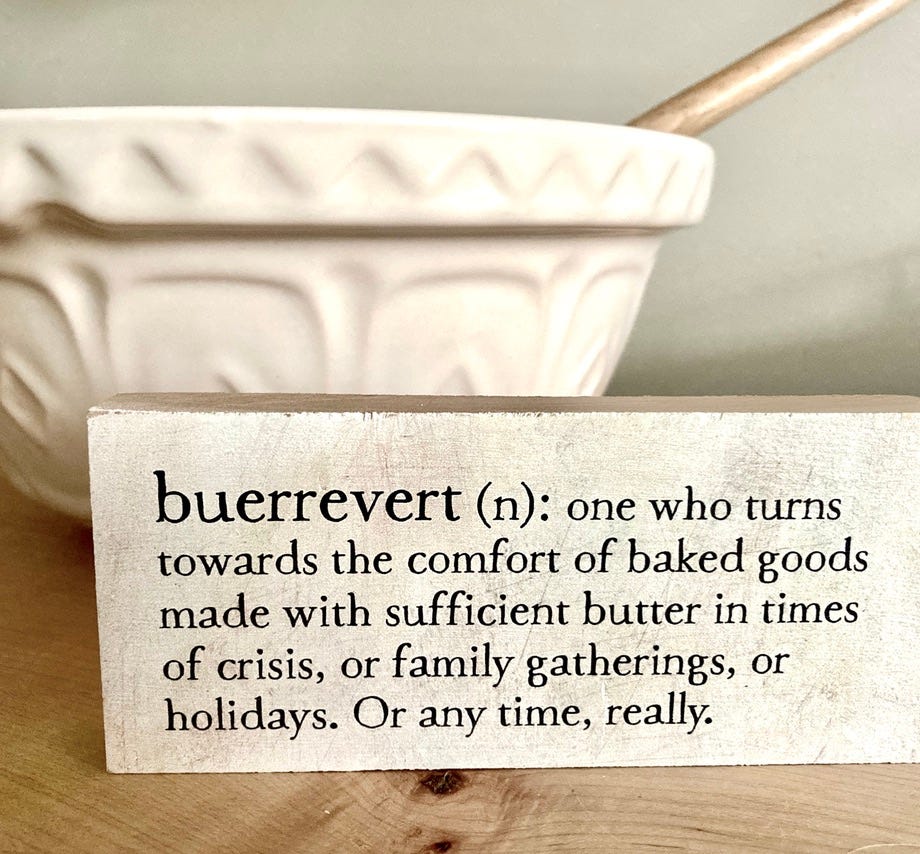
FIA: But for the Vert series that we’ve come up with—buerrevert, arborvert, aquapetravert, the things you turn to instead of introvert and extrovert—we will pass those back and forth. He’ll do a pass and then I’ll look and say, “Okay. What if we do this?” And he’ll disagree, then give it some time, and say, “Yeah. Give it back to me.” So some things we’ll go back and forth with, and other things I’ll say, “Yeah, but I think this,” and he’ll say, “That’s great, you get to think that. I’m doing this.” I’m like, “Okay. That’s fine, too.”
What is your creative process? Do you map out what you’re going to write or draw or is it all instinctual?
FIA: Nothing plans out with him. No calendar.
BRIAN: I think that’s fair. It’s hard to explain. I’m not really writing like, “I’m going to write about this.” It’s more I start listening to what’s showing up, and then I’ll catch the throughline of it and I’ll follow it. It’s more organic and feels alive in a way that writing to a specific theme doesn’t. I usually catch the themes I’m interested in after the fact.
FIA: Yeah, and I’m guided by the theater background, where I think of it as seasons. I think I was a herding dog in a former lifetime. I like boundaries, and I like freedom within the boundaries, but I like clear endings and beginnings.
Do you ever have creative blocks? If so, how do you break through them?
FIA: We just stop working. I would say we have stepped away from this need to produce and produce and produce and produce. Part of that thing about any sort of creative block is that a sense of the muse is always there. There’s no sense of it moving and disappearing. It’s a real sense of, this is a long-term idea or thought, and this particular chapter is just simply listening. And you’re not going to find it by pushing and pushing and pushing, because then it’s really no longer about the thing you’re doing, it’s about trying to produce something.
BRIAN: A creative block, in my experience, tends to happen in people when they’ve decided “this is the thing I do,” and not recognizing that there’s an ebb and flow in our biology, in the rhythms of our mind. If you’re running into a stopping point, it’s less that there’s a block than right now there’s something else that’s opening up. I don’t think I’ve ever had a creative block, because I go do something else. I’ll cook, I’ll go outside and make up songs with [our dog] Koko, I’ll go down to the basement workshop and start fitting things together until I see something that’s interesting to me, not because I’m going to sell it or make it into a product, but just [to make it]. What’s more interesting to me than having an identity as an artist is having a rich and full experience of my life. It’s hard to get blocked when you’re constantly looking at ways that you can sneak past your own ideas of yourself.
FIA: Because then when you’re sneaking around all the ideas you have of yourself, you’re constantly encountering new and interesting things. They don’t always turn into stuff, but they’re always new and interesting.
I like to ask people about their influences or other artists they’re into. Are there any artists or works of art that you turn to for inspiration or that have influenced what you do?
BRIAN: We’ve got influences all over the place. Steven Heller as a graphic curator I like. I like outsider art. I remember a book I ran across in Berkeley when I lived there that paired untrained African artists with trained African artists, and just flipping through it, I was amazed at how the untrained artists brought a specificity of experience to it, and the trained artists felt like, yeah, I can see you’ve trained in Illustrator and learned about composition and oils and color theory, and who fucking cares? It had nothing to say. So I will often dig through outsider art.
Es Devlin, an artist who is all over the map at the same time she’s not all over the map at all. She’s very specific in the threads that she’s reaching for. I like some of the South American fantastic realists like Gabriel García Márquez, and I like the French semiotician Roland Barthes. There’s something about how they see the world. Where I draw inspiration from is people who see the world so clearly their own way and have no problem saying, “Hey, it’s what I’m seeing. I don’t know if it’s right, but this is what I’m seeing.” That’s where I get inspiration. And I rarely go to them for inspiration; I’ll just run across them and go, “That is so cool!” And that’ll start me up again.
FIA: Mine tend to be more like Christopher Alexander, the architect. They look at the structure, the science of something. I love Robin Wall Kimmerer, in terms of interspecies conversations and communications, and what the natural world has already figured out and how we’re figuring that out. Right now, I’m doing a deep dive with Suzanne Clothier, with relationship-centered training. And the Alexander Technique in terms of Cathy Madden. It’s like, how the structure of something is built to work and then within this larger idea of something, it stretches out into a philosophy. What does that mean when we’re shipping a card across the miles? This idea of do no harm, and what does that mean as a species, and what if the evergreens and the cedars were our aunts and our uncle? I mean, these big ideas with nature and the cross-pollination of living within a place and a space are things that I’m really, really curious about.
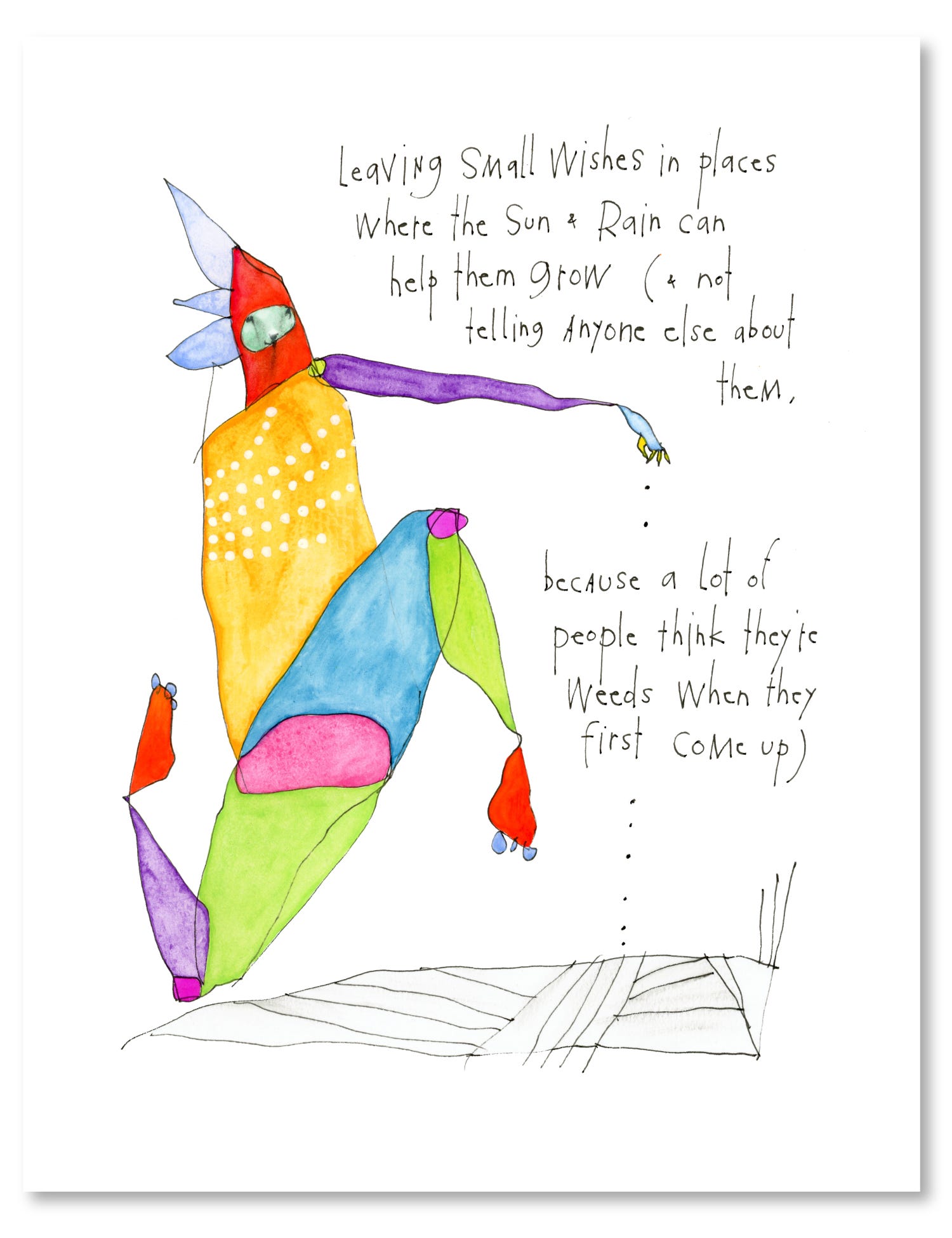
BRIAN: When you [ask] who are our influences or inspirations, I tend to call it, “People who are curious about an idea.”
FIA: And they spend time with it! I mean, like decades and decades. And these are outliers, too. These are not always people within the mainstream. A lot of these people also are redefining language, where they’re coming up with ideas and you think, “Wow, the language that we have around something doesn’t really fit,” or does not speak to the integrity of this particular thing. It’s people that have done the work. And it’s not the—what is it, this many hours to create a genius?
BRIAN: 10,000 hours.
FIA: It’s not that. It’s that they failed so many times along the way that they’ve built up myelin. And they’re hardly ever the ones that everybody’s talking about. It’s really exciting and life affirming, especially with all the madness going on in this world, when you stumble upon that, and you think, “I can breathe more deeply because somebody is up to something magnificent. Isn’t that wonderful?” That’s the thing that we get really excited about. And then you don’t want your work to be any less than that. Not in a competitive way, but in a way that’s like, if we could contribute in that sort of magnificent way, why wouldn’t we? Why would we do anything less than that?
BRIAN: I think a question we both have, ongoingly, is what does it take to have mastery of the thing we’re interested in? Not mastering somebody else’s thing, but the thing that we’re interested in.
“These Moments“ is a piece of yours that I saw on Instagram at some point, and I immediately connected with it. I kept thinking about it and thinking about it until I finally bought the print. Is there any artwork that you’ve done or something that you’ve written that has stuck with you and is one of your favorites?
BRIAN: It’s the one I’m working on. The closest analogy I have is my grandmother used to have a photo album of all these photos of family throughout her life, and my sister and I would sit on each side of her, and she’d flip through and she’d tell us the story of [the photo]. Like, “This is your great uncle, and this is right before he speared a shark off North Carolina. It almost bit off his little finger.” You can’t see it in the photo. The thing with the stories I’m writing is you can’t see the 90% of it that’s invisible. You see just the upper edge, like an iceberg. And I have so many experiences of my life when I reread them. I’m much more interested, though, in whatever I’m working on now, because that’s something I don’t know yet, and I’d like to find out.
FIA: One of my favorite things about Brian is he’s got thousands of stories that he’s written. You could ask him about any one of them and he can tell you about the person or the moment in his life that he wrote it. And this is from the early, early ones, and the ones he just wrote last week. It’s because for him, it’s distilling and distilling and distilling a life into these Polaroid moments.
BRIAN: Yeah, I think that’s true. It’s a really interesting question. There are things that I haven’t cracked yet, in the sense that it’s telling me something and I’m too focused in a different direction to hear it yet, but I know because it keeps whispering every time I walk by. Those aren’t usually written pieces; they’re usually objects I’m in the process of making. Like I’ve got one out in the woodshop right now that I keep walking by, going, “What the heck is that?” I’ve had it for three years now, and I keep trying things in my mind. So those are interesting things to me, but they’re rarely the words. Words are just an excuse to get to the feel of the experience of it. The analogy that I always have is an orange. You can describe the taste of an orange, the smell of an orange—it’s nothing like the actuality of unpeeling a ripe orange and having that tang hit you. No amount of words will ever do that. And so while I love words, I don’t trust them to talk about what’s real.
What do you hope people will get from your work?
BRIAN: I would love for people to remember their own life. That this is it. This is the life you have. You don’t owe anybody anything with this life. Experience it.
FIA: There’s an invitation to agency. It’s an invitation for you to explore, experience, or learn something you want to learn, and how do we create spaces for that for one another, so that we can all breathe a little bit deeper, a little bit more in line with the way that we’re designed to breathe, which is joyfully full.
To learn more about Brian and Fia, visit the Flying Edna website.
This interview has been edited for clarity and length.
You might also enjoy…

