

CR 094: Mac Barnett on Children’s Literature: ‘It is our moral responsibility to take this stuff seriously’
The award-winning children’s book author discusses his first book for adults, “Make Believe: On Telling Stories to Children.”

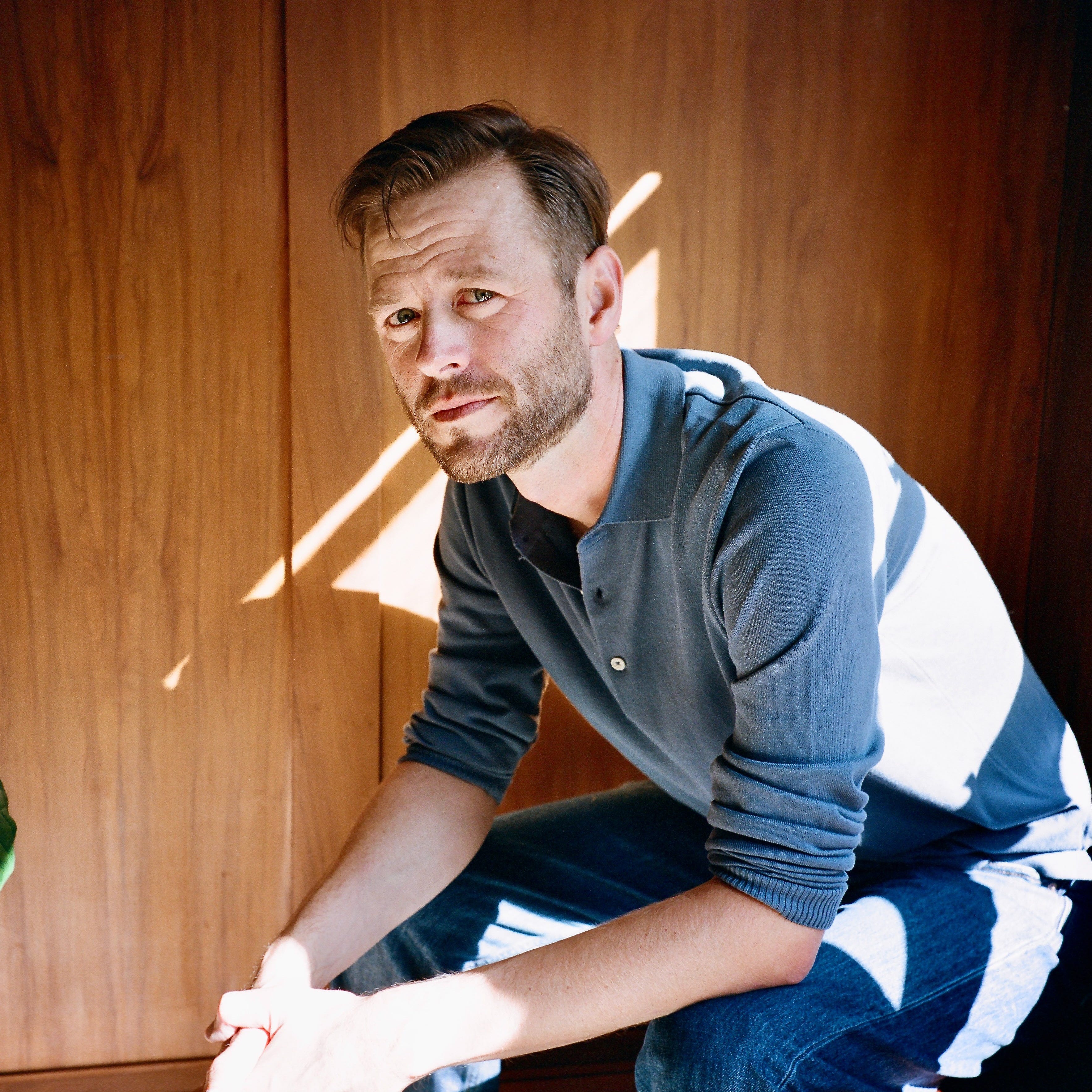
Mac Barnett never planned to write a book for adults. The author of dozens of books for kids, including the Caldecott Honor-winning Extra Yarn and the Mac B., Kid Spy series, Barnett has long been an advocate for picture books. He and picture book author-illustrator Jon Klassen run the Looking at Picture Books Substack, in which they aim to give readers “a deeper understanding of the medium,” and in 2011, he wrote the “Picture Book Proclamation,” signed by 21 fellow authors, which pushed for more awareness of the genre. In short, kids’ books are his jam; adult books, not so much.
But when Barnett was appointed the National Ambassador of Young People’s Literature, he realized he had an opportunity to make his longstanding argument—that children deserve good books—to a wider audience. So he wrote the newly published Make Believe: On Telling Stories to Children, a short but powerful read which he refers to as “an argument.”
“The thing I want adults to know,” Barnett says, “is that children, contrary to a lot of our expectations, are actually an ideal audience for art and literature. It is incumbent upon us as adults to get them books that are deserving of their attention, because we are so entwined with children’s books. Children’s books are written by adults. They are edited by adults, published by adults, reviewed by adults. Those reviews are read by adults. Adults buy the books, and for very young kids, adults decide whether to actually read those books out loud to kids. So it is our moral responsibility to take this stuff seriously and to spend time thinking about these books as literature. Because if we are not working on making the best books and getting them in kids’ hands, then they’re not going to get these books. So, at the most basic level, I want to point out how intertwined adults are with getting kids good books and ask us to think about it more.”
Over Zoom, Barnett spoke with me about the book that made him want to become a writer, his influences, and why he loathes didacticism in children’s literature.
This content contains affiliate links. I am an affiliate of Bookshop.org and I will earn a commission if you click through and make a purchase.
SANDRA EBEJER: You never planned to write a book for adults, but then you wrote this book for adults. Why?
MAC BARNETT: A year-and-a-half ago, I got appointed the National Ambassador of Young People’s Literature. A big part of that has been talking to adults about children’s books. I think that adults misunderstand children’s books. I spend a lot of time writing for kids, reading to kids, and I think adults underestimate children’s literature because they underestimate children. So it felt like there needed to be a book that advocated for the literary merit of children’s books, and also for the intelligence of the children who read books.
You describe your earliest days as a storyteller, back when you were working as a camp counselor. Do you remember writing your first children’s book and what that experience was like?
Very much so. I started it my senior year of college. I think back on that a lot because a lot of time I hate writing. I hate the act of sitting down and composing, and it’s my job. Sometimes I fantasize, like, what if I didn’t have to do this? And then I think back [to when] I was an intern at a little publishing company in San Francisco, and that whole time I was working on a picture book. Nobody I knew was writing picture books; nobody I knew even cared about picture books. I was 21 years old. Why was I doing that? Why was I sitting there on BART working on these drafts? And it’s comforting to be like, “On some level, I am compelled to do this. I am made to do this. This is how my brain works. This is my cruising altitude.” Nobody was asking for that; nobody was demanding it. Truly, nobody cared. And I did it anyway. I wanted to do it. And so it’s nice, like there is some sort of internal engine, because some days it doesn’t feel like it, I tell you that. [Laughs]
Creative Reverberations is a reader-supported publication. Each interview takes many hours of work. To read all posts and support ad-free, independent journalism, please become a paid subscriber.
In Make Believe you write an extensive overview of Goodnight Moon, to the point where it made me want to go back and read it again because I’d clearly missed a lot. What about that book makes it so unique and special?
Well, one reason I do that is it’s a book that’s familiar to so many of us. It’s a book that if you have a baby shower, there’s going to be five copies given as a gift. It is a book that is a part of so many of our childhoods, and I think its ubiquity makes it hard to see its brilliance, that it is this experimental poem. It’s this really ambitious, kind of dark and strange book that’s ultimately comforting, and I don’t think this is accidental to its success. I think it’s the reason that kids who had it read to them in the ’50s then went and bought that book in the ’70s to give to another generation of kids, and on and on. That is the source of its power.
And although you might not have thought all those things I thought in that close reading—one, I just wanted to show that it can withstand a close reading, just as an Emily Dickinson poem can withstand a close reading. Margaret Wise Brown was one of our great American poets, and her work deserves to be looked at as such. And two, to answer “Why that book?,” you don’t have to write a piece of literary analysis to feel the strangeness of the book, to feel the difference of the book, to feel the rhythms of the book. That hopefully, on some level, I’m describing how that book works and what it feels like to have that book read to you as a kid. Kids are very sensitive to the rhythms of language, to incongruities in the images, and the mechanics of the book. The very complicated mechanics of the book create an effect on the reader, the kid, that is profound and long lasting.
So one, it was like a literary exercise to show what kind of interpretive work was possible. But two, and this is really important, I do not think that the literary work I was doing there is like the readout of academics or critics who are having fun being like, “Wouldn’t it be amazing if we treated this poem like real literature?” The reason that book works for kids is because it is real literature, because it embraces the strangeness and even the scariness of falling asleep.

Margaret Wise Brown obviously had an impact on your work. Who are some of your other influences?
There was a book at the summer camp that I worked at. They called it the library, but it was just a bookshelf of the saddest children’s books. But they had one that had come out when I was a kid that I had missed. I hadn’t read it. It’s called The Stinky Cheese Man [by Jon Scieszka and Lane Smith]. I’d never seen anything like it. The cover was so beautiful, but the design was just wild. I thought it was really funny and brilliant and interesting. And I was like, “This is the kind of thing that an English major who is interested in experimental literature [would like]. I can understand this book, but maybe my four-year-olds will like the pictures or that it’s about fairy tales.” We do that a lot as adults. There’s this self-flattering mode where we say, “There are some jokes in there for the adults. They go right over the kids’ heads, but there’s some stuff for them, too.” And what we mean is, “There’s a bunch of stupid stuff in there for them, and then there’s some smart stuff in there for adults.”
I read that book to my four-year-olds, and I was shocked. The metafictional jokes, the boundary-pushing jokes—they were laughing at all of the same stuff that I was laughing at. Kids can get sophisticated jokes and think complex thoughts. They sometimes don’t have the references that we have as adults. They don’t have all the experience or even know the names of things, and that book, very subtly, teaches you what you need to know before making a very complicated joke about it. So seeing the sophistication of these four-year-olds and their willingness to take a chance on a strange book was inspiring to me. I think if that book came out for adults, it would have a cult following. It would come out from a university press, and people would talk about it at dinner parties. It’s this great, strange book, but because it came out for elementary school kids, it is one of the best-selling, most loved picture books ever published. And again, like Goodnight Moon, like Where the Wild Things Are, this is actually a hugely ambitious piece of experimental literature that is widely read and embraced by elementary school students.
And that book for me... I was like, “If this is what a picture book is like, this is what I want to do.” That is the book that made me decide to write picture books. In college I studied difficult poetry that was intentionally hard to understand, and I think what I was interested in was, is there a reason beyond elitism and social capital that you might be interested in reading difficult poems? Something other than just bragging rights, that “I’m somebody who can understand this stuff.” Is there fun to be had? Is there a sense of play? Is there a pleasure from wrestling with a difficult text and decoding it? That’s what I see in kids. I think they are much more willing to sit with a story and do the hard work of interpreting it, of figuring out what it means than we adults are. They’re better at it. Our default is if something is hard for us, we think it’s going to be even harder for a child. But there are so many things that they are better at than us, and interpreting art turns out to be one of them.
I also want to add that, as you wrote about in the book, Margaret Wise Brown had an absolutely horrible death.
Terrible! It’s so bad. She died at the age of 42. She had an ovarian cyst, had it removed, and then was bedridden in France. She lived in New York City. So she’s bedridden for a couple weeks, is about to be released. At this time in her life, too, she is in love with a Rockefeller and about to be married. She gets out of bed, and to prove that she’s feeling well, she does a can-can kick, which dislodges a blood clot in her leg, which goes to her brain, and she dies on the spot.
Unreal. I did not know that story until I read Make Believe.
It’s so wild. And her books—there are these sudden veerings into the unexpected across her work. They end in abrupt, deliberately unsatisfying ways. You turn the page and things shift in this really vertiginous way. Part of what her work does is it gets to the truth, which you know as a kid, too, that life is not neat and stories are not neat and the unexpected is always there. The violent is always there. The tragic is always there. This is all stuff that is in the picture books of Margaret Wise Brown. And so her death is eerily consonant with her poetry.
In the book you write, “Kids have made me a better writer, but they’ve also made me a better reader.” In what way?
As a reader of fiction, what do we need as adults? What do we pride ourselves on? If we’re like, “I’m a good reader,” I think the things we’re talking about are qualities that kids possess naturally. So, being good at noticing things, a keen observer of text and a keen observer of the world; an openness to new kinds of stories, not having orthodoxy about how a narrative should work; and that comfort with ambiguity, which is literature’s greatest power, to get to paradox or incongruity and to make us sit there with it, which is a threat to our ordered and formed adult lives. Kids are much better at being in that place because they live in it so much. And I think these qualities, which we cultivate through a lifetime of reading and maybe even a study of literature—and there’s something really comforting about this—they’re human skills. They’re things that we don’t have at birth necessarily, but they’re in us. As soon as we start talking and telling stories, we have them. In fact, those keen senses, the appreciation of the rhythms of language, the absurdities of language, the strangeness of the world, that openness, these are things that we shed in childhood. So a good reader, I think, is often reawakening skills that they had as kids, but that have dulled.
One of the things you talk about in Make Believe is that adults have plenty of books that are simply entertaining, whereas books for kids are supposed to have some sort of lesson. In your career, have you felt pressured to include a teaching moment or write to trends?
I have not felt it, because from the beginning, the didactic mode, to me, feels anti-literary and on some level anti-kid, so it’s never been interesting to me. But have I felt that the pressure exists? Yeah, of course, from editors, from parents, teachers, librarians who read the book and say, “There’s no lesson here!” That is the default mode for a lot of adults when they think about kids’ books: does it teach a good lesson? Does it tell you to share or say thank you or make a kid better in some way? Which really is just another way that adults are trying to control kids. And then we wonder why kids aren’t loving reading, right? We adults are treating children’s books as tools. We are looking for an outcome, rather than treating children’s books as something to be enjoyed, as something that is entertaining, as art, as literature, as powerful experiences. And we insist on this didactic mode that kids can sniff out in a second—“Okay, they’re telling me to share again.” And when they stop listening, when they don’t want to read these books, we wonder, “Why does this generation not care about reading?”
And, you know, we have this mode of books that improve us, right? This genre is alive and well in adult literature. It’s self-help. But self-help is over-represented in kids’ books. And self-help is a totally valid genre, but with kids’ books, it’s actually not self-help because kids aren’t getting to choose the ways in which they are improved. It’s very risky to give somebody else a self-help book as a gift, right? You might hand it over, and be like, “I think you could really use this.” And they’re looking at it like, “What the hell? You think I have this problem?” That’s a risky gift. The chances of it offending the person you give it to are very high. But that is what we do to children every single day when we read a book to them that teaches a lesson. We say, “We think you need to know this.” It is the most arrogant and really dangerous, socially, thing that we can do.
Well, in addition to adults deciding what books kids should have, adults are deciding what books they can’t have. In doing research for this interview, I learned that a couple of your books have been removed from school libraries in Florida. What is your response to those who choose to challenge books or deny children the ability to read certain titles?
I grew up in the library. That was my place and it was a place of freedom for me. It was really important to me as a kid. Kids are constantly having adults tell them what to do, and here’s a place where you can chase down your interests, the things that excite you. And my mom, when we would go to the library, would let me run around the whole place and choose whatever books I wanted from the shelves. I would bring her that stack, and we would check them out. And I can’t remember her ever saying, “No, you can’t check this book out.” That would have been her right. She could have said, “Why don’t we wait five years?” I don’t remember her doing that. I can’t imagine her actually doing it to me. But that was her call, her choice.
What I know she would never have done is take a book out of another kid’s hands at the library. That’s a misunderstanding of what the library is as a community resource. And again, it’s another instance of adults telling kids what to do, which I think we all remember was one of the biggest bummers of childhood existence. And look, if we want kids to read more, which I do, one of the most counterproductive things you can do is take a book a kid is interested in out of their hands.
You’ve worked with many illustrators on different titles. What is that relationship like? Are you hands-on when it comes to illustrations? Or do you stay out of that aspect of the work?
When I’m writing a picture book manuscript, I’m trying to build something that an illustrator can come in and add to. A lot of creating a picture book manuscript is actually about leaving gaps, because the illustrations in picture books have a storytelling role. The Illustrator is really an author who writes with pictures. So I’m trying to create something that is interesting for an illustrator, that gives them opportunities. I’m often part of the process with Jon. Jon Klassen is one of my best friends. We talk all the time, and when we’re working on a book, we talk about that book together. But [with other illustrators], when I’m done, the illustrator is in charge. And if the illustrator wants to talk to me, I’m there. I’m somebody who knows the book well. But making any piece of art, you let go of it at a certain point and other people decide what to do with it. When you make picture books, you let go very early. If you just write them, you hand them off to an illustrator who takes over the storytelling duty and then we hand them to adults.
We hand them to adults who are actually our equal collaborators in creating the artwork, because a picture book is really this individual performance. If you read picture books out loud to kids, you know that you were like an actor who has been cast in every part. Adults will decide how to read our books, like whether to do voices for the characters. So literally, what these characters sound like, how quickly to turn the pages, which creates the rhythm with which the story moves forward. Sometimes an adult will put a page turn at a place where the illustrator has not, like turn it earlier, later, or will cut a sentence that I spent two weeks getting right. But that’s the game. That’s how these work, and a good adult will know how to make that story really sing for that kid or group of kids that they’re reading to right then. So a picture book—and I think this is something beautiful—is this set of collaborations. And hopefully in a good picture book, when I’m done, when the illustrator is done, when the adult reading the book is done with their jobs, there is still a gap. There’s still a piece that’s unfinished, a space that the kid listening can bring their own intelligence and experience to to figure out what that means.
Is there anything you haven’t done yet, or any type of book you haven’t written, that you’d really like to do?
I am so reactive to the idea that’s in my head, so I’m bad at planning things this way. I have a new set of books out with Jon, and for Make Believe, when we’re going out to tour these books, rather than doing readings to kids, we’re just going to be talking to writers and artists that we admire about children’s books. And those kinds of conversations—talking with adults about children’s books, bringing children’s books to spaces where people care about literature, but aren’t often talking about children’s literature—that’s exciting to me. I’m looking forward to getting on the road and doing that. But then this fall, I’ll be back in elementary schools reading to kids, and that’s where I belong.
To learn more about Mac Barnett, visit his website.
To purchase Make Believe, click here.
This interview has been edited for clarity and length.
You might also enjoy…

